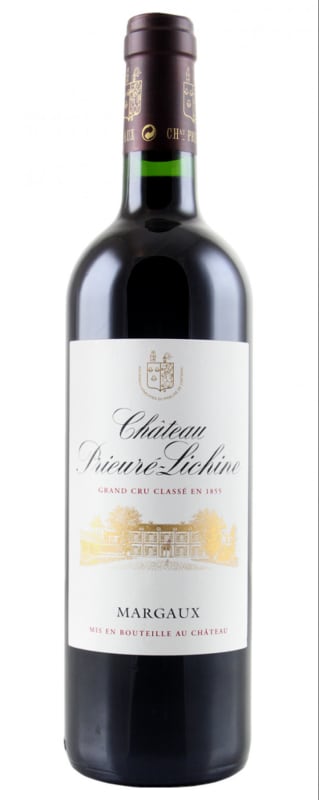


Winemaker Notes
Blend: 62% Cabernet Sauvignon, 35% Merlot, 3% Petit Verdot
The Barrel Sample for this wine is under 14% ABV.
Professional Ratings
-
Wine Enthusiast
This wine is poised between great ripeness and a mineral, textured character, while also showing a robust tannic structure. Its richness is tempered by the freshness of the vintage. There is plenty of long-term aging potential in this wine that continues the great improvements at the estate.
Barrel Sample: 94-96 -
Decanter
Plump black fruits, medium to full intensity plum colour with a violet rim and slate-edged tannins that slow things down on the end of the wine. The trick with a Margaux wine is to get concentration without losing elegance, and they have pulled that off here. It's an excellent Prieuré, with a slow build through the palate, if not quite at the height of the wines that have been produced at this estate in 2016 and 2018 but you are not going to be disappointed here. Tasted twice two weeks apart. Stéphane Derenoncourt consultant.
Barrel Sample: 93 -
Robert Parker's Wine Advocate
The 2019 Prieuré-Lichine is supple and generous, bursting with aromas of blackberries, currants, licorice, spices and creamy new oak. Medium to full-bodied, broad and fleshy, it's round and enveloping, with ripe acids and a rich, seamless profile. This is showing well out of the gates. This heavily morcellated estate (amounting to some 125 different parcels) is clearly benefitting from a more rigorous selection and better attention to detail regarding harvest dates.
-
Jeb Dunnuck
Readers looking for a complex, nuanced Margaux should check out the 2019 Château Prieuré-Lichine. Giving up a beautiful floral bouquet that includes red and blue fruits, sappy herbs, and flowery incense, it hits the palate with medium to full-bodied richness, plenty of mid-palate depth and sweet tannins, and a great finish. This complex, layered Margaux needs just 2-4 years of bottle age and should see its 20th birthday in fine form.
-
James Suckling
This shows a lot of floral notes, such as lilacs and violets, together with aromas of dark fruit, cloves and bark. It has medium body and a soft, polished-tannin structure. Juicy, lingering fruit and firm, fine-grained finish.
-
Wine Spectator
Presents lush plum and blackberry preserve flavors that gush through, flanked by a twinge of singed sandalwood to give it form. The finish is dotted by dark licorice, ganache and earth accents. Cabernet Sauvignon, Merlot and Petit Verdot.


One of the world’s most classic and popular styles of red wine, Bordeaux-inspired blends have spread from their homeland in France to nearly every corner of the New World. Typically based on either Cabernet Sauvignon or Merlot and supported by Cabernet Franc, Malbec and Petit Verdot, the best of these are densely hued, fragrant, full of fruit and boast a structure that begs for cellar time. Somm Secret—Blends from Bordeaux are generally earthier compared to those from the New World, which tend to be fruit-dominant.

Silky, seductive and polished are the words that characterize the best wines from Margaux, the most inland appellation of the Médoc on the Left Bank of Bordeaux.
Margaux’s gravel soils are the thinnest of the Médoc, making them most penetrable by vine roots—some reaching down over 23 feet for water. The best sites are said to be on gentle outcrops, or croupes, where more gravel facilitates good drainage.
The Left Bank of Bordeaux subscribes to an arguably outdated method of classification but it is nonetheless important in regards to history of the area. In 1855 the finest chateaux were deemed on the basis of reputation and trading price—at that time. In 1855, Chateau Margaux achieved first growth status, yet it has been Chateau Palmer (officially third growth from the 1855 classification) that has consistently outperformed others throughout the 20th century.
Chateau Margaux in top vintages is capable of producing red Cabernet Sauvignon based wines described as pure, intense, spell-binding, refined and profound with flavors and aromas of black currant, violets, roses, orange peel, black tea and incense.
Other top producers worthy of noting include Chateau Rauzan-Ségla, Lascombes, Brane-Cantenac, and d’Issan, among others.
The best wines of Margaux combine a deep ruby color with a polished structure, concentration and an unrivaled elegance.