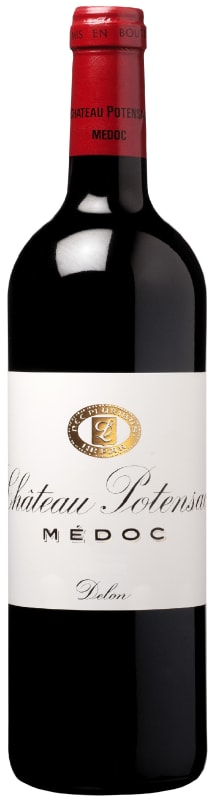


Winemaker Notes
Blend: 45% Merlot, 36% Cabernet Sauvignon, 18% Cabernet Franc, 1% Petit Verdot
Professional Ratings
-
James Suckling
Fruity nose of blackcurrant and blueberry with sage and vanilla. It’s full-bodied with firm tannins. Savory and juicy with pleasant acidity. Compact and long. Racy. 45% merlot, 36% cabernet sauvignon,18% cabernet franc and 1% petit verdot. Try after 2023.
-
Jeb Dunnuck
The Grand Vin 2018 Château Potensac (45% Merlot, 36% Cabernet Sauvignon, 18% Cabernet Franc, and the balance Petit Verdot) sports a deeper purple, almost opaque hue to go with lots of ripe black cherry and currant-like fruits intermixed with notes of toasty oak, tobacco, graphite, and earth. Richer and more concentrated than the Chapelle de Potensac release, with full-bodied richness and building tannin's, it's going to benefit from a solid 5-7 years of bottle age and keep for 15+.
-
Wine Spectator
The dark cherry and plum fruit is fresh and direct, with light tobacco and toast accents hanging on the finish.
Barrel Sample: 89-92 -
Decanter
Plush plum in colour, with a depth to the body that starts from the first sip. A clear step up from the second wine, as I have found in many Médocs in the vintage. Raspberry and blueberry fruits which then deepen out to the classic black fruit notes of Potensac. Bottled in mid-April, ageing in barrel was kept to 14 months to avoid any over-extraction, because alcohol levels are pretty high. 1% Petit Verdot completes the blend. Drinking Window 2024 - 2025
-
Robert Parker's Wine Advocate
The 2018 Potensac is composed of 45% Merlot, 36% Cabernet Sauvignon, 18% Cabernet Franc and 1% Petit Verdot. The wine has 14.42% alcohol and was aged in 35% new barriques. Medium to deep garnet-purple colored, it rolls out of the glass with open-knit scents of ripe, juicy black plums, boysenberries, redcurrant jelly and cassis, plus hints of dried Provence herbs, cinnamon stick and dusty soil. Medium to full-bodied, the palate is chock-full of lively black and red berry layers, supported by soft tannins and a racy line, finishing with a lively skip in its step.


One of the world’s most classic and popular styles of red wine, Bordeaux-inspired blends have spread from their homeland in France to nearly every corner of the New World. Typically based on either Cabernet Sauvignon or Merlot and supported by Cabernet Franc, Malbec and Petit Verdot, the best of these are densely hued, fragrant, full of fruit and boast a structure that begs for cellar time. Somm Secret—Blends from Bordeaux are generally earthier compared to those from the New World, which tend to be fruit-dominant.

One of the most—if not the most—famous red wine regions of the world, the Medoc reaches from the city of Bordeaux northwest along the left bank of the Gironde River almost all the way to the Atlantic. Its vineyards climb along a band of flatlands, sandwiched between the coastal river marshes and the pine forests in the west. The entire region can only claim to be three to eight miles wide (at its widest), but it is about 50 miles long.
While the Medoc encompasses the Haut Medoc, and thus most of the classed-growth villages (Margaux, Moulis, Listrac, St-Julien, Pauillac and St. Estephe) it is really only those wines produced in the Bas-Medoc that use the Medoc appellation name. The ones farther down the river, and on marginally higher ground, are eligible to claim the Haut Medoc appellation, or their village or cru status.
While the region can’t boast a particularly dramatic landscape, impressive chateaux disperse themselves among the magically well-drained gravel soils that define the area. This optimal soil draining capacity is completely necessary and ideal in the Medoc's damp, maritime climate. These gravels also serve well to store heat in cooler years.