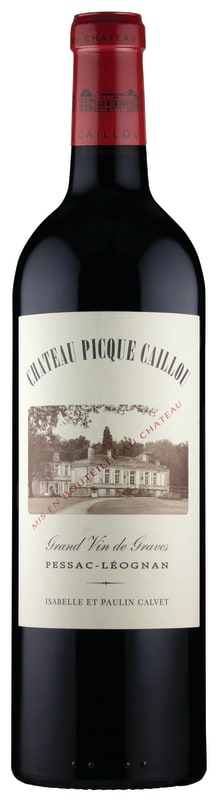


Winemaker Notes
Vibrant red robe. Intense nose of spices, red fruits and vanilla. Medium-bodied in the mouth with red cherries, cassis, and lightly grilled oak flavors. Silky tannins and nice long finish.
Blend: 50% Cabernet Sauvignon, 45% Merlot, 5% Petit Verdot
Professional Ratings
-
Wine Enthusiast
Cinnamon and blackberry juice aromas lead to a wine that is still young and structured. It has a succulent character, black currant and spice flavors from wood aging. Drink this rich wine from 2028.
-
Wine Spectator
A dark red, with a mulled edge to its black currant and black cherry fruit, this shows streaks of tar, alder and bay leaf. The long, fine-grained finish is focused, with an iron note lingering at the very end. Cabernet Sauvignon, Merlot and Petit Verdot. Best from 2027 through 2037.
-
Jeb Dunnuck
The 2022 Château Picque Caillou is a pretty, elegant wine based on 50% Cabernet Sauvignon, 45% Merlot, and 5% Petit Verdot. Ripe black cherries, flowery incense, graphite, and spicy nuances all define the nose, and it's medium-bodied, has a pure, layered, elegant mouthfeel, ripe tannins, and outstanding length.
-
James Suckling
There is a lactic note on the nose, with hints of goat cheese and smoke that don’t dominate. Olives, currants and black cherries as well. Structured and quite chewy on the palate, with a medium to full body at the end.


One of the world’s most classic and popular styles of red wine, Bordeaux-inspired blends have spread from their homeland in France to nearly every corner of the New World. Typically based on either Cabernet Sauvignon or Merlot and supported by Cabernet Franc, Malbec and Petit Verdot, the best of these are densely hued, fragrant, full of fruit and boast a structure that begs for cellar time. Somm Secret—Blends from Bordeaux are generally earthier compared to those from the New World, which tend to be fruit-dominant.

Recognized for its superior reds as well as whites, Pessac-Léognan on the Left Bank claims classified growths for both—making it quite unique in comparison to its neighboring Médoc properties.
Pessac’s Chateau Haut-Brion, the only first growth located outside of the Médoc, is said to have been the first to conceptualize fine red wine in Bordeaux back in the late 1600s. The estate, along with its high-esteemed neighbors, La Mission Haut-Brion, Les Carmes Haut-Brion, Pique-Caillou and Chateau Pape-Clément are today all but enveloped by the city of Bordeaux. The rest of the vineyards of Pessac-Léognan are in clearings of heavily forested area or abutting dense suburbs.
Arid sand and gravel on top of clay and limestone make the area unique and conducive to growing Sémillon and Sauvignon blanc as well as the grapes in the usual Left Bank red recipe: Cabernet Sauvignon, Merlot, Cabernet Franc and miniscule percentages of Petit Verdot and Malbec.
The best reds will show great force and finesse with inky blue and black fruit, mushroom, forest, tobacco, iodine and a smooth and intriguing texture.
Its best whites show complexity, longevity and no lack of exotic twists on citrus, tropical and stone fruit with pronounced floral and spice characteristics.