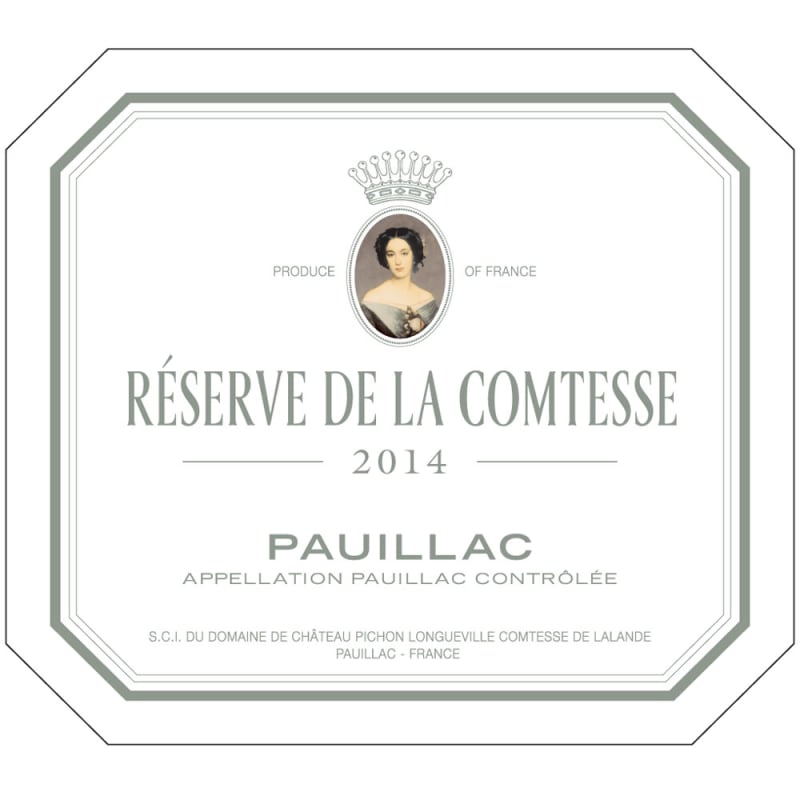

Winemaker Notes
Professional Ratings
-
Decanter
The excellence of this second wine vindicates the appointment of Nicolas Glumineau as technical director in 2012. The nose shows black fruit aromas, and there's immediate, lush, forward fruit on the attack. It's suave and concentrated, but also remarkably deep, weighty, robust and structured, with a long finish - this has clear ageing potential.
-
James Suckling
Rose-petal, cassis-bush and berry aromas. Medium to full body, tangy acidity and a soft and velvety mouthfeel. Round and friendly. Second wine of Pichon Lalande. Drink in 2019.
-
Robert Parker's Wine Advocate
The 2014 Reserve de Comtesse de Lalande has a very fresh and vibrant bouquet with lovely cedar-infused black fruit that sings of Pauillac-ness (apologies for the made-up word!). The palate is medium-bodied with fine tannin, crisp and elegant with a keen line of acidity. This feels quite linear at the moment and perhaps the finish could have dealt more complexity commensurate with the aromatics. Yet there is bundles of freshness infused into this Deuxième Vin and there is a palpable salinity on the aftertaste.
-
Wine Spectator
Deep, with a core of steeped plum, cassis and raspberry paste notes that are easily carried by a graphite spine, while anise and roasted apple wood details fill in the background. Shows lots of briary energy through the finish. Best from 2018 through 2026.


One of the world’s most classic and popular styles of red wine, Bordeaux-inspired blends have spread from their homeland in France to nearly every corner of the New World. Typically based on either Cabernet Sauvignon or Merlot and supported by Cabernet Franc, Malbec and Petit Verdot, the best of these are densely hued, fragrant, full of fruit and boast a structure that begs for cellar time. Somm Secret—Blends from Bordeaux are generally earthier compared to those from the New World, which tend to be fruit-dominant.

The leader on the Left Bank in number of first growth classified producers within its boundaries, Pauillac has more than any of the other appellations, at three of the five. Chateau Lafite Rothschild and Mouton Rothschild border St. Estephe on its northern end and Chateau Latour is at Pauillac’s southern end, bordering St. Julien.
While the first growths are certainly some of the better producers of the Left Bank, today they often compete with some of the “lower ranked” producers (second, third, fourth, fifth growth) in quality and value. The Left Bank of Bordeaux subscribes to an arguably outdated method of classification that goes back to 1855. The finest chateaux in that year were judged on the basis of reputation and trading price; changes in rank since then have been miniscule at best. Today producers such as Chateau Pontet-Canet, Chateau Grand Puy-Lacoste, Chateau Lynch-Bages, among others (all fifth growth) offer some of the most outstanding wines in all of Bordeaux.
Defining characteristics of fine wines from Pauillac (i.e. Cabernet-based Bordeaux Blends) include inky and juicy blackcurrant, cedar or cigar box and plush or chalky tannins.
Layers of gravel in the Pauillac region are key to its wines’ character and quality. The layers offer excellent drainage in the relatively flat topography of the region allowing water to run off into “jalles” or streams, which subsequently flow off into the Gironde.