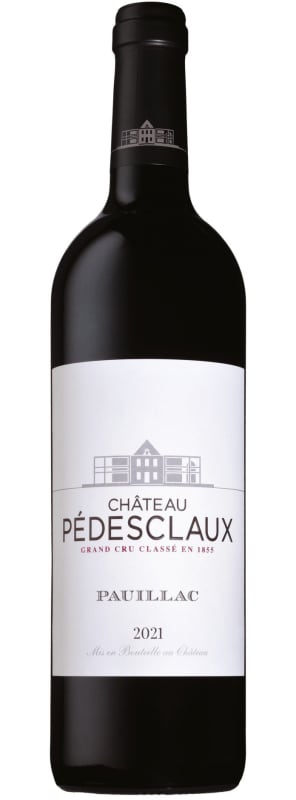


Winemaker Notes
Château Pédesclaux 2021 is considered very close to classic vintages and has great potential for storing. It is characterized by a deep and dynamic nose, with notes of small black fruits and spices. The mouth, deliciously juicy, is led by an incredible tension on the palate. Its supple, textured tannins and its sapid finish allow Château Pédesclaux to assert its unique identity.
Blend: 64% Cabernet Sauvignon, 27% Merlot, 6% Cabernet Franc, 3% Petit Verdot
Professional Ratings
-
James Suckling
Dark cherries, black currants, white pepper and graphite with a touch of dark chocolate and cigar box. I love the suppleness and the mid-palate fruit that give excellent width and flesh to this rather lean vintage. Medium to full body with more flesh than bones. The tannins are fine and sleek, and the finish, creamy and extensive. A commendable effort from this vintage. Shows lots of early appeal but will hold very well in the next five to seven years.
-
Decanter
Gorgeous dark pinky purple rim to the glass. Beautifully expressive aromas, red and pink flowers - peonies, rose and violets and intense, chocolatey cola blackcurrant, just the best combination. Concentration and lift on the palate, this is darker and more seductive than the second wine, the perfume and the richness of the fruits with the dark liquorice tones draws you in and plays alongside the bright, light acidity. So you have focus and intensity as well as freshness and approachability. The two are not totally combined yet but such lovely elements going on and such precision on show. This has tension and a balance between refinement and power really led by the Cabernet Sauvignon. The bright cherry hit on the finish lingers too. A lovely set of wines this year - worth seeking out! 3% Petit Verdot completes the blend. 3.71pH. Ageing 60% new oak. 58% grand vin. A yield of 29hL/ha. In official organic conversion since 2019.
Barrel Sample: 92 -
Jeb Dunnuck
The 2021 Château Pédesclaux is solid, even outstanding, with classic Pauillac notes of graphite and lead pencil supported by beautiful cassis-driven fruit. Medium-bodied, elegant, and balanced, it has fine tannins, reasonable mid-palate depth, and a good finish. Based on 64% Cabernet Sauvignon, 27% Merlot, and the rest Cabernet Franc and Petit Verdot, it's well-made, has terrific purity of fruit, and I love its overall balance. It's going to benefit from just a few years of bottle age and should drink nicely for 10-15 years if well stored.
-
Robert Parker's Wine Advocate
The 2021 Pedésclaux is a strong effort that's turned out well in bottle, offering up aromas of cassis, dark berries, violets and pencil shavings, followed by a medium to full-bodied, fleshy palate with powdery tannins, lively acids and a vibrant core of fruit.


One of the world’s most classic and popular styles of red wine, Bordeaux-inspired blends have spread from their homeland in France to nearly every corner of the New World. Typically based on either Cabernet Sauvignon or Merlot and supported by Cabernet Franc, Malbec and Petit Verdot, the best of these are densely hued, fragrant, full of fruit and boast a structure that begs for cellar time. Somm Secret—Blends from Bordeaux are generally earthier compared to those from the New World, which tend to be fruit-dominant.

The leader on the Left Bank in number of first growth classified producers within its boundaries, Pauillac has more than any of the other appellations, at three of the five. Chateau Lafite Rothschild and Mouton Rothschild border St. Estephe on its northern end and Chateau Latour is at Pauillac’s southern end, bordering St. Julien.
While the first growths are certainly some of the better producers of the Left Bank, today they often compete with some of the “lower ranked” producers (second, third, fourth, fifth growth) in quality and value. The Left Bank of Bordeaux subscribes to an arguably outdated method of classification that goes back to 1855. The finest chateaux in that year were judged on the basis of reputation and trading price; changes in rank since then have been miniscule at best. Today producers such as Chateau Pontet-Canet, Chateau Grand Puy-Lacoste, Chateau Lynch-Bages, among others (all fifth growth) offer some of the most outstanding wines in all of Bordeaux.
Defining characteristics of fine wines from Pauillac (i.e. Cabernet-based Bordeaux Blends) include inky and juicy blackcurrant, cedar or cigar box and plush or chalky tannins.
Layers of gravel in the Pauillac region are key to its wines’ character and quality. The layers offer excellent drainage in the relatively flat topography of the region allowing water to run off into “jalles” or streams, which subsequently flow off into the Gironde.