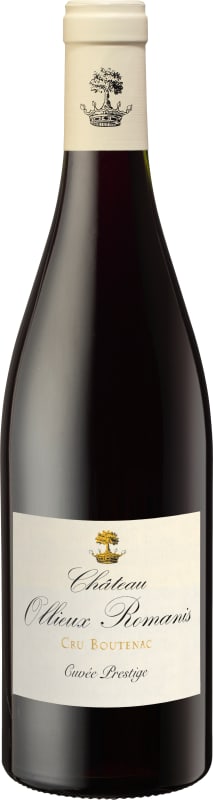


Winemaker Notes
Smooth but assertive, Cuvée Prestige is the big brother of Ollieux Romanis' Cuvée Classique. It is distinguished by its aging in barrels and characteristic grape varieties.
Blend: 40% Carignan, 30% Syrah, 20% Mourvèdre,10% Grenache
Professional Ratings
-
Decanter
This is only our fifth Languedoc-Roussillon red wine to find itself in the Best in Show selection, and the first from the cru of Corbières-Boutenac. The blend of this dark black-red wine, typically for Corbières as a whole, is 40 per cent Carignan with 30 per cent Syrah, 20 per cent Mourvèdre and 10 per cent Grenache, and it’s a successful one. From first sniff, you can gauge the wine’s unusual complexity: sweet, beguiling but far-from-simple fruit offset by the herbs-and-stone austerity of the rangy Mediterranean wilderness in which it comes into being. There’s soft liquorice, too, and a touch of tart asperity which again evokes the place itself. The flavour gives you a deep plunge into that wilderness; Languedoc’s best wines are never easy drinking. Spend time with the wine, though, and you’ll find it rewarding and complex: a great though quietly spoken gastronomic red from a multi-millennial vineyard biotope.


With bold fruit flavors and accents of sweet spice, Grenache, Syrah and Mourvèdre form the base of the classic Rhône Red Blend, while Carignan, Cinsault and Counoise often come in to play. Though they originated from France’s southern Rhône Valley, with some creative interpretation, Rhône blends have also become popular in other countries. Somm Secret—Putting their own local spin on the Rhône Red Blend, those from Priorat often include Merlot and Cabernet Sauvignon. In California, it is not uncommon to see Petite Sirah make an appearance.

The Corbières AOC, established in 1985, is the largest in the Languedoc, and represents the South of France in transition. Though viticulture here dates back to the Romans, only within the last twenty years have Corbières wines begun to reclaim their reputation. Approved for reds, rosés, and whites, the region's vineyards cover a wide variety of elevations, soil types, and exposures. Hilly terrain and the Atlantic Cers wind moderate the Mediterranean heat, giving the wines balance and complexity; the best will go ten years or more in the cellar.
Reds represent 88% of the AOC’s production and are an assemblage of the sun-loving grapes of southern France. Carignan’s briars, Grenache’s berries, Syrah’s cherries and Mourvèdre’s plums allow for a wide range of styles, which are often influenced by the wild herbs of the garrigue. Corbières rosés, though only 9% of production, are serious wines and the small production of Rhône-variety whites are fresh and sea-influenced.
With eleven sub-appellations, Corbières is an AOC in the process of refinement. Corbières-Boutenac attained Cru status in 2005, one of only five in the Languedoc to achieve this highest ranking.