


Winemaker Notes
Aile d'Argent 2022 reveals citrus fruit aromas elevated by subtle touches of verbena and acacia honey. Generous and well-balanced, its ripe white fruit flavors combine harmoniously with an appealing minerality, offering a pleasant freshness. The impression of balance continues and persists on floral and slightly lemony notes.
Blend: 52% Sauvignon Blanc, 39% Sémillon, 8% Sauvignon Gris, 1% Muscadelle
Professional Ratings
-
James Suckling
So vibrant and minerally with salt and dried apple, peach and pears. Medium to full body. Creamy texture. Some phenolics. Dried fruit skin. Vivid acidity.
Barrel Sample: 96-97 -
Jeb Dunnuck
Another impressive Bordeaux Blanc from the Médoc, the 2022 Château Mouton Rothschild Aile D'Argent Blanc is based on 52% Sauvignon Blanc, 39% Sémillon, 8% Sauvignon Gris, and the rest Muscadelle. Still aging in 45% new oak, it has a ripe, tropical nose of minty herbs, exotic flowers, and assorted citrus and melon-like fruits. It's clean, vibrant, and medium-bodied, with bright acidity and a great finish.
Barrel Sample: 93-95 -
Decanter
Gorgeous tropical notes on the nose, pineapple, mango, lemon, fresh but ripe and lively with elderflower, acacia flowers, green apple and citrus fruits. Nicely weighted on the palate. A shot of bright mango and apple with flecks of lime and a creamy lemon yoghurt type texture, thick but enjoyable. Keeps its coolness, not so tense or necessarily streamlined but generous flavour all the way through. A citrus kick and lift at the end brings the freshness and tang back, with a salinity that is moreish. Joyful and really quite approachable still with weight and texture. Will be bottled in the first week of June. Very moreish. Harvest 22-31st August. A yield of 16.7hl/ha. 1% Muscadelle completes the blend. 3.18 PH. 3.8 g/l total acidity. Aged 45% in new barrels.
Barrel Sample -
Robert Parker's Wine Advocate
Harvested in the month of August, the 2022 Aile d'Argent bursts with aromas of gooseberries, white flowers, lime zest and mango. Medium to full-bodied, satiny and enveloping, it's a bright, fleshy Sauvignon Blanc-dominant blend that concludes with a saline finish.
Barrel Sample: 90-92



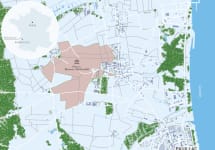
A First Classified Growth, Château Mouton Rothschild spans 82 hectares (202 acres) of vines at Pauillac in the Médoc, planted with the classic varieties of the region: Cabernet Sauvignon (79%), Merlot (17%), Cabernet Franc (3 %), Petit Verdot (1 %). The average age of the vines is 50 years.
The estate benefits from exceptionally favourable natural conditions, in the quality of the soil, the position of its vines and their exposure to the sun. Combining respect for tradition with the latest technology, it receives meticulous attention from grape to bottle. The wine is matured in new French oak barrels.
Le Petit Mouton de Mouton Rothschild is the second wine of Château Mouton Rothschild.
The estate also comprises 6 hectares (15 acres) of sandy, gravelly soil planted with Sauvignon Blanc (51%), Semillon (40%) and Sauvignon Gris (9%), used to make its white wine, Aile d’Argent.
Brought to the pinnacle by two exceptional people, Baron Philippe de Rothschild (1902-1988) then his daughter Baroness Philippine (1933-2014), its destiny has now been taken in hand by her three children: Camille and Philippe Sereys de Rothschild, and Julien de Beaumarchais de Rothschild. True to their grandfather’s and mother’s work, all three are committed, with the same enthusiasm and determination, to perpetuating Baron Philippe’s dictum: “Live for the vine”. Almost a command, it means being there for the vineyard in good times and in hardship, serving it with skill and honouring it with art.
Château Mouton Rothschild is a place of art and beauty, famous for the spectacular vista of its great barrel hall, its remarkable vat room and its Museum of Wine in Art. Every year since 1945, the Château Mouton Rothschild label has been illustrated with an original artwork by a great contemporary artist. Dalí, César, Miró, Chagall, Warhol, Soulages, Bacon, Balthus, Tàpies, Koons and Doig are only some of the artists featured in a fascinating collection to which a new work is added each year and which makes up the Paintings for the Labels exhibition.

Sometimes light and crisp, other times rich and creamy, Bordeaux White Blends typically consist of Sauvignon Blanc and Semillon. Often, a small amount of Muscadelle or Sauvignon Gris is included for added intrigue. Popularized in Bordeaux, the blend is often mimicked throughout the New World. Somm Secret—Sauternes and Barsac are usually reserved for dessert, but they can be served before, during or after a meal. Try these sweet wines as an aperitif with jamón ibérico, oysters with a spicy mignonette or during dinner alongside hearty Alsatian sausage.

One of the most important wine regions of the world, Bordeaux is a powerhouse producer of wines of all colors, sweetness levels, and price points. Separated from the Atlantic Ocean by a coastal pine forest, this relatively flat region has a mild maritime climate, marked by cool wet winters and warm summers. Annual weather differences create significant vintage variations, making Bordeaux an exciting French wine region to follow.
The Gironde estuary, a defining feature of Bordeaux, separates most of the region into the Left Bank and the Right Bank. Farther inland, where the Gironde splits into the Garonne and Dordogne Rivers, the bucolic, rolling hills of the area in between, called Entre-Deux-Mers, is a source of great quality, approachable reds and whites.
The Left Bank, dominated by Cabernet Sauvignon, contains the Médoc, Graves, and Sauternes, as well as the region’s most famous chateaux. Merlot is important here as the perfect blending grape for Cabernet Sauvignon adding plush fruit and softening Cabernet's sometimes hefty tannins. Cabernet Franc, Petit Verdot and Malbec may also be used in the Left Bank Bordeaux wine blends.
Merlot is the principal Bordeaux wine variety of the Right Bank; Cabernet Franc adds structure and complexity to Merlot, creating wines that are concentrated, supple, and more imminently ready for drinking, compared with their Left Bank counterparts. Key appellations of the Right Bank include St. Emilion and Pomerol.
Dry and sweet Bordeaux white wines are produced throughout the region from Sauvignon Blanc, Sémillon, and sometimes Muscadelle or Sauvignon Gris. Some of the finest dry whites can be found in the Graves sub-appellation of Pessac-Léognan, while Sauternes is undisputedly the gold standard for sweet wines. Small amounts of rosé and sparkling Bordeaux wines are made in the region as well.