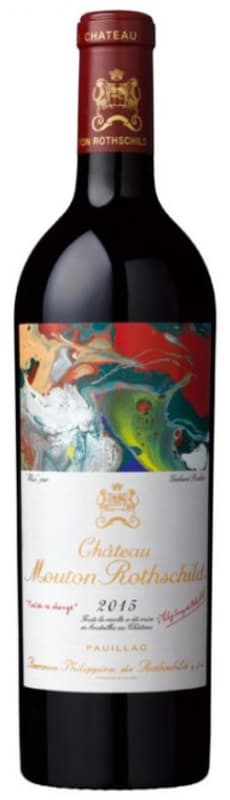


Winemaker Notes
The tannins are generally very well-rounded, dense and seamlessly smooth. After blending, the wines still have the same aromatic intensity and complex, full-bodied structures which barrel-maturing should further enhance.
Professional Ratings
-
Jeb Dunnuck
The crème de la crème from the northern Médoc is the 2015 Mouton Rothschild and this incredible wine flirts with perfection. Made from 82% Cabernet Sauvignon, 16% Merlot, and 3% Petit Verdot, this inky purple-colored effort offers sensational Cabernet flare in its crème de cassis, graphite, lead pencil shavings, floral, and Asian spice aromas and flavors. It is full-bodied, dense, and incredibly concentrated, yet still has the sexy, opulent, seductive style of the vintage front and center. It will be a candidate for perfection in 10-12 years and is going to be one of the longest-lived wines in the vintage. Hats off to Philippe Dhalluim and his team for this incredible effort that’s a step up over just about every other northern Médoc out there!
-
James Suckling
Decadent and rich aromas of black cherries and plums with wet earth and sandalwood. Turns to dried mushrooms. Full-bodied, tight and closed with big, polished tannins, yet this is very closed and shy right now. Despite this, underneath it shows such depth and beauty. Tangy acidity. This is a combination of 2005 and 2009. Try it in 2024.
-
Decanter
My joint top wine (with Ch Margaux) of the vintage. A real firework display but still controlled. Very rich on the palate: broad yet silky, earthy yet so refined. This is Mouton at a new peak and it’s hard to imagine a better balance of elegance and power.
-
Robert Parker's Wine Advocate
The 2015 Mouton Rothschild is a blend of 82% Cabernet Sauvignon, 16% Merlot and 2% Cabernet Franc aged in 100% new oak with a mid-July 2017 bottling. Deep garnet-purple colored, this Mouton pulls off an incredibly impactful entrance, emerging from the glass with profound notes of blackberry preserves, plum pudding, crème de cassis and grilled meats, featuring perfectly accessorized accents of sandalwood, cinnamon stick and fenugreek with wafts of dried roses, unsmoked cigars and tilled soil. Medium to full-bodied, the palate is completely packed with rich, ripe black fruits sparked with blue and red fruit undertones and an incredible structure of very firm, very ripe tannins, with seamless freshness and an epically long, earth-laced finish. Possessing striking natural beauty framed by impeccable crafting, this 2015 is a total diva and well worth attention. Give it a good 7-8 years in bottle, at least, and drink it over the next 30+ years.
-
Wine Enthusiast
This is a hugely opulent wine, packed withblack fruits, rich tannins and great concentration. It is a gorgeous wine that's full of potential, with the dense, dark core showing how well this wine will age. Drink this complex wine from 2027.
Cellar Selection -
Wine Spectator
Offers a prodigious core of steeped fig, black currant and blackberry compote flavors, enmeshed with notes of smoldering tobacco, charcoal and licorice. Broad, deep and long, with a deep foundation of graphite through the finish. Despite the heft, this manages to show off some purity too. Best from 2025 through 2045.


One of the world’s most classic and popular styles of red wine, Bordeaux-inspired blends have spread from their homeland in France to nearly every corner of the New World. Typically based on either Cabernet Sauvignon or Merlot and supported by Cabernet Franc, Malbec and Petit Verdot, the best of these are densely hued, fragrant, full of fruit and boast a structure that begs for cellar time. Somm Secret—Blends from Bordeaux are generally earthier compared to those from the New World, which tend to be fruit-dominant.

The leader on the Left Bank in number of first growth classified producers within its boundaries, Pauillac has more than any of the other appellations, at three of the five. Chateau Lafite Rothschild and Mouton Rothschild border St. Estephe on its northern end and Chateau Latour is at Pauillac’s southern end, bordering St. Julien.
While the first growths are certainly some of the better producers of the Left Bank, today they often compete with some of the “lower ranked” producers (second, third, fourth, fifth growth) in quality and value. The Left Bank of Bordeaux subscribes to an arguably outdated method of classification that goes back to 1855. The finest chateaux in that year were judged on the basis of reputation and trading price; changes in rank since then have been miniscule at best. Today producers such as Chateau Pontet-Canet, Chateau Grand Puy-Lacoste, Chateau Lynch-Bages, among others (all fifth growth) offer some of the most outstanding wines in all of Bordeaux.
Defining characteristics of fine wines from Pauillac (i.e. Cabernet-based Bordeaux Blends) include inky and juicy blackcurrant, cedar or cigar box and plush or chalky tannins.
Layers of gravel in the Pauillac region are key to its wines’ character and quality. The layers offer excellent drainage in the relatively flat topography of the region allowing water to run off into “jalles” or streams, which subsequently flow off into the Gironde.