
Winemaker Notes
Professional Ratings
-
Robert Parker's Wine Advocate
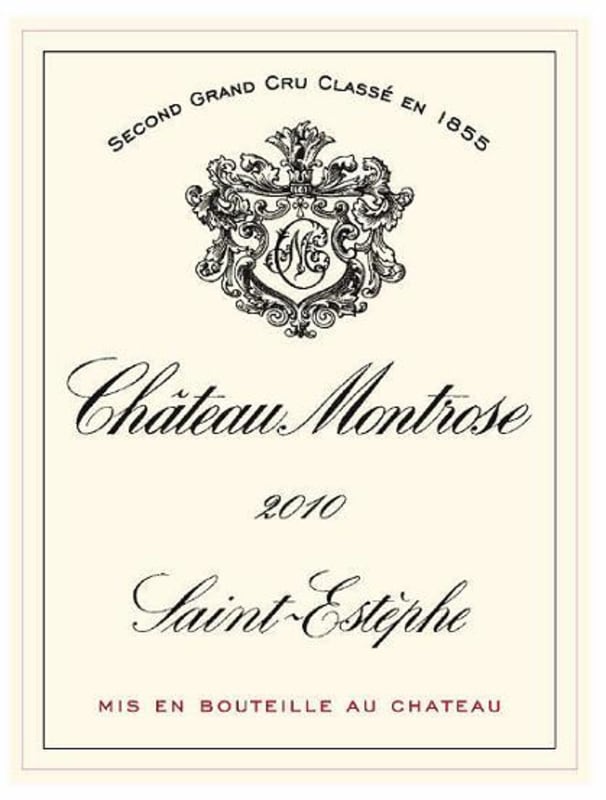
Tasted at the Montrose vertical in London, the 2010 Montrose was the youngest vintage by some 115 years, but it is undeniably one of the best. It is a blend of 53% Cabernet Sauvignon, 37% Merlot, 9% Cabernet Franc and 1% Petit Verdot picked from 27 September until 15 October. Deep, almost opaque in color, it has a tightly wound, arresting nose of blackberry, bilberry, crushed violets and graphite all with quite brilliant delineation. The palate is medium rather than full-bodied, laden with plenty of fruit, grippy like many 2010s with a structured, masculine and tannic finish that wards you away for another 10-15 years. However, it is still possible to admire the purity and delineation of this long-term Montrose, a wine that comes with a compulsory cellaring. Patience will be handsomely rewarded. How long can you wait? Tasted June 2016.
-
Decanter
And on to the tighter, more intellectual vintage of the two sparring partners of 2009 and 2010. You can feel the quality, the intensity, the more cerebral aspect of 2010 where the tannins are matched step for step by acidity and fruit. A wonderful wine, it will run and run and even now it floats somewhere on your palate, keeping itself hidden from view. If you want to understand why acidity can be a good thing, get to know Montrose 2010. There is an abundance of autumnal black fruit, certainly, even touches of bitter dark chocolate and dark pepper spicing, but this is going to unfurl at its own pace.
-
James Suckling
A perfumed and pure Montrose, with lots of currants, berries and spices that evolve to chocolate and light coffee. Full body, with super racy tannins and bright and clean finish. Very fine and structured. A balance and freshness to it all as well as beautiful form and tension.
-
Wine Enthusiast
This is such an elegant wine that has all the structure of the vintage. Surrounding the tannins, the wine is sweet and ripe, with smokiness from the wood. It's powerful, elegant and sophisticated with a strong sense of poise. The tannins promise long-term aging. Cellar Selection.
-
Wine Spectator
Rock solid, displaying a dense core of plum, steeped currant and braised fig fruit, with racy charcoal and ganache notes. Intensely chalky, offering flesh and refinement to match the bracing minerality, this shows hints of grilled savory, iron, warm paving stone and bitter orange on the riveting finish. Should age very slowly. Best from 2019 through 2038.
-
Wilfred Wong of Wine.com
One of greatest kept secrets amongst the classifieds, the 2010 Ch Montrose is a wine destined to be one of all time greats; very concentrated and long, yet pure and un-compromised by the winemaking team. Plenty of power and thickness, yet refined in its red fruit and minerality. Look for this wine to rest well in the cellar and grow into an incredible wine for the dinner table. (Best Served: 2024-2040)


One of the world’s most classic and popular styles of red wine, Bordeaux-inspired blends have spread from their homeland in France to nearly every corner of the New World. Typically based on either Cabernet Sauvignon or Merlot and supported by Cabernet Franc, Malbec and Petit Verdot, the best of these are densely hued, fragrant, full of fruit and boast a structure that begs for cellar time. Somm Secret—Blends from Bordeaux are generally earthier compared to those from the New World, which tend to be fruit-dominant.

Deeply colored, concentrated, and distinctive, St. Estephe is the go-to for great, age-worthy and reliable Bordeaux reds. Separated from Pauillac merely by a stream, St. Estephe is the farthest northwest of the highest classed villages of the Haut Medoc and is therefore subject to the most intense maritime influence of the Atlantic.
St. Estephe soils are rich in gravel like all of the best sites of the Haut Medoc but here the formation of gravel over clay creates a cooler atmosphere for its vines compared to those in the villages farther downstream. This results in delayed ripening and wines with higher acidity compared to the other villages.
While they can seem a bit austere when young, St. Estephe reds prove to live very long in the cellar. Traitionally dominated by Cabernet Sauvignon, many producers now add a significant proportion of Merlot to the blend, which will soften any sharp edges of the more tannic, Cabernet.
The St. Estephe village contains two second growths, Chateau Montrose and Cos d’Estournel.