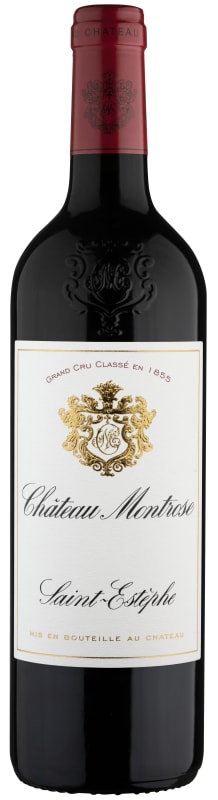


Winemaker Notes
#78 Jeb Dunnuck Top 100 of 2025
Blend: 66% Cabernet Sauvignon, 25% Merlot, 8% Cabernet Franc, 1% Petit Verdot
Professional Ratings
-
Jeb Dunnuck
One of the greats in the vintage, the 2022 Château Montrose is deep ruby/purple-hued and has a massive perfume of sweet crème de cassis, sappy tobacco, and freshly sharpened pencils. With incredible purity and precision in its aromatics, it hits the palate with full-bodied richness, a layered, powerful, yet still somehow elegant mouthfeel, ultra-fine tannins, and a great finish. Based on a classic blend of 65% Cabernet Sauvignon, 25% Merlot, 8% Cabernet Franc, and the rest Petit Verdot, it spent 18 months in 60% new French oak. As I wrote during En Primeur, it has the essence of a Montrose-like character.
-
Robert Parker's Wine Advocate
2022 Montrose was so compelling that assigning it a bracketed score seemed a mere formality, and so it has proven. Unwinding in the glass with a deep and brooding bouquet of cassis, wild blueberries, violets, pencil shavings and burning embers, it's full-bodied, deep and dense, somehow marrying all the tannic authority that has long been such a signature of Montrose with a suavity and purity that represents the quintessence of contemporary Bordeaux. The broad, palate-staining finish lasts for more than a minute. This is a profound young wine that readers aren't going to want to miss.
-
Vinous
The 2022 Montrose is insanely beautiful. That much is obvious. When it might be ready to drink is another question. In recent years, Montrose has acquired notable finesse in its tannins, so that is not an issue. But the 2022 is packed with tremendous density and concentration that will need time to soften. Blackberry, graphite, licorice, lavender and chocolate stain the palate in a stunning, riveting wine of the very highest level.
-
James Suckling
Great depth in the nose, taking you into its core of blackcurrants, pencil shavings, graphite, tar, inkpot and cassis. Full-bodied and very tight, this flexes its polished muscles, showing form and tension. Compacted. From organically grown grapes. 66% cabernet sauvignon, 25% merlot, 8% cabernet franc and 1% petit verdot.
-
Decanter
A gorgeous richness straight away, you can feel the intensity and concentration but the texture is so sleek, almost silky yet weighty, juicy and intense. Supple but firm with crushed stones, liquorice, tobacco, dark chocolate, plums and blackcurrants. Tannins are firm and at the fore, but cool and crisp with bite and wet stone elements give an instant minerality. The fruit almost takes a back seat, ripe and black in nature, but quieter than the other elements and overall frame. Juicy and succulent, an appealing shot of acidity initially, mouthwatering and vibrant, then the chalky tannins come in and give this a sense of seriousness. This carries the strength of the vintage well, focused and precise with detail and a sense of energy that is so impactful.
Barrel Sample: 97 -
Wine Spectator
This is laden with gently steeped black currant, black cherry and blackberry fruit inlaid with flashes of licorice snap, singed alder, chestnut and gunpowder tea. A flash of lilac skirts the edges, adding subtle energy and lift. The long finish offers an alluring feel, with an echo of warm earth lingering amid the fruit. Cabernet Sauvignon, Merlot, Cabernet Franc and Petit Verdot.


One of the world’s most classic and popular styles of red wine, Bordeaux-inspired blends have spread from their homeland in France to nearly every corner of the New World. Typically based on either Cabernet Sauvignon or Merlot and supported by Cabernet Franc, Malbec and Petit Verdot, the best of these are densely hued, fragrant, full of fruit and boast a structure that begs for cellar time. Somm Secret—Blends from Bordeaux are generally earthier compared to those from the New World, which tend to be fruit-dominant.

Deeply colored, concentrated, and distinctive, St. Estephe is the go-to for great, age-worthy and reliable Bordeaux reds. Separated from Pauillac merely by a stream, St. Estephe is the farthest northwest of the highest classed villages of the Haut Medoc and is therefore subject to the most intense maritime influence of the Atlantic.
St. Estephe soils are rich in gravel like all of the best sites of the Haut Medoc but here the formation of gravel over clay creates a cooler atmosphere for its vines compared to those in the villages farther downstream. This results in delayed ripening and wines with higher acidity compared to the other villages.
While they can seem a bit austere when young, St. Estephe reds prove to live very long in the cellar. Traitionally dominated by Cabernet Sauvignon, many producers now add a significant proportion of Merlot to the blend, which will soften any sharp edges of the more tannic, Cabernet.
The St. Estephe village contains two second growths, Chateau Montrose and Cos d’Estournel.