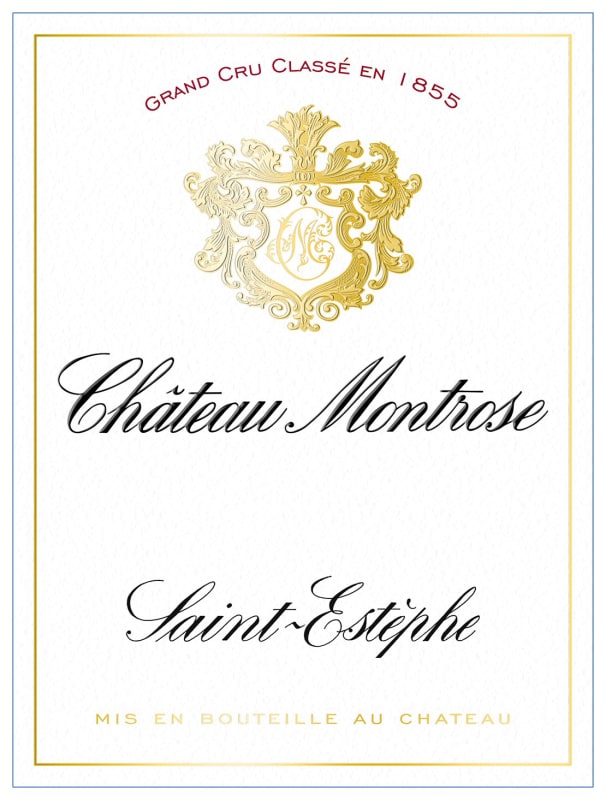

Winemaker Notes
The result of rigorous selection at each stage of production, in both the vineyard and the winery, this great, predominantly Cabernet Sauvignon wine is typical of the Saint-Estèphe appellation. Structured and tannic but with all the elegance and refinement of a Grand Cru Classé, with time it develops a delicate and complex bouquet.
Blend: 71% Cabernet Sauvignon, 23% Merlot, 6% Cabernet Franc, 1% Petit Verdot
Professional Ratings
-
Robert Parker's Wine Advocate
Surpassing the 2019 and rivaling the 2016 as this estate's finest vintage of the last few decades, the 2020 Montrose is a monument in the making. Wafting from the glass with aromas of violets, dark berries, licorice, loamy soil, black truffle and subtle spices, it's full-bodied, deep and layered, with a seamless, elegantly muscular profile, terrific purity and energy, beautifully powdery tannins and a long, resonant finish. It checks in at 13.7% alcohol, the same as the superb 2009, but it is even deeper, more vibrant and more complex than the 2009.
-
James Suckling
The nose is really fantastic with lead pencil shavings, iron shavings, blackcurrants and lavender. Full- to medium-bodied with ultra-fine tannins that run the length of the wine. Wonderful persistence and personality. Juicy and savory finish. Always classy and sophisticated at the end.
-
Decanter
Scented and perfumed on the nose with a delicate charm. Striking, full, round, juicy and crisp - this has bite and a sense of strictness in the frame that keeps things relatively narrow at this point but comes with excellent definition of elements. Great classicism with lots of freshness. Really very seductive, the black and blue fruit, graphite and touch of smoke grow and expand with richness and intensity but staying friendly at the same time thanks to the soft sweetness and juicy acidity. I just love the interplay between being serious and generous, structured but racy, intense yet precise. Such purity, and focus. Energetic and pent up, this is raring to go to show off its beauty but just being held back. Effortless, complex and compelling. I loved it a tiny bit less than the 2019 but it’s still one of the best in 2020.
-
Jeb Dunnuck
The Grand Vin 2020 Chateau Montrose is brilliant and unquestionably in the lineup of the truly greats from this chateau, including the 1989, 1990, 2009, 2010, 2015, 2018, and 2019. With an IPT of 80 and a natural alcohol of 13.4%, its deep, saturated purple hue is followed by quintessential Saint-Estephe notes of pure cassis, graphite, tobacco leaf, acacia flowers, and loamy earth. Full-bodied, concentrated, and powerful, it nevertheless stays incredibly pure, elegant, and seamless, with perfectly ripe tannins. A blend of 71% Cabernet Sauvignon, 23% Merlot, 5% Cabernet Franc, and the rest Petit Verdot, is shines even today for its purity and balance, and it should be in the early stages of its prime drink window within a decade.
-
Wine Enthusiast
While the wine is firm and with powerful tannins it has delicious fruitiness that is more forward than in many vintages of the wine. The fine black currant flavors are underlined by acidity while the Cabernet Sauvignon gives a fine, firm structure to this very direct wine. Barrel Sample: 95-97
-
Wine Spectator
Gorgeously rendered for the vintage, with a well-endowed core of loganberry, mulberry and cassis flavors that roll through and are laced with a cast iron hint, while tobacco, warm stone and black tea accents swirl in the background. The long, authoritative finish steadily melds the fruit with the cast iron edge. Cabernet Sauvignon, Merlot, Cabernet Franc and Petit Verdot.


One of the world’s most classic and popular styles of red wine, Bordeaux-inspired blends have spread from their homeland in France to nearly every corner of the New World. Typically based on either Cabernet Sauvignon or Merlot and supported by Cabernet Franc, Malbec and Petit Verdot, the best of these are densely hued, fragrant, full of fruit and boast a structure that begs for cellar time. Somm Secret—Blends from Bordeaux are generally earthier compared to those from the New World, which tend to be fruit-dominant.

Deeply colored, concentrated, and distinctive, St. Estephe is the go-to for great, age-worthy and reliable Bordeaux reds. Separated from Pauillac merely by a stream, St. Estephe is the farthest northwest of the highest classed villages of the Haut Medoc and is therefore subject to the most intense maritime influence of the Atlantic.
St. Estephe soils are rich in gravel like all of the best sites of the Haut Medoc but here the formation of gravel over clay creates a cooler atmosphere for its vines compared to those in the villages farther downstream. This results in delayed ripening and wines with higher acidity compared to the other villages.
While they can seem a bit austere when young, St. Estephe reds prove to live very long in the cellar. Traitionally dominated by Cabernet Sauvignon, many producers now add a significant proportion of Merlot to the blend, which will soften any sharp edges of the more tannic, Cabernet.
The St. Estephe village contains two second growths, Chateau Montrose and Cos d’Estournel.