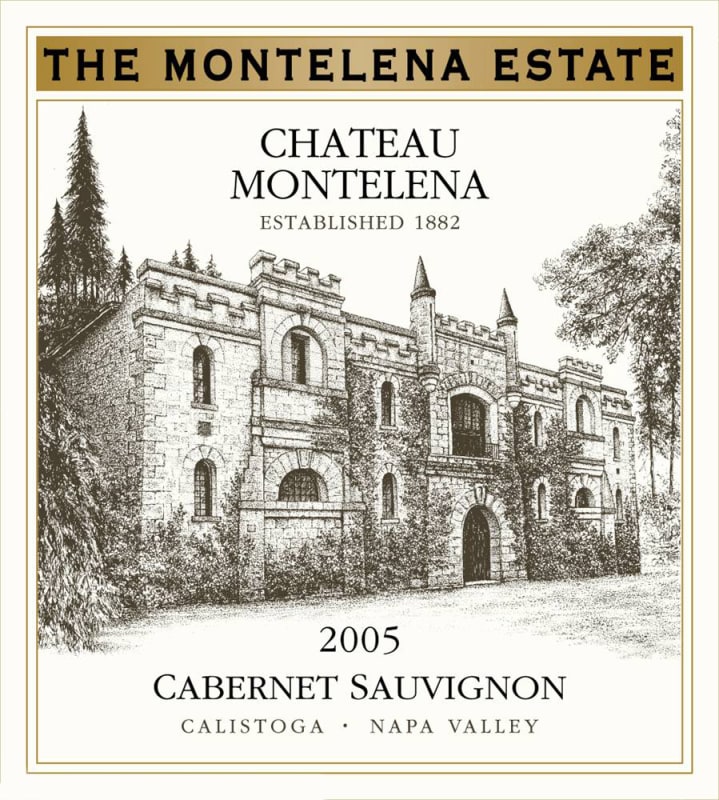

Winemaker Notes
Professional Ratings
-
Decanter
A long, cool growing season, with harvest from the end of September to the end of October, delivered fantastic flavour development. More Bordeaux-like than most in the tasting, it was highly aromatic, with a lush cassis, violet and graphite nose, and intense flavours of dark plum cherry fruit, cocoa, and notes of espresso. It’s expressive right now, yet the powerful tannins say it’s got years to go. One for collectors.
-
Jeb Dunnuck
The 2005 Cabernet Sauvignon Estate is still rich and powerful, with Bordeaux-like notes of blackcurrants, tobacco leaf, damp earth, cedar, and dried herbs. Deep, rich, and beautifully textured, with balance and length, it has silky tannins, a layered, clean texture and a great finish. It's another balanced, oh, so classic wine.
-
Robert Parker's Wine Advocate
Deep garnet in color, the 2005 Cabernet Sauvignon Estate leaps from the glass with notes of crushed blackberries, black cherries and Bing cherries with hints of raspberry leaves, bay leaves and underbrush plus a waft of pencil shavings. Medium-bodied, nicely poised, very fresh and beautifully elegant, it has a solid frame of very fine-grained tannins and a very long, berry-laced finish. Still incredibly youthful.
-
Wine Enthusiast
Quite rich and exotic, with complex, appealing flavors of cocoa puff, mocha, buttered cinnamon toast, blackberry granola and smoky cedar. This richness finishes drily, but the wine is very tannic, giving it a lock-down astringency.
Cellar Selection


A noble variety bestowed with both power and concentration, Cabernet Sauvignon enjoys success all over the globe, its best examples showing potential to age beautifully for decades. Cabernet Sauvignon flourishes in Bordeaux's Medoc where it is often blended with Merlot and smaller amounts of some combination of Cabernet Franc, Malbecand Petit Verdot. In the Napa Valley, ‘Cab’ is responsible for some of the world’s most prestigious, age-worthy and sought-after “cult” wines. Somm Secret—DNA profiling in 1997 revealed that Cabernet Sauvignon was born from a spontaneous crossing of Cabernet Franc and Sauvignon Blanc in 17th century southwest France.

One of Napa Valley’s oldest wine growing subregions but last to gain appellation status, Calistoga occupies the northernmost section of the valley. Beginning at the foot of Mount St. Helena, its vineyards stretch over steep canyons and roll out onto the valley floor. The soils in Calistoga are volcanic, which means they are heavy in minerals, low in organic matter and allow good drainage for vine roots, creating less green growth and more concentration of flavor within the grape berries.
Summer days are very hot but most nights cool down with moist ocean breezes sneaking in over the Mayacamas Mountains or from Knights Valley to its northwest.
Cabernet Sauvignon is the area’s star variety with Zinfandel coming in a strong second, though the latter commands far less price per tonnage so continues to be outshined by Cabernet in vineyard acreage, save for some important exceptions.