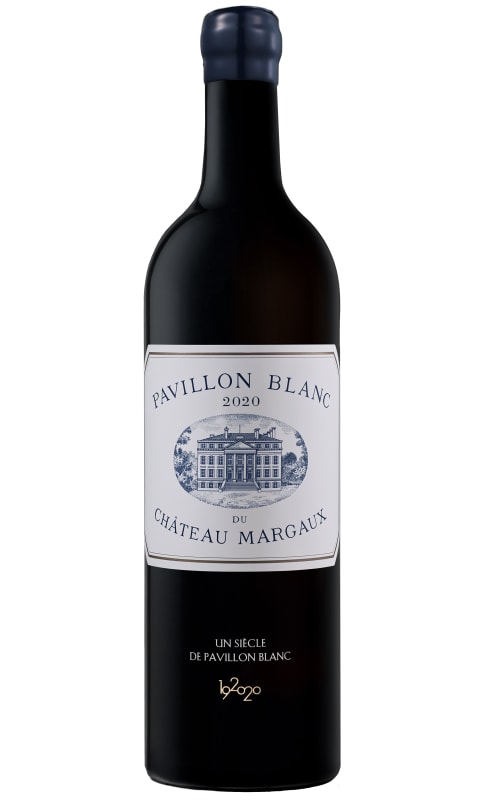


Winemaker Notes
The acidity of the grapes was the dominant factor in deciding when to harvest their white grapes. We began on August 24th and finished on September 1st. When we tasted the batches, it appeared that our decision was the right one, as the acidity contributes to giving the wine great aromatic freshness and a particular persistence. Pavillon Blanc 2020 is the result of a number of tastings during which the best batches were selected to make a subtle, pure and slender Pavillon Blanc.
As they did these tastings, they reflected with some emotion the fact that they are celebrating the centennial of the Pavillon Blanc du Château Margaux, which succeeded the Château Margaux Vin Blanc de Sauvignon, produced since the 18th century.
Professional Ratings
-
James Suckling
The clarity and focus of this white is phenomenal with honeysuckle, white peach, lavender, and melon aromas that follow through to a full body, yet it’s tight and focused with super fine phenolics that keep it together. Great balance between the opulence and freshness. It has great acidity. Incredible energy.
-
Decanter
Typical Sauvignon Blanc notes on the nose, elderflower, grass, green apple - really expressive and alive on the nose. Some lemon and lemongrass notes too with apricot. Seering acidity, lovely zesty freshness with lots of bitter orange and satsuma nuances. A creamy texture offsets the sharp fruit - this walks the line between richness and delicacy with freshness, a touch of sweetness and mouthwatering acidity giving the liveliness. Crisp and clean finish - this feels well worked with clear structure and salty minerality.
-
Jeb Dunnuck
I always love the white from this chateau. Their 2020 Chateau Margaux Pavillon Blanc (100% Sauvignon Blanc) has a vibrant, racy, yet still concentrated style to go with classic aromatics of bright citrus, grapefruit, honeyed mint, and a kiss of chalky minerality. This medium-bodied, bright, balanced white will benefit from just 2-3 years of bottle age and keep for over a decade.
-
Robert Parker's Wine Advocate
The 2020 Pavillon Blanc bursts with aromas of lemongrass, crisp green apple, white flowers and fresh mint, followed by a medium to full-bodied, ample and fleshy palate that's pure, racy and charming, exhibiting a somewhat more giving profile than the more chiseled 2019.


Sometimes light and crisp, other times rich and creamy, Bordeaux White Blends typically consist of Sauvignon Blanc and Semillon. Often, a small amount of Muscadelle or Sauvignon Gris is included for added intrigue. Popularized in Bordeaux, the blend is often mimicked throughout the New World. Somm Secret—Sauternes and Barsac are usually reserved for dessert, but they can be served before, during or after a meal. Try these sweet wines as an aperitif with jamón ibérico, oysters with a spicy mignonette or during dinner alongside hearty Alsatian sausage.

One of the most important wine regions of the world, Bordeaux is a powerhouse producer of wines of all colors, sweetness levels, and price points. Separated from the Atlantic Ocean by a coastal pine forest, this relatively flat region has a mild maritime climate, marked by cool wet winters and warm summers. Annual weather differences create significant vintage variations, making Bordeaux an exciting French wine region to follow.
The Gironde estuary, a defining feature of Bordeaux, separates most of the region into the Left Bank and the Right Bank. Farther inland, where the Gironde splits into the Garonne and Dordogne Rivers, the bucolic, rolling hills of the area in between, called Entre-Deux-Mers, is a source of great quality, approachable reds and whites.
The Left Bank, dominated by Cabernet Sauvignon, contains the Médoc, Graves, and Sauternes, as well as the region’s most famous chateaux. Merlot is important here as the perfect blending grape for Cabernet Sauvignon adding plush fruit and softening Cabernet's sometimes hefty tannins. Cabernet Franc, Petit Verdot and Malbec may also be used in the Left Bank Bordeaux wine blends.
Merlot is the principal Bordeaux wine variety of the Right Bank; Cabernet Franc adds structure and complexity to Merlot, creating wines that are concentrated, supple, and more imminently ready for drinking, compared with their Left Bank counterparts. Key appellations of the Right Bank include St. Emilion and Pomerol.
Dry and sweet Bordeaux white wines are produced throughout the region from Sauvignon Blanc, Sémillon, and sometimes Muscadelle or Sauvignon Gris. Some of the finest dry whites can be found in the Graves sub-appellation of Pessac-Léognan, while Sauternes is undisputedly the gold standard for sweet wines. Small amounts of rosé and sparkling Bordeaux wines are made in the region as well.