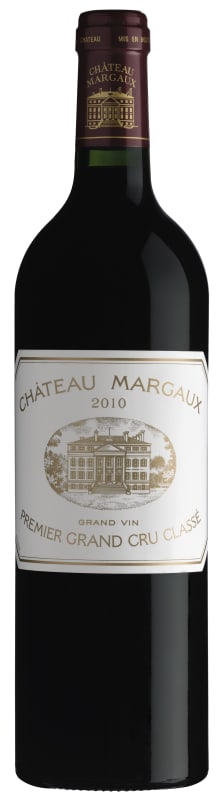


Winemaker Notes
Professional Ratings
-
James Suckling
This was phenomenal from barrel and remains so. The aromas are spellbinding. It smells like a bouquet of pink roses and then goes to currants, berries and citrus. Full body, with wonderfully refined tannins. It starts discretely and then grows to different levels and dimensions like a slow but big high tide. The texture is so beautiful. Try it in 2020 or beyond.
-
Jeb Dunnuck
An undeniable star in Margaux – and from a vintage described as a “dream year” by Philippe Bascaules – the 2010 Château Margaux is a blend of 90% Cabernet Sauvignon, 7% Merlot, and small amounts of Cabernet Franc and Petit Verdot, raised in new barrels. This deep purple-hued beauty offers up a sensational perfume of smoky tobacco, red and black fruits, and graphite. Full-bodied and powerful, it boasts ripe, polished tannins and incredible depth on the palate. While it's not yet in its prime drinking window, it has everything you could ask for and will have an incredible evolution.
-
Robert Parker's Wine Advocate
Deep garnet in color, the 2010 Château Margaux features notions of minted blackcurrants, new leather and Black Forest cake with nuances of sautéed herbs, tar, underbrush and wild fungi plus a waft of cedar. Full-bodied, the palate has a rock-solid structure of firm, grainy tannins and bold freshness supporting the taut, muscular fruit, finishing long and earthy. Rating: 98+
-
Wine Enthusiast
A great wine that is just starting out. The high proportion of Cabernet Sauvignon in the blend gives the structured, black currant character. Dark chocolate and layers of wood are forward, revealing how young the wine is. And then the fruit, so rich and powerful, brings deliciousness to the firm, dense structure. Cellar Selection.
-
Wine Spectator
Liquid velvet, with stunning length and a caressing mouthfeel, as layers of creamed plum, blackberry coulis and steeped black currant fruit glides along, seamlessly intertwined with black tea, mulled blood orange, incense and lilac. Hints of mesquite and alder hang subtly in the background, and the structure, evident and massive, has melded wonderfully.


One of the world’s most classic and popular styles of red wine, Bordeaux-inspired blends have spread from their homeland in France to nearly every corner of the New World. Typically based on either Cabernet Sauvignon or Merlot and supported by Cabernet Franc, Malbec and Petit Verdot, the best of these are densely hued, fragrant, full of fruit and boast a structure that begs for cellar time. Somm Secret—Blends from Bordeaux are generally earthier compared to those from the New World, which tend to be fruit-dominant.

Silky, seductive and polished are the words that characterize the best wines from Margaux, the most inland appellation of the Médoc on the Left Bank of Bordeaux.
Margaux’s gravel soils are the thinnest of the Médoc, making them most penetrable by vine roots—some reaching down over 23 feet for water. The best sites are said to be on gentle outcrops, or croupes, where more gravel facilitates good drainage.
The Left Bank of Bordeaux subscribes to an arguably outdated method of classification but it is nonetheless important in regards to history of the area. In 1855 the finest chateaux were deemed on the basis of reputation and trading price—at that time. In 1855, Chateau Margaux achieved first growth status, yet it has been Chateau Palmer (officially third growth from the 1855 classification) that has consistently outperformed others throughout the 20th century.
Chateau Margaux in top vintages is capable of producing red Cabernet Sauvignon based wines described as pure, intense, spell-binding, refined and profound with flavors and aromas of black currant, violets, roses, orange peel, black tea and incense.
Other top producers worthy of noting include Chateau Rauzan-Ségla, Lascombes, Brane-Cantenac, and d’Issan, among others.
The best wines of Margaux combine a deep ruby color with a polished structure, concentration and an unrivaled elegance.