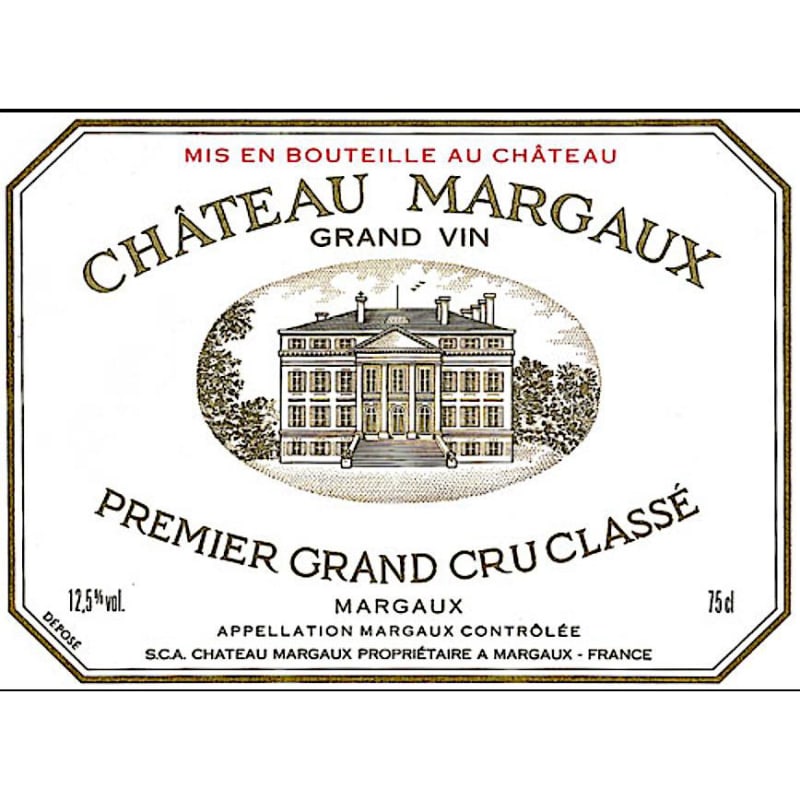

Winemaker Notes
Professional Ratings
-
Jeb Dunnuck
The grand vin is the 2015 Château Margaux and it’s as good a wine as I’ve ever tasted. Coming from just over one-third of the total production and a blend of 87% Cabernet Sauvignon, 8% Merlot, 3% Cabernet Franc and the balance Petit Verdot, brought up in 100% new French oak, its deep ruby/purple-tinged color is followed by a thrilling bouquet of crème de cassis, toasted spice, hints of toasty oak, and cedar wood. Incredibly elegant and finesse-driven, yet packed with fruit, depth, richness, and structure, it has as much class as you can fit inside a glass. While the vintage provides plenty of upfront charm, this is a wine to cellar for at least a decade, and enjoy over the following 40+ years.
-
James Suckling
This is a haunting young wine that shows you a subtle and hidden strength on the nose with rose petals, currants, currant leaves, stones and plums. Wonderful ripeness yet brightness, too. Takes your breath away with the intensity and structure. Full-bodied, powerful and muscular, yet there's an agile undertone to the whole thing. Compact and condensed. A new legend for Margaux. The 1961 that didn’t happen. Try in 2024.
-
Wine Enthusiast
Predominantly Cabernet Sauvignon, this wine shows a wonderful black-currant purity on the palate, along with intense, vibrant acidity. The background is all tannin, which speaks to its aging potential. This wine is the last vintage produced by Paul Pontallier, who was general manager from 1990 until his death in 2016. It's a memorable wine and one for aging. Drink from 2027.
Cellar Selection -
Robert Parker's Wine Advocate
The 2015 Chateau Margaux is a blend of 87% Cabernet Sauvignon, 8% Merlot, 3% Cabernet Franc and 2% Petit Verdot. Medium garnet-purple colored, the nose features oh-so-seductive notes of warm blackberries, cassis and black forest cake with touches of forest floor, sandalwood, anise and cigar boxes plus a waft of lavender. Medium to full-bodied, it delivers taut, muscular, densely packed black fruits and exotic spice flavor layers supported by a very firm backbone of grainy tannins with oodles of freshness and a long, savory finish. It is tightly knit and a little reticent at this very youthful stage; afford it at least 15 years in the cellar, and it will open out into a classic Chateau Margaux of incredible proportions. Readers may be interested to know that this wine is beautifully packaged in a special commemorative bottle honoring winemaker Paul Pontellier, who passed away in 2016. The gold-etched black bottle bears the message, “Hommage à Paul Pontellier” at the bottom. This 2015 is an achingly beautiful swan song from an incredibly gifted winemaker, taken from us too soon. In my view, this alone makes this vintage more than worth the investment for the many lovers of history in a bottle.
-
Wine Spectator
Sublime, with captivating sandalwood, black tea and mesquite aromas that infuse the core of gently steeped red and black currant and raspberry fruit. The structure is seamless and thoroughly embedded throughout, letting warm tar, lilac, juniper and iron notes display themselves at will through the finish. The finish is about as long as it gets, with echoes of fruit and warm earth that should prove haunting when this reaches full maturity. Best from 2030 through 2050.
-
Decanter
My joint top wine (with Ch Mouton Rothschild) of the vintage. Pure charm: the palate is discreet at the start and then goes on forever , always with the château’s silky texture and fine, firmly structured tannins. This will become a very great wine. Barrel Sample.


One of the world’s most classic and popular styles of red wine, Bordeaux-inspired blends have spread from their homeland in France to nearly every corner of the New World. Typically based on either Cabernet Sauvignon or Merlot and supported by Cabernet Franc, Malbec and Petit Verdot, the best of these are densely hued, fragrant, full of fruit and boast a structure that begs for cellar time. Somm Secret—Blends from Bordeaux are generally earthier compared to those from the New World, which tend to be fruit-dominant.

Silky, seductive and polished are the words that characterize the best wines from Margaux, the most inland appellation of the Médoc on the Left Bank of Bordeaux.
Margaux’s gravel soils are the thinnest of the Médoc, making them most penetrable by vine roots—some reaching down over 23 feet for water. The best sites are said to be on gentle outcrops, or croupes, where more gravel facilitates good drainage.
The Left Bank of Bordeaux subscribes to an arguably outdated method of classification but it is nonetheless important in regards to history of the area. In 1855 the finest chateaux were deemed on the basis of reputation and trading price—at that time. In 1855, Chateau Margaux achieved first growth status, yet it has been Chateau Palmer (officially third growth from the 1855 classification) that has consistently outperformed others throughout the 20th century.
Chateau Margaux in top vintages is capable of producing red Cabernet Sauvignon based wines described as pure, intense, spell-binding, refined and profound with flavors and aromas of black currant, violets, roses, orange peel, black tea and incense.
Other top producers worthy of noting include Chateau Rauzan-Ségla, Lascombes, Brane-Cantenac, and d’Issan, among others.
The best wines of Margaux combine a deep ruby color with a polished structure, concentration and an unrivaled elegance.