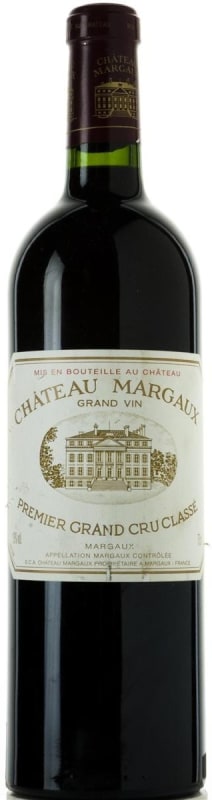


Winemaker Notes
Professional Ratings
-
Wine Spectator
This still broods seriously, with dark plum, currant and blackberry fruit, studded with charcoal, singed tobacco and cedar notes and backed by a serious grip of roasted earth. The gorgeously long finish is driven by old-school tannins, with the smoldering edge going on and on. A brick house of a Margaux, with more charcoal than graphite, more austerity than elegance and more power than refinement.
-
Robert Parker's Wine Advocate
Bottled very late (November, 1997), the 1995 has continued to flesh out, developing into one of the great classics made under the Mentzelopoulos regime. The color is opaque ruby/purple. The nose offers aromas of licorice and sweet smoky new oak intermixed with jammy black fruits, licorice, and minerals. The wine is medium to full-bodied, with extraordinary richness, fabulous equilibrium, and hefty tannin in the finish. In spite of its large size and youthfulness, this wine is user-friendly and accessible. This is a thrilling Margaux that will always be softer and more evolved than its broader-shouldered sibling, the 1996. How fascinating it will be to follow the evolution of both of these vintages over the next half century. Anticipated maturity: 2005-2040.
-
Vinous
The 1995 Château Margaux is a vintage that I have not tasted for several years. This bottle showed well, even if it was pipped to the post by the 1995 Ducru-Beaucaillou on the night. It has a youthful bouquet with more red fruit than previous bottles, infused with freshly rolled tobacco and pencil box, crushed violet and hints of rose petal. The palate is armed with filigree tannins that frame the pure black fruit, hints of blue fruit surfacing towards the second half. Certainly its velvety texture instantly seduces and the poise on the finish is exquisite. This clearly has plenty in the tank, as it has not rushed headlong into its secondary phase. Tasted at the "Vintage Pairs" dinner at Club Bâtard in Hong Kong.


One of the world’s most classic and popular styles of red wine, Bordeaux-inspired blends have spread from their homeland in France to nearly every corner of the New World. Typically based on either Cabernet Sauvignon or Merlot and supported by Cabernet Franc, Malbec and Petit Verdot, the best of these are densely hued, fragrant, full of fruit and boast a structure that begs for cellar time. Somm Secret—Blends from Bordeaux are generally earthier compared to those from the New World, which tend to be fruit-dominant.

Silky, seductive and polished are the words that characterize the best wines from Margaux, the most inland appellation of the Médoc on the Left Bank of Bordeaux.
Margaux’s gravel soils are the thinnest of the Médoc, making them most penetrable by vine roots—some reaching down over 23 feet for water. The best sites are said to be on gentle outcrops, or croupes, where more gravel facilitates good drainage.
The Left Bank of Bordeaux subscribes to an arguably outdated method of classification but it is nonetheless important in regards to history of the area. In 1855 the finest chateaux were deemed on the basis of reputation and trading price—at that time. In 1855, Chateau Margaux achieved first growth status, yet it has been Chateau Palmer (officially third growth from the 1855 classification) that has consistently outperformed others throughout the 20th century.
Chateau Margaux in top vintages is capable of producing red Cabernet Sauvignon based wines described as pure, intense, spell-binding, refined and profound with flavors and aromas of black currant, violets, roses, orange peel, black tea and incense.
Other top producers worthy of noting include Chateau Rauzan-Ségla, Lascombes, Brane-Cantenac, and d’Issan, among others.
The best wines of Margaux combine a deep ruby color with a polished structure, concentration and an unrivaled elegance.