


Winemaker Notes
Born in 1990, "Blanc de Lynch-Bages" is the fruit of joining the three white varietals of the Bordeaux appellation, planted on some eight parcels of the historical Lynch-Bages terroir.
Since 2006, a comprehensive selection project in the vineyards has made it possible to strengthen its vitality and promote its fruity and floral notes. The intra-parcel selection at harvest time and the prevention of the oxidation of the berries before pressing contribute to safeguarding the flavors and to the harmonious aging of the wines.
Adding to with the fresh fruit flavors of Sauvignon Blanc, including cassis buds, grapefruit and exotic fruit, flavors of dried or candied fruit and white flowers of Sémillon and Muscadelle mingle. The fermentation and aging in barrels, used precisely, give the wine fine woody and vanilla notes, which contribute to their aromatic complexity.
In its youth, Blanc de Lynch-Bages is lively and explosive. Sauvignon Blanc, as it comes into full expression, gradually gives way to aromas of dried apricots, candied fruit and nuts, more specific to Sémillon. Throughout its life it maintains an exhilarating freshness and a long finish, typical of the great white wines of Bordeaux.
Professional Ratings
-
Jeb Dunnuck
I was blown away by the quality of the 2021 Château Lynch-Bages Blanc, which ranks with the top whites in the vintage. Offering awesome white grapefruit, floral, mint, and chalky notes, it hits the palate with medium-bodied richness, a vivid, pure, chiseled mouthfeel, and a great finish. I'd be a buyer. Barrel Sample : 94-96
-
James Suckling
Really fresh and vivid with sliced grapefruit, lemon, green apple and white peach. Apricot, too. Medium to full body with phenolic texture and a long, vivid finish. 70% sauvignon, 20% semillon and 10% muscadelle. Drink or hold.
-
Decanter
Less of the citrus flavours of recent vintages and more apricot and nectarine stone fruits, taking its cue from Sémillon and Muscadelle. Relaxed and effortless while still maintaining both lift and tension, with a saline wet stone lick on the finish. I tasted the 2019 on the same day, as it had just been bottled, and the 2020 is less of a classic Lynch Bages Blanc, but still utterly delicious, with clear weight and impression through the mid palate. 3.35pH. 50% new oak for six months. Fermentation below 20°C. A yield of 40hl/ha.
Barrel Sample:94 -
Robert Parker's Wine Advocate
Composed of 70% Sauvignon Blanc, 20% Sémillon and 10% Muscadelle, the 2020 Blanc de Lynch-Bages springs from the glass with vivacious notes of white peaches, fresh pineapple and pink grapefruit, plus touches of honeysuckle and mandarin peel. The medium-bodied palate is equally intense, featuring just enough acidity and bright, zesty sparks, finishing pleasantly savory.
Barrel Sample90-92 -
Wine Spectator
Features a zip of fleur de sel that runs from start to finish, adding extra cut and drive to an enticing set of lemon peel and gooseberry notes. Shows a subtle pith accent that adds length to the finish. Sauvignon Blanc, Semillon and Muscadelle. Drink now.
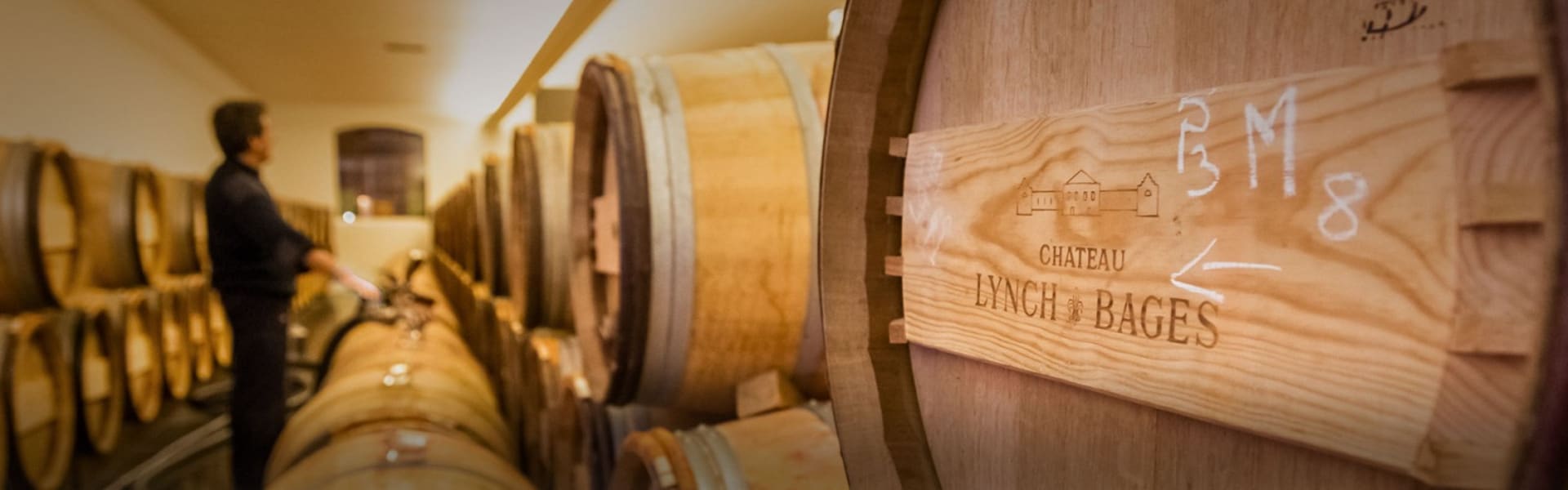


The grapes are all hand picked and then carefully sorted before crushing. A very strict selection is made prior to blending and the wine is traditionally aged in oak barrels before bottling.

Sometimes light and crisp, other times rich and creamy, Bordeaux White Blends typically consist of Sauvignon Blanc and Semillon. Often, a small amount of Muscadelle or Sauvignon Gris is included for added intrigue. Popularized in Bordeaux, the blend is often mimicked throughout the New World. Somm Secret—Sauternes and Barsac are usually reserved for dessert, but they can be served before, during or after a meal. Try these sweet wines as an aperitif with jamón ibérico, oysters with a spicy mignonette or during dinner alongside hearty Alsatian sausage.

One of the most important wine regions of the world, Bordeaux is a powerhouse producer of wines of all colors, sweetness levels, and price points. Separated from the Atlantic Ocean by a coastal pine forest, this relatively flat region has a mild maritime climate, marked by cool wet winters and warm summers. Annual weather differences create significant vintage variations, making Bordeaux an exciting French wine region to follow.
The Gironde estuary, a defining feature of Bordeaux, separates most of the region into the Left Bank and the Right Bank. Farther inland, where the Gironde splits into the Garonne and Dordogne Rivers, the bucolic, rolling hills of the area in between, called Entre-Deux-Mers, is a source of great quality, approachable reds and whites.
The Left Bank, dominated by Cabernet Sauvignon, contains the Médoc, Graves, and Sauternes, as well as the region’s most famous chateaux. Merlot is important here as the perfect blending grape for Cabernet Sauvignon adding plush fruit and softening Cabernet's sometimes hefty tannins. Cabernet Franc, Petit Verdot and Malbec may also be used in the Left Bank Bordeaux wine blends.
Merlot is the principal Bordeaux wine variety of the Right Bank; Cabernet Franc adds structure and complexity to Merlot, creating wines that are concentrated, supple, and more imminently ready for drinking, compared with their Left Bank counterparts. Key appellations of the Right Bank include St. Emilion and Pomerol.
Dry and sweet Bordeaux white wines are produced throughout the region from Sauvignon Blanc, Sémillon, and sometimes Muscadelle or Sauvignon Gris. Some of the finest dry whites can be found in the Graves sub-appellation of Pessac-Léognan, while Sauternes is undisputedly the gold standard for sweet wines. Small amounts of rosé and sparkling Bordeaux wines are made in the region as well.