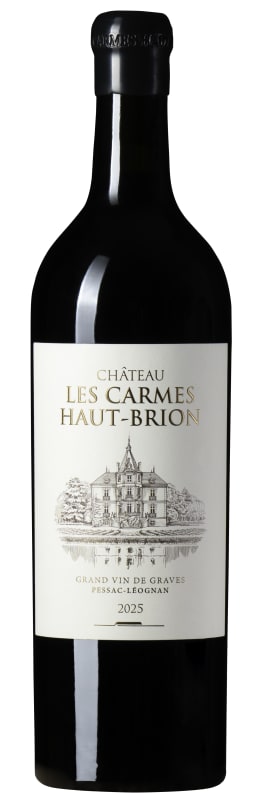


Winemaker Notes
Among the classic elegance of Pessac-Léognan, the Carmes top wine has carved out its own niche. Unprecedented proportions of Cabernet Franc offer a silky power which is then supported by the intensity of Cabernet Sauvignon. Within this structure, Merlot develops rounded and refined fruitiness: balance is the order of the day, ensuring a style that is complex and delicious in equal measures.
Blend: 50% Cabernet Franc, 30% Cabernet Sauvignon, 20% Merlot
Professional Ratings
-
James Suckling
The precision is so seductive and intellectual, with aromas of fresh flowers, iron, graphite, cedar, blood oranges and black fruit. It's medium-bodied with a compact palate of intense tannins that melt into the wine. Rather weightless in nature. It kicks in at the end with incredible intensity and focus. 13% alcohol. 65% whole cluster. 54% cabernet franc, 29% cabernet sauvignon and 17% merlot, mostly co-fermented.
Barrel Sample: 99-100 -
Jeb Dunnuck
Deeper-hued than the C des Carmes cuvée, with a gorgeous perfume of red, blue, and black fruits intermixed with graphite, leafy herbs, iris, and subtle floral, minty, and almost peppery nuances, the 2025 Château Carmes Haut-Brion is based on 54% Cabernet Franc, 29% Cabernet Sauvignon, and the rest Merlot, vinified with 65% whole clusters. On the palate, it's wonderfully textured and medium to full-bodied, with a round, layered, expansive mouthfeel and ultra-fine tannins. I love its overall balance, it has no hard edges, and while there's plenty of tannins here (IPT 82), they're perfectly integrated and polished. It checks in at 13% alcohol with a pH of 3.59, and this is just loaded with charm and character.
Barrel Sample: 96-98 -
Robert Parker's Wine Advocate
The 2025 Les Carmes Haut-Brion is a blend of 54% Cabernet Franc, 29% Cabernet Sauvignon and 17% Merlot, one of the highest proportions of Cabernet Franc at the estate and comparable to 2016. It was vinified with 65% whole clusters and matured in 70% new oak. It reveals a complex, harmonious bouquet of pomegranate, iris and peony, intertwined with cassis, mulberries and dark berries. Medium- to full-bodied, dense and structured, it’s deep and layered, its concentrated core of fruit framed by velvety structuring tannins, concluding with a long, mineral-inflected finish. Combining tension with an ethereal profile, it delivers remarkable clarity, freshness and elegance. While slightly more overtly structured at this stage than the prodigious 2022, it remains impeccably balanced.
Barrel Sample: 95-98 -
Vinous
The 2025 Les Carmes Haut-Brion is a huge, powerful wine that is going to need many years to come into its own. Dark red/purplish fruit, lavender, incense, melted road tar and licorice make a bold entrance. Fertility in the Merlots was low. As a result, the 2025 has the highest amount of Cabernet Franc and Sauvignon ever, 83% in total as opposed to the more typical 70% or so. Whole clusters, always a part of the approach here, are 65%. Time on skins was 45 days at 27°C (80.6°F) compared to the 35 days at 30°C (86°F) that is more typical. Readers will find an especially deep, potent Carmes, a wine that will need the better part of a decade to shed some of its considerable baby fat. It's a telling example of the vintage, with 1% less alcohol than in most recent years. Today the 2025 is a mere infant. It's another exceptional wine from Technical Director Guillaume Pouthier and his team. –Antonio Galloni
Barrel Sample: 96-98 -
Decanter
Extremely floral nose; peony, iris, rose, expressive and aromatic with black fruits too, liquorice, dark fruit, cedar, some black chocolate and coffee bitterness on the nose too. Smooth and supple, nicely weighted in the mouth, forward, grippy and bright with a soft chew - really quite polished and pristine. Seamlessly integrated with the acidity balancing the tannins and the ripe fruit with some mineral wet stone undercurrents and slight bitter liquorice and grapefruit skin on the finish. It’s a little serious, but certainly polished with a soft chew of strawberry and raspberry and stoney-edged tannins giving excellent terroir signature. Ripe, fresh, clean, fragrant, sleek and streamlined. It has a lovely style and lots of finesse from winemaker Guillaume Pouthier. Harvest 11-25 September, 60% whole bunch fermentation taking the alcohol down from 14.3% at picking to 13.5%. 3.62pH.
Barrel Sample: 97
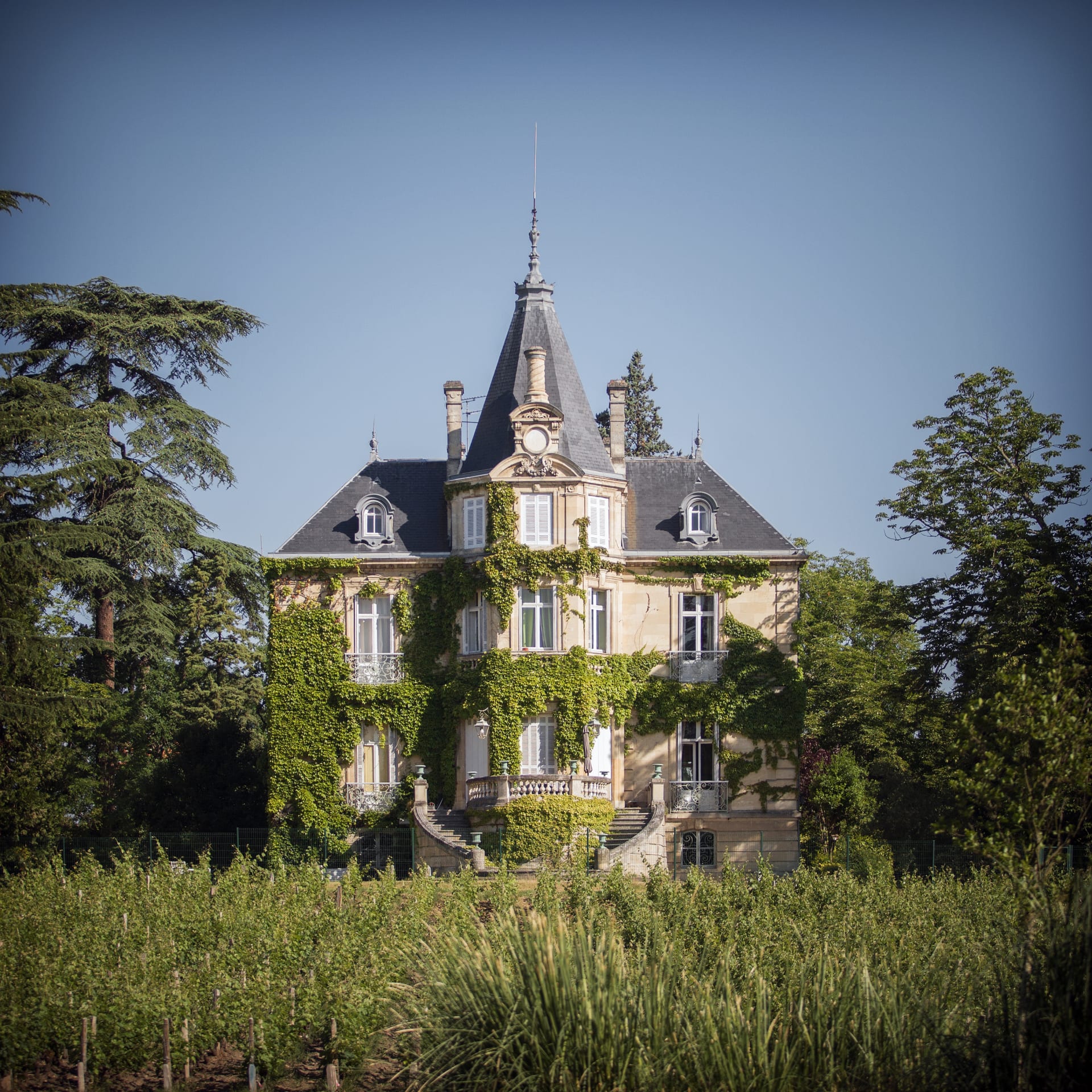



Château Les Carmes Haut-Brion is the only Bordeaux property located within the city of Bordeaux. Its tiny vineyard, the Clos des Carmes, is located in the heart of the city and dates back to the 16th century. In 1584, the Carmelite Reverend Fathers inherited the Crespiac mill, where they stayed for around two centuries. Then, in 1855, the Colin family became the new owners, and the estate subsequently came under the ownership of the Chantecaille family. In 2010, Patrice Pichet and his family acquired the estate, which a few merchants and négociants called the 'sleeping beauty of Bordeaux'. The Pichet family's arrival marked the beginning of a transformative chapter for this historic estate, with significant modernization and investment taking place at the château.
The renewal process began with the vineyard itself. Missing elements were replanted, slopes were corrected and the variety of grapes was updated to reinstate Cabernet Franc, which has been the main variety in the blend since 2013. Vine cultivation is also guided by an environmentally friendly approach, with horses used for all soil work. Here, nature is not constrained but revealed.
Then there are the people: Guillaume Pouthier, the new managing director, and Guillaume Deschepper, the technical director. Neither of them are from Bordeaux; they come from an iconic house in the Rhône Valley and have a new vision of what constitutes a great wine.
Finally, a new, state-of-the-art winery was constructed, designed by the renowned architects Philippe Starck and Luc Arsène-Henry.
The ambition was to elevate the estate to new heights while honoring its centuries-old heritage.
One of the most daring moves was the estate’s pioneering use of whole-cluster fermentation, a technique that had never before been employed in Bordeaux. This gave the wine a unique character and balance.
Over the last 10 years, the estate has undergone enormous progression and transformation, resulting in the production of wines of unparalleled character and depth. This has cemented the estate’s reputation as a beacon of innovation and tradition in the Bordeaux wine landscape and beyond.

One of the world’s most classic and popular styles of red wine, Bordeaux-inspired blends have spread from their homeland in France to nearly every corner of the New World. Typically based on either Cabernet Sauvignon or Merlot and supported by Cabernet Franc, Malbec and Petit Verdot, the best of these are densely hued, fragrant, full of fruit and boast a structure that begs for cellar time. Somm Secret—Blends from Bordeaux are generally earthier compared to those from the New World, which tend to be fruit-dominant.

Recognized for its superior reds as well as whites, Pessac-Léognan on the Left Bank claims classified growths for both—making it quite unique in comparison to its neighboring Médoc properties.
Pessac’s Chateau Haut-Brion, the only first growth located outside of the Médoc, is said to have been the first to conceptualize fine red wine in Bordeaux back in the late 1600s. The estate, along with its high-esteemed neighbors, La Mission Haut-Brion, Les Carmes Haut-Brion, Pique-Caillou and Chateau Pape-Clément are today all but enveloped by the city of Bordeaux. The rest of the vineyards of Pessac-Léognan are in clearings of heavily forested area or abutting dense suburbs.
Arid sand and gravel on top of clay and limestone make the area unique and conducive to growing Sémillon and Sauvignon blanc as well as the grapes in the usual Left Bank red recipe: Cabernet Sauvignon, Merlot, Cabernet Franc and miniscule percentages of Petit Verdot and Malbec.
The best reds will show great force and finesse with inky blue and black fruit, mushroom, forest, tobacco, iodine and a smooth and intriguing texture.
Its best whites show complexity, longevity and no lack of exotic twists on citrus, tropical and stone fruit with pronounced floral and spice characteristics.