


Winemaker Notes
For this great vintage, Bordeaux and its climate imposed an important technical effort in the aesthetic quest for balance, in acontext where the need for intervention was an important key to success. 2019 is thus proving to be a typical balanced Aquitainvintage, rich, dense and elegant, despite the extreme conditions incurred.
Blend: 42% Cabernet Franc, 31% Cabernet Sauvignon, 27% Merlot
The Barrel Sample for this wine is under 14% ABV.
Professional Ratings
-
Jeb Dunnuck
I wasn't able to taste the 2019 Château Les Carmes Haut-Brion from barrel, but it certainly brings the goods from bottle. Deep ruby/purple-hued, with a smorgasbord-like array of red, blue, and black fruits as well as violets, candied flowers, tobacco, and sappy herbs, it hits the palate with medium to full-bodied richness, a deep, layered, concentrated mouthfeel, flawless balance, and that rare mix of power and elegance that truly great Pessac can deliver. Showing the more elegant style of the vintage, it checks in behind the magical, perfect 2018 but is very much in the style of the 2016. Readers will love having this beauty in the cellar, and it will evolve for 40-50 years if stored correctly. Hats off to winemaker Guillaume Pouthier for another thrilling wine.
-
James Suckling
What a great nose with such complexity of blackberry, forest floor, mushroom and bark. Like walking in a deep forest. Full-bodied with a dense palate, yet it remains energetic and focused. Very fine texture. Flavorful finish. Extremely persistent.
-
Decanter
Inky purple in colour, with peony and iris aromatics, then a whoosh of freshness that makes your mouth water before you are even halfway through. This is extremely impressive, well balanced, with fine tannins and real discretion but hidden power and depths. Clear floral character, with an austerity that makes you celebrate minerality. There are gourmet touches but the focus is rather on slate, rosemary and crushed stones with hints of chocolate shavings alongside the damson and blackberry fruit. 3.56pH, 80% in casks, 11% 20hl wood and 9% amphoras, 55% whole bunch fermentation (which brings the alcohol down to this relatively low level for the estate's location). A wine to surprise those who think Bordeaux can't deliver understatement.
Barrel Sample: 96 -
Robert Parker's Wine Advocate
The 2019 Les Carmes Haut-Brion has turned out very well in bottle. Mingling aromas of plums and cassis with notions of blood orange, warm spices and new oak, it's full-bodied, velvety and seamless, with an ample core of bright, succulent fruit that's framed by an elegantly muscular chassis of ripe, powdery tannins and lively acids. Concluding with a long, expansive finish, it's reminiscent of a more giving, extroverted version of Pouthier's superb 2016. As is now the rule at this address, some whole bunches were retained during maceration, and the wine saw a long élevage in a variety of vessels, from classic 225-liter Bordeaux barriques to foudres and amphorae. The blend is dominated by 42% Cabernet Franc, complemented by 31% Cabernet Sauvignon and the balance Merlot.
-
Wilfred Wong of Wine.com
COMMENTARY: Over the years, I have been slowly warming up to the qualities of Chateau Les Carmes Haut-Brion. The 2019 vintage is one of the winery's best efforts to date. The wine excels with bold aromas and flavors of black fruit and oak. Enjoy it with grilled short ribs. (Tasted: June 29, 2022, San Francisco, CA)
-
Wine Spectator
Rich and caressing in feel, with alluring cassis, steeped plum and boysenberry puree flavors. Shows pretty anise and apple wood accents that line the finish, where there's a solid tarry echo as well. Merlot, Cabernet Franc and Cabernet Sauvignon. Best from 2023.
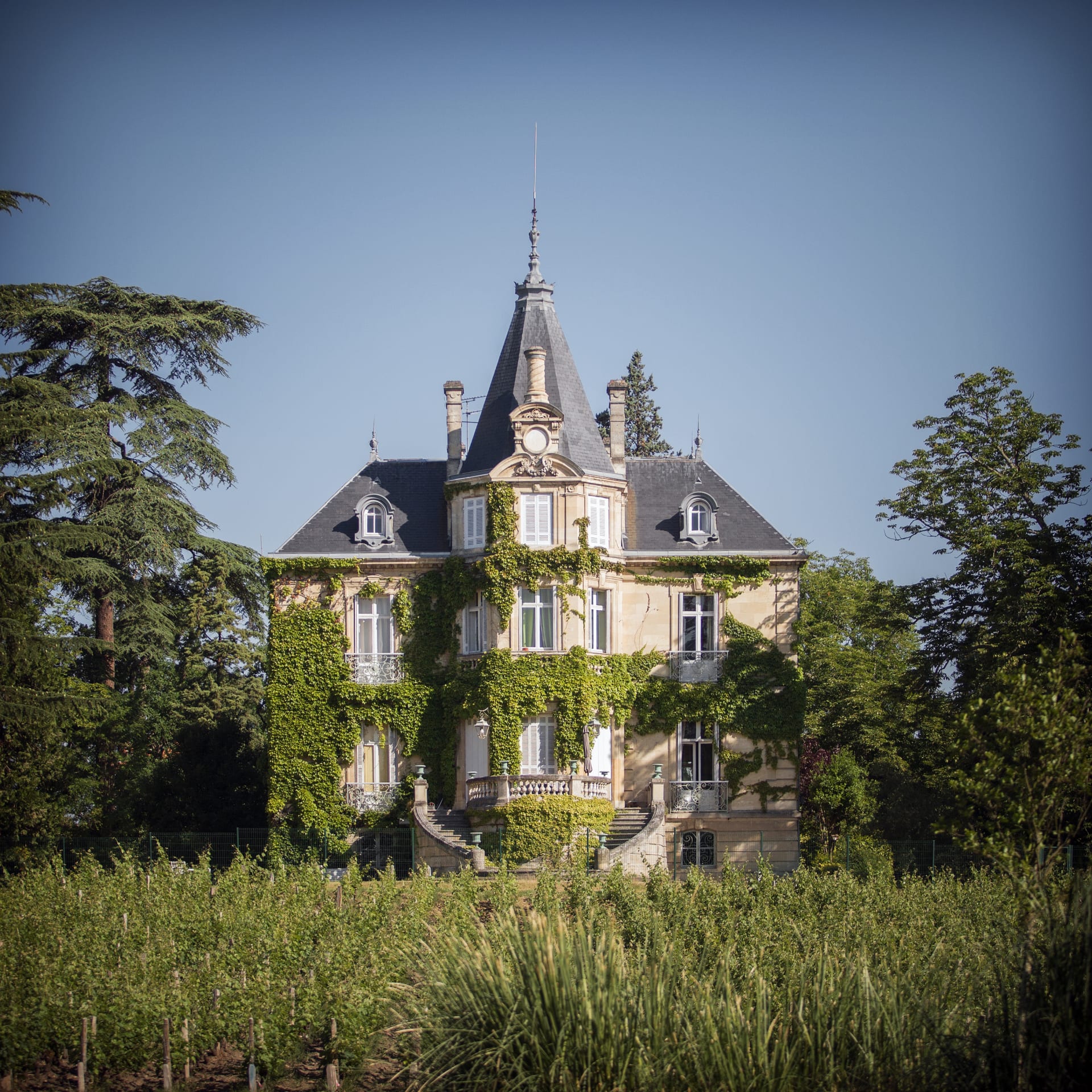



Château Les Carmes Haut-Brion is the only Bordeaux property located within the city of Bordeaux. Its tiny vineyard, the Clos des Carmes, is located in the heart of the city and dates back to the 16th century. In 1584, the Carmelite Reverend Fathers inherited the Crespiac mill, where they stayed for around two centuries. Then, in 1855, the Colin family became the new owners, and the estate subsequently came under the ownership of the Chantecaille family. In 2010, Patrice Pichet and his family acquired the estate, which a few merchants and négociants called the 'sleeping beauty of Bordeaux'. The Pichet family's arrival marked the beginning of a transformative chapter for this historic estate, with significant modernization and investment taking place at the château.
The renewal process began with the vineyard itself. Missing elements were replanted, slopes were corrected and the variety of grapes was updated to reinstate Cabernet Franc, which has been the main variety in the blend since 2013. Vine cultivation is also guided by an environmentally friendly approach, with horses used for all soil work. Here, nature is not constrained but revealed.
Then there are the people: Guillaume Pouthier, the new managing director, and Guillaume Deschepper, the technical director. Neither of them are from Bordeaux; they come from an iconic house in the Rhône Valley and have a new vision of what constitutes a great wine.
Finally, a new, state-of-the-art winery was constructed, designed by the renowned architects Philippe Starck and Luc Arsène-Henry.
The ambition was to elevate the estate to new heights while honoring its centuries-old heritage.
One of the most daring moves was the estate’s pioneering use of whole-cluster fermentation, a technique that had never before been employed in Bordeaux. This gave the wine a unique character and balance.
Over the last 10 years, the estate has undergone enormous progression and transformation, resulting in the production of wines of unparalleled character and depth. This has cemented the estate’s reputation as a beacon of innovation and tradition in the Bordeaux wine landscape and beyond.

One of the world’s most classic and popular styles of red wine, Bordeaux-inspired blends have spread from their homeland in France to nearly every corner of the New World. Typically based on either Cabernet Sauvignon or Merlot and supported by Cabernet Franc, Malbec and Petit Verdot, the best of these are densely hued, fragrant, full of fruit and boast a structure that begs for cellar time. Somm Secret—Blends from Bordeaux are generally earthier compared to those from the New World, which tend to be fruit-dominant.

Recognized for its superior reds as well as whites, Pessac-Léognan on the Left Bank claims classified growths for both—making it quite unique in comparison to its neighboring Médoc properties.
Pessac’s Chateau Haut-Brion, the only first growth located outside of the Médoc, is said to have been the first to conceptualize fine red wine in Bordeaux back in the late 1600s. The estate, along with its high-esteemed neighbors, La Mission Haut-Brion, Les Carmes Haut-Brion, Pique-Caillou and Chateau Pape-Clément are today all but enveloped by the city of Bordeaux. The rest of the vineyards of Pessac-Léognan are in clearings of heavily forested area or abutting dense suburbs.
Arid sand and gravel on top of clay and limestone make the area unique and conducive to growing Sémillon and Sauvignon blanc as well as the grapes in the usual Left Bank red recipe: Cabernet Sauvignon, Merlot, Cabernet Franc and miniscule percentages of Petit Verdot and Malbec.
The best reds will show great force and finesse with inky blue and black fruit, mushroom, forest, tobacco, iodine and a smooth and intriguing texture.
Its best whites show complexity, longevity and no lack of exotic twists on citrus, tropical and stone fruit with pronounced floral and spice characteristics.