

Winemaker Notes
Professional Ratings
-
Robert Parker's Wine Advocate
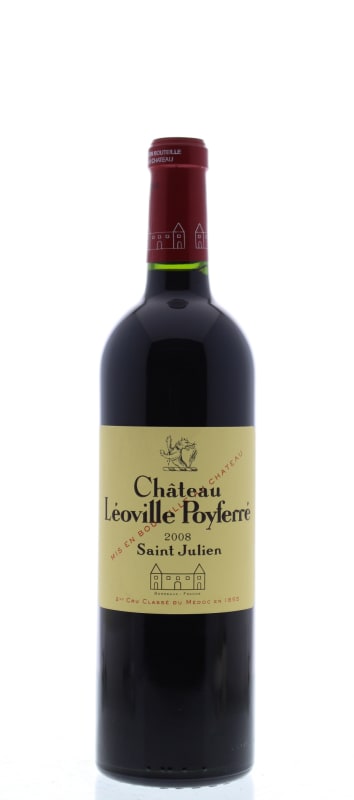
One of the finest over-achieving efforts in this vintage as well as a “best buy” for a top-flight St.-Julien, this 2008 is an irresistible success. It reveals an opaque ruby/purple color, lots of unctuosity and a boatload of sweet cassis and black cherry fruit intertwined with notions of licorice, smoke and oak. Full-bodied, remarkably concentrated and stunningly pure and textured, this sensational wine is already drinking well, and will be even better with 2-3 years of cellaring. It should last for 20-25 years. Bravo!
-
Wine Enthusiast
Generous and ripe, obviously extracted, this is a wine that is packed with tannins sharpened with black fruits. Spice, wood and acidity add to the depth of flavor.
-
James Suckling
I am impressed with the fruit and velvety tannins. Full and deliciously fruity with soft tannins and rich fruit. Blueberry. Open and gorgeous. Impressive for the vintage.
-
Connoisseurs' Guide
Although another potent and moderately tannic expression of Cabernet Sauvignon born of Saint-Julien terroir, this deep and fairly full-bodied version shows a little more polish and a little less coarseness than either of the two Barton bottlings. It is long and sustained on the palate with all of its spaces nicely filled. It is not for drinking any time soon, but it will unfold in a half-dozen years and should peak in ten.
-
Wine Spectator
Very direct, with black currant and fig paste jumping out and driving all the way through the lightly muscular finish, where extra iron, espresso and charcoal notes fill in. An iron edge lingers. This needs a little time. Best from 2013 through 2019


One of the world’s most classic and popular styles of red wine, Bordeaux-inspired blends have spread from their homeland in France to nearly every corner of the New World. Typically based on either Cabernet Sauvignon or Merlot and supported by Cabernet Franc, Malbec and Petit Verdot, the best of these are densely hued, fragrant, full of fruit and boast a structure that begs for cellar time. Somm Secret—Blends from Bordeaux are generally earthier compared to those from the New World, which tend to be fruit-dominant.

An icon of balance and tradition, St. Julien boasts the highest proportion of classed growths in the Médoc. What it lacks in any first growths, it makes up in the rest: five amazing second growth chateaux, two superb third growths and four well-reputed fourth growths. While the actual class rankings set in 1855 (first, second, and so on the fifth) today do not necessarily indicate a score of quality, the classification system is important to understand in the context of Bordeaux history. Today rivalry among the classed chateaux only serves to elevate the appellation overall.
One of its best historically, the estate of Leoville, was the largest in the Médoc in the 18th century, before it was divided into the three second growths known today as Chateau Léoville-Las-Cases, Léoville-Poyferré and Léoville-Barton. Located in the north section, these are stone’s throw from Chateau Latour in Pauillac and share much in common with that well-esteemed estate.
The relatively homogeneous gravelly and rocky top soil on top of clay-limestone subsoil is broken only by a narrow strip of bank on either side of the “jalle,” or stream, that bisects the zone and flows into the Gironde.
St. Julien wines are for those wanting subtlety, balance and consistency in their Bordeaux. Rewarding and persistent, the best among these Bordeaux Blends are full of blueberry, blackberry, cassis, plum, tobacco and licorice. They are intense and complex and finish with fine, velvety tannins.