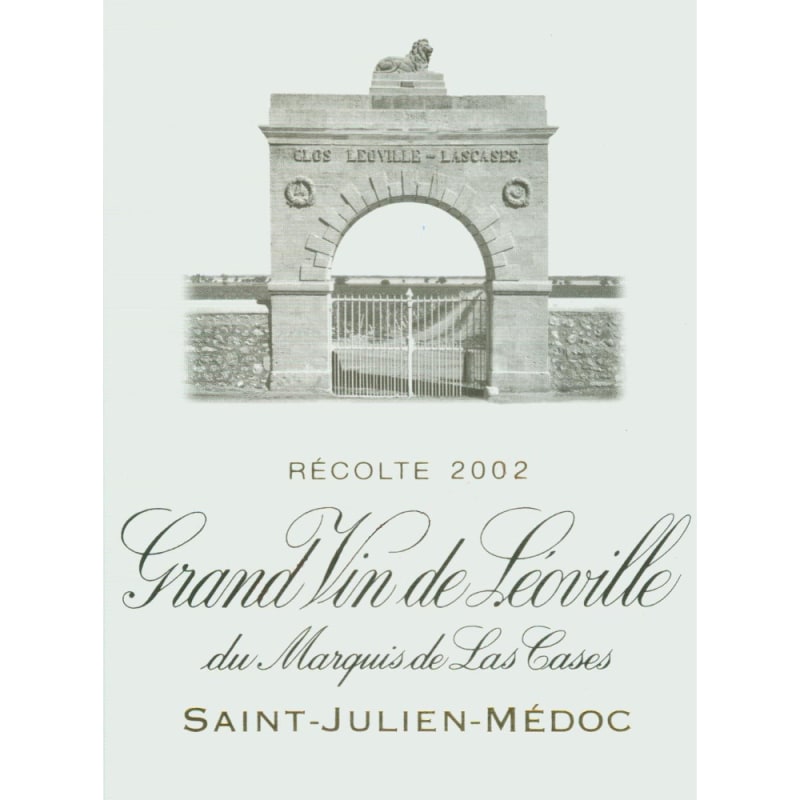

Winemaker Notes
Professional Ratings
-
Robert Parker's Wine Advocate
Only 43% of the production made it into the final blend of this remarkable 2002. Produced from a low 17 hectoliters per hectare, it includes 66.7% Cabernet Sauvignon, 14.5% Merlot, 13.9% Cabernet Franc, and the rest Petit Verdot. It has the highest alcohol ever achieved in a Leoville Las Cases (13.5%) as well as a lofty pH of 3.85. Nevertheless, the impression is one of a structured wine with considerable density, a ruby/purple color, layers of flavor, and a classic overall personality. The wine exhibits pure black currant, licorice-infused fruit, huge body, a viscous mid-palate, and a long, heady finish. I suspect this wine won’t be nearly as charming as the 2003 in its youth, but it hasn’t yet closed down, and I am amazed at just how rich, intense, and full-bodied it tastes even after bottling. This is certainly one of the half dozen or so candidates for wine of the vintage. Anticipated maturity: 2012-2030+.
-
Decanter
Not the easiest summer, although hot weather in September meant that this is a better vintage on the Left Bank where Cabernet was able to ripen - and here 81% of the blend is either Cabernet Sauvignon or Franc. Intense cassis, clear Las Cases signature, slight austerity still with a beautifully silky texture and a crushed mint leaf freshness. This has the understated savoury Cabernet character of the vintage, not as intense as some Las Cases vintages for certain, but this is packed with confident fruit and tannins and it is starting to open up, softening and showing its personality. As it evolves in the glass, the delicate complexity of the structure starts to exert its charm, and gentle truffled liquorice notes sit next to smoked blackberries. I started this as a Coravin sample, but in the end felt that was unfair, because it needs to be opened for a few hours before really starting to show what it's about. Think of this as a great way to access Las Cases at an earlier window than usual, but it is not one to cellar indefinitely. Tasted twice, once at home and once at the château. 5% Petit Verdot completes the blend - the last time that this variety is in the 1st wine of Las Cases, as they were then field grafted over to Cabernet Sauvignon. Harvest 28th September to 11th October. Drinking Window 2021 - 2042
-
Wine Spectator
This is the essence of currants and berries with minerals and flowers. Full-bodied, with silky, refined tannins. Superlong and impressive. A beauty. Love it. As it should be.


One of the world’s most classic and popular styles of red wine, Bordeaux-inspired blends have spread from their homeland in France to nearly every corner of the New World. Typically based on either Cabernet Sauvignon or Merlot and supported by Cabernet Franc, Malbec and Petit Verdot, the best of these are densely hued, fragrant, full of fruit and boast a structure that begs for cellar time. Somm Secret—Blends from Bordeaux are generally earthier compared to those from the New World, which tend to be fruit-dominant.

An icon of balance and tradition, St. Julien boasts the highest proportion of classed growths in the Médoc. What it lacks in any first growths, it makes up in the rest: five amazing second growth chateaux, two superb third growths and four well-reputed fourth growths. While the actual class rankings set in 1855 (first, second, and so on the fifth) today do not necessarily indicate a score of quality, the classification system is important to understand in the context of Bordeaux history. Today rivalry among the classed chateaux only serves to elevate the appellation overall.
One of its best historically, the estate of Leoville, was the largest in the Médoc in the 18th century, before it was divided into the three second growths known today as Chateau Léoville-Las-Cases, Léoville-Poyferré and Léoville-Barton. Located in the north section, these are stone’s throw from Chateau Latour in Pauillac and share much in common with that well-esteemed estate.
The relatively homogeneous gravelly and rocky top soil on top of clay-limestone subsoil is broken only by a narrow strip of bank on either side of the “jalle,” or stream, that bisects the zone and flows into the Gironde.
St. Julien wines are for those wanting subtlety, balance and consistency in their Bordeaux. Rewarding and persistent, the best among these Bordeaux Blends are full of blueberry, blackberry, cassis, plum, tobacco and licorice. They are intense and complex and finish with fine, velvety tannins.