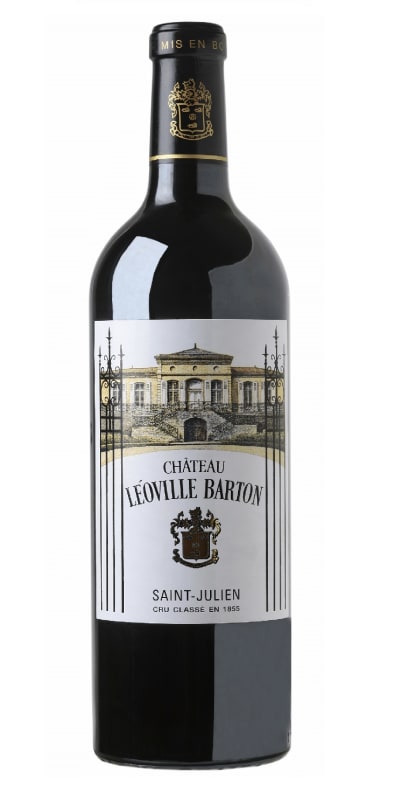


Winemaker Notes
Intense purple color. The nose is complex revealing aromas of black fruits, currant and blackcurrant. On the palate, the wine is incredibly smooth and juicy while being subtly spicy. It reveals raspberry and plum notes with elegant acidity and fine tannins.
Blend: 85.5% Cabernet Sauvignon, 14.5% Merlot
Professional Ratings
-
Jeb Dunnuck
The flagship from this great chateau, the 2020 Chateau Leoville Barton checks in as 85.5% Cabernet Sauvignon and 14.5% Merlot that saw 60% new French oak. It has fabulous aromatics of creme de cassis, graphite, liquid violets, spring flowers, and background oak. Full-bodied and concentrated on the palate, its purity of fruit is just about off the chart, it has a great mid-palate, and enough tannins to warrant 7-8 years of bottle age. This is another sensational wine from this team that will have 30-40 years of overall longevity. Best After 2030.
Rating: 97+
-
James Suckling
Aromas of dark berries, ash, tar, blackcurrants and lead pencil, following through to a medium to full body, with firm and integrated tannins and a medium, chewy finish. Needs four to six years to soften and come together. Very tight and nicely structured. Try in 2027 and onwards.
-
Wine Enthusiast
Dense and with velvety tannins, this wine has great structure and concentration without being too weighty. This solid wine is sure to age. Drink from 2027.
Cellar Selection -
Wine Spectator
A bold, strapping young wine, with vivid plum, cassis, kirsch and black licorice notes that meld steadily as they cruise through, carried by a bolt of graphite and finishing with a flourish of violet, anise and apple wood. Mouthwatering in the end. Built for the cellar. Cabernet Sauvignon and Merlot. Best from 2030 through 2045.
-
Decanter
Liquorice on the nose with blue fruit aromas - cool and expressive. Quite tight on the palate, the tannins making the impact right now and the style still very much on the savoury edge. Good acidity here, but it’s coming off a little sharp, giving angles to the palate though given some cushioning by ripe tannins. I do love the red and black berry elements alongside pine notes, cedar, coffee, liquorice and tobacco, the wood flexing its muscles. Softly classic with nice St-Julien character.
-
Robert Parker's Wine Advocate
A superb wine, the 2020 Léoville Barton exhibits generous aromas of blackberries and crème de cassis mingled with hints of licorice, pencil shavings and classy new oak. Medium to full-bodied, broad and fleshy, with a concentrated core of fruit, sweet tannins and a nicely defined finish, it bears some similarities with the estate's demonstrative 2000 vintage, even if the two growing seasons were quite different. I suspect it will tighten up with more time in bottle, hence the plus sign next to my score, but right now, the 2020 is unusually accessible out of the gates. Best after 2027. Rating: 95+
-
Wilfred Wong of Wine.com
COMMENTARY: The 2020 Chateau Leoville Barton shows up with style, richness, and staying power. This wine—one of the chateaux's best to date—offers an excellent combination of ripe fruit, spice, and oaky notes. Pair it with pan-fried flank steak topped with minced shallots. (Tasted: January 27, 2023, San Francisco, CA)


One of the world’s most classic and popular styles of red wine, Bordeaux-inspired blends have spread from their homeland in France to nearly every corner of the New World. Typically based on either Cabernet Sauvignon or Merlot and supported by Cabernet Franc, Malbec and Petit Verdot, the best of these are densely hued, fragrant, full of fruit and boast a structure that begs for cellar time. Somm Secret—Blends from Bordeaux are generally earthier compared to those from the New World, which tend to be fruit-dominant.

An icon of balance and tradition, St. Julien boasts the highest proportion of classed growths in the Médoc. What it lacks in any first growths, it makes up in the rest: five amazing second growth chateaux, two superb third growths and four well-reputed fourth growths. While the actual class rankings set in 1855 (first, second, and so on the fifth) today do not necessarily indicate a score of quality, the classification system is important to understand in the context of Bordeaux history. Today rivalry among the classed chateaux only serves to elevate the appellation overall.
One of its best historically, the estate of Leoville, was the largest in the Médoc in the 18th century, before it was divided into the three second growths known today as Chateau Léoville-Las-Cases, Léoville-Poyferré and Léoville-Barton. Located in the north section, these are stone’s throw from Chateau Latour in Pauillac and share much in common with that well-esteemed estate.
The relatively homogeneous gravelly and rocky top soil on top of clay-limestone subsoil is broken only by a narrow strip of bank on either side of the “jalle,” or stream, that bisects the zone and flows into the Gironde.
St. Julien wines are for those wanting subtlety, balance and consistency in their Bordeaux. Rewarding and persistent, the best among these Bordeaux Blends are full of blueberry, blackberry, cassis, plum, tobacco and licorice. They are intense and complex and finish with fine, velvety tannins.