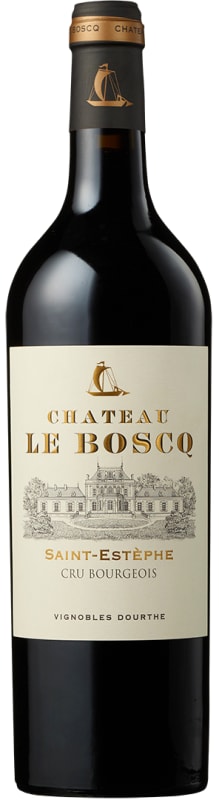


Winemaker Notes
Very deep and concentrated in appearance. The Château Le Boscq terroir once again shines to perfection through this vintage. The intense bouquet, unleashing ripe, fresh black berry fruits, develops toasty, slightly charred notes and aromas of precious woods so typical of this estate. Initially silky-smooth, it immediately gains in stature on the palate, its delicious mouthfeel mingling with fruit and spicy notes, underpinned by impressively smooth tannic structure. Revealing great harmony overall, the wine lingers in an elegant, drawn-out and complex finish.
Blend: 64% Cabernet Sauvignon, 34% Merlot, 2% Petit Verdot
Professional Ratings
-
Wine Enthusiast
The latest vintage from this chateau, owned in the 18th century by Irishman Thomas Barton and now by Dorthe, is dense, striated with tannins as well as concentrated black fruits. A sense of the freshness that comes with the vintage balances the structure. The wine will take some time to develop fully, Best after 2023. Cellar Selection.
-
James Suckling
This is spicy with some dried-meat and berry character. Medium body. Light tannins and a medium finish. A blend of 64% cabernet sauvignon, 34% merlot and 2% petit verdot. Drink now.
-
Wine Spectator
A sanguine accent leads off, pulling red currant and pomegranate fruit along as this slowly opens up to reveal more damson plum, tea and iron notes through the end. The focused and pure finish shows mouthwatering cut. Cabernet Sauvignon, Merlot and Petit Verdot.


One of the world’s most classic and popular styles of red wine, Bordeaux-inspired blends have spread from their homeland in France to nearly every corner of the New World. Typically based on either Cabernet Sauvignon or Merlot and supported by Cabernet Franc, Malbec and Petit Verdot, the best of these are densely hued, fragrant, full of fruit and boast a structure that begs for cellar time. Somm Secret—Blends from Bordeaux are generally earthier compared to those from the New World, which tend to be fruit-dominant.

Deeply colored, concentrated, and distinctive, St. Estephe is the go-to for great, age-worthy and reliable Bordeaux reds. Separated from Pauillac merely by a stream, St. Estephe is the farthest northwest of the highest classed villages of the Haut Medoc and is therefore subject to the most intense maritime influence of the Atlantic.
St. Estephe soils are rich in gravel like all of the best sites of the Haut Medoc but here the formation of gravel over clay creates a cooler atmosphere for its vines compared to those in the villages farther downstream. This results in delayed ripening and wines with higher acidity compared to the other villages.
While they can seem a bit austere when young, St. Estephe reds prove to live very long in the cellar. Traitionally dominated by Cabernet Sauvignon, many producers now add a significant proportion of Merlot to the blend, which will soften any sharp edges of the more tannic, Cabernet.
The St. Estephe village contains two second growths, Chateau Montrose and Cos d’Estournel.