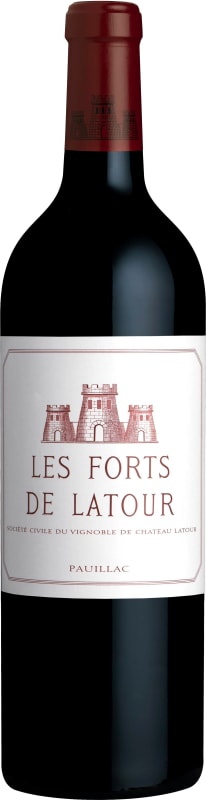


Winemaker Notes
Heady aromas of dark fruits, violet petals and pencil lead bestrewed with sweet spices and liquorice. This is an exhilarating wine, powerfully structured with present but fine-grained tannins, concentrated flavours and an acidity bringing a full and elegant finish to the mouth.
Blend: 65% Cabernet Sauvignon, 34% Merlot, 1% Petit Verdot
Professional Ratings
-
Jeb Dunnuck
A fruit bomb of a wine, the 2018 Les Forts De Latour is just about overflowing with sweet cassis and darker currant-like fruit, as well as complex notes of smoked tobacco, flowery incense, and spice. This plush, full-bodied, sexy effort has sweet tannins, a layered, opulent mouthfeel, and a great finish.
-
James Suckling
A solid and steely red with lots of blackcurrant and blueberry character. Medium-to full-bodied and polished, fine tannins. Flavorful finish.
Range: 94-95 -
Robert Parker's Wine Advocate
The 2018 Les Forts de Latour is made up of 65.6% Cabernet Sauvignon, 34% Merlot and 0.4% Petit Verdot, with 14.2% alcohol and an IPT (total polyphenol index) of 77. It was aged in 60% new oak. Deep garnet-purple in color, it needs a fair bit of swirling to reveal notions of baked black cherries, cassis and blackberry pie with hints of pencil lead, clove oil, cardamom and allspice with a waft of violets. Medium to full-bodied, the palate delivers impressive density with velvety tannins and a lively backbone supporting the generous black fruits, finishing long with all the earthy nuances coming through at the very end.
Rating: 94+ -
Vinous
The 2018 Les Forts de Latour is surprisingly approachable. It boasts serious concentration because of the warm dry summer and ensuring low yields, yet the intensity of the fruit pretty much covers the tannins, quite unusual for young Forts de Latour. Dark-toned fruit, gravel, incense, licorice and scorched earth add to the wine's distinctive sepia-toned personality. The 2018 turned out beautifully.
-
Wine Spectator
This is a gorgeous combination of cashmere and graphite, with racy edged cassis and blackberry fruit supported from underneath while light violet, anise and black tea details add range through the finish. A sleek and refined Pauillac that is hard to resist, but will easily handle cellaring. Cabernet Sauvignon, Merlot and Petit Verdot. Best from 2022 through 2035.
-
Decanter
Richly perfumed on the nose, so aromatic and scented in a heady way - ripe strawberries and blackcurrants. A bit more subdued than I was expecting with a crushed stone texture to the tannins, less plush - more serious, straight, determined and all in one line. Ripe and cool black and blue fruits, less jammy than I was expecting but still with clear depth aided by high acidity and touch of spice and tension around the sides. Nicely textured - a complex glass of wine, definitely not 'easy drinking' right now - give it a few years and a long decant, but this builds and builds, with a great sense of complexity, terroir and minerality to it.


One of the world’s most classic and popular styles of red wine, Bordeaux-inspired blends have spread from their homeland in France to nearly every corner of the New World. Typically based on either Cabernet Sauvignon or Merlot and supported by Cabernet Franc, Malbec and Petit Verdot, the best of these are densely hued, fragrant, full of fruit and boast a structure that begs for cellar time. Somm Secret—Blends from Bordeaux are generally earthier compared to those from the New World, which tend to be fruit-dominant.

The leader on the Left Bank in number of first growth classified producers within its boundaries, Pauillac has more than any of the other appellations, at three of the five. Chateau Lafite Rothschild and Mouton Rothschild border St. Estephe on its northern end and Chateau Latour is at Pauillac’s southern end, bordering St. Julien.
While the first growths are certainly some of the better producers of the Left Bank, today they often compete with some of the “lower ranked” producers (second, third, fourth, fifth growth) in quality and value. The Left Bank of Bordeaux subscribes to an arguably outdated method of classification that goes back to 1855. The finest chateaux in that year were judged on the basis of reputation and trading price; changes in rank since then have been miniscule at best. Today producers such as Chateau Pontet-Canet, Chateau Grand Puy-Lacoste, Chateau Lynch-Bages, among others (all fifth growth) offer some of the most outstanding wines in all of Bordeaux.
Defining characteristics of fine wines from Pauillac (i.e. Cabernet-based Bordeaux Blends) include inky and juicy blackcurrant, cedar or cigar box and plush or chalky tannins.
Layers of gravel in the Pauillac region are key to its wines’ character and quality. The layers offer excellent drainage in the relatively flat topography of the region allowing water to run off into “jalles” or streams, which subsequently flow off into the Gironde.