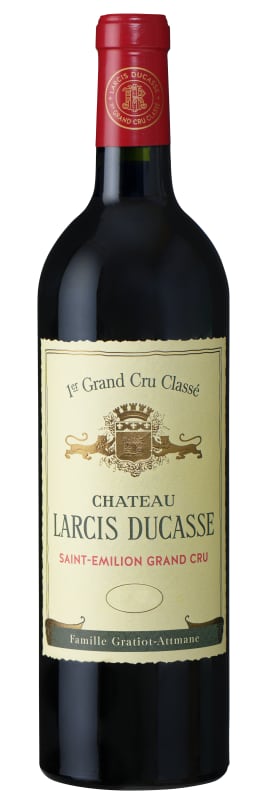


Winemaker Notes
Blend: 86% Merlot, 14% Cabernet Franc
Professional Ratings
-
James Suckling
Very complex and subtle with cedar, dried herb, green tobacco, berry and lavender aromas that follow through to a medium body, with ultra-fine tannins that give a sophistication and beauty to the wine, especially from this vintage. 86% merlot and 14% cabernet franc.
-
Decanter
Rose petals, pink flowers, raspberries and a touch of cardamom and cinnamon to the red berry fruit. Grippy and textured, quite a lean expression, direct and focussed, with bite to the tannins and a touch of dry salty, flinty minerality that coats the cheeks. It's well worked but hasn't quite settled yet and doesn't quite have the fruit density to carry more of the motion and energy. Sleek though and definitely confident. Will be lovely once it calms.
-
Vinous
The 2021 Larcis Ducasse has turned out better than I expected. It is a shy, introverted Larcis built along super-classic lines—the sort of Saint-Émilion that will emerge only with a number of years in bottle. Spice, tobacco, cedar, menthol, licorice and dried herbs all build effortlessly in the glass. This is such a classy, elegant wine. Tasted three times. –Antonio Galloni
-
Wine Enthusiast
This has tobacco and black-pepper aromas, and solid tannins. Power and dense blackberry flavors are impressive.
-
Jeb Dunnuck
Up with top wines of the vintage, the 2021 Château Larcis Ducasse is a beautiful Saint-Emilion based on 86% Merlot and 14% Cabernet Franc, with the Merlot harvested between September 29 and October 9, and the Cabernet from October 9 to October 11. From yields of 34 hectoliters per hectare and aged in 50% new barrels, its solid ruby/plum hue is followed by a beautiful nose of ripe red and black fruits, iron, dried tobacco, leather, and truffly earth. Medium to full-bodied (closer to medium-bodied), it has terrific mid-palate depth, ripe, polished tannins, and a balanced, layered, elegant mouthfeel. As with most 2021s, it only needs a few years of bottle age and will have two decades of overall longevity.
-
Robert Parker's Wine Advocate
Offering up exotic aromas of minty blackberries and cherries mingled with dark chocolate, confit orange and melted asphalt, the 2021 Larcis Ducasse is medium to full-bodied, with a rich and creamy palate framed by powdery tannins. It's unusually sweet and unctuous for the vintage and concludes with a discreetly herbal finish. Maturation in wood, now featuring some foudres and 500-liter barrels in addition to barriques, lasted until April, with bottling just over three months later.
-
Wine Spectator
Offers red currant and damson plum notes lined with savory accents throughout, while light chalk and potpourri hints underscore the finish.


One of the world’s most classic and popular styles of red wine, Bordeaux-inspired blends have spread from their homeland in France to nearly every corner of the New World. Typically based on either Cabernet Sauvignon or Merlot and supported by Cabernet Franc, Malbec and Petit Verdot, the best of these are densely hued, fragrant, full of fruit and boast a structure that begs for cellar time. Somm Secret—Blends from Bordeaux are generally earthier compared to those from the New World, which tend to be fruit-dominant.

Marked by its historic fortified village—perhaps the prettiest in all of Bordeaux, the St-Émilion appellation, along with its neighboring village of Pomerol, are leaders in quality on the Right Bank of Bordeaux. These Merlot-dominant red wines (complemented by various amounts of Cabernet Franc and/or Cabernet Sauvignon) remain some of the most admired and collected wines of the world.
St-Émilion has the longest history in wine production in Bordeaux—longer than the Left Bank—dating back to an 8th century monk named Saint Émilion who became a hermit in one of the many limestone caves scattered throughout the area.
Today St-Émilion is made up of hundreds of independent farmers dedicated to the same thing: growing Merlot and Cabernet Franc (and tiny amounts of Cabernet Sauvignon). While always roughly the same blend, the wines of St-Émilion vary considerably depending on the soil upon which they are grown—and the soils do vary considerably throughout the region.
The chateaux with the highest classification (Premier Grand Cru Classés) are on gravel-rich soils or steep, clay-limestone hillsides. There are only four given the highest rank, called Premier Grand Cru Classés A (Chateau Cheval Blanc, Ausone, Angélus, Pavie) and 14 are Premier Grand Cru Classés B. Much of the rest of the vineyards in the appellation are on flatter land where the soils are a mix of gravel, sand and alluvial matter.
Great wines from St-Émilion will be deep in color, and might have characteristics of blackberry liqueur, black raspberry, licorice, chocolate, grilled meat, earth or truffles. They will be bold, layered and lush.