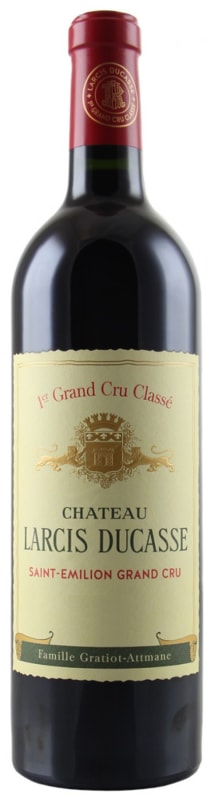


Winemaker Notes
Merlot and Cabernet Franc vines are planted according to the profile of each part of the vineyard. Work in the vineyard is done meticulously. Fermentation takes place gently and then the wine is aged in barrel for a duration adapted to each vintage. The final blend from this superb terroir results in delicious, elegant and magnificently balanced wines.
Professional Ratings
-
Jeb Dunnuck
The 2018 Château Larcis Ducasse checks in as 89% Merlot and 11% Cabernet Franc that comes from a gorgeous hillside terroir on the Côte Pavie, located between Château Pavie and Château Bellefont-Belcier. Aged 18 months in 60% new barrels, it offers a truly sensational bouquet of ripe blackcurrants, espresso roast, scorched earth, bloody meat, chocolate, iron, and bouquet garni. A massive, super-rich Saint-Emilion with a dense, concentrated, layered mouthfeel, it has building yet sweet tannins and incredible purity of fruit. Reminding me of the 2005 shortly after release, this heavenly juice offers astonishing richness and depth while staying flawlessly balanced and elegant. Sadly, there are less than 3,000 cases produced, but this monumental, legendary wine won't hit maturity for a good 8-10 years and will have 40-50 years of longevity if well stored.
-
James Suckling
Polished aromas of lavender, plum, dried blueberry, clove, sandalwood and dark chocolate. Hints of praline. It’s full-bodied with firm, tightly knit tannins. Supple, seamless layers with great length and precision. Still reserved and tight. A toned and textured red with great structure. Try from 2026.
-
Robert Parker's Wine Advocate
Deep garnet-purple in color, the 2018 Larcis Ducasse needs a fair bit of swirling to unlock notes of crushed blackberries, plum preserves and boysenberries with suggestions of black truffles, tapenade and crushed rocks coming through, building to a subtle underlying perfume of roses and cloves. The medium to full-bodied palate delivers mouth-coating black fruits and loads of savory sparks, framed by firm, slightly chewy tannin's and just enough freshness, finishing long and earthy.
-
Decanter
Powerful but with a sense of restraint, this is extremely well handled in 2018. The difference between this and a more massive St-Emilion is subtle for sure - it's unquestionably on the dark fruit register - but you notice it in the way that the tannins respond and bounce rather than stiffen up in the mouth. You can enjoy them as they close in around you rather than beg for air. The palate has lots of dark chocolate, liquorice and slate notes, with cassis and blackberry fruits. This is from south-facing slopes, so there's plenty of ripeness in the grapes, but the limestone helps to temper it, along with the natural water sources that are found at this spot. Owned by Famille Gratiot-Attmane, but with the Nicolas Thienpont team overseeing winemaking.
-
Wine Enthusiast
A concentrated wine with big tannins and a smoky character, this is rich, darkly textured and full of blackberry fruit. The wine is powerful, spicy and fresh on the end.
Barrel Sample:92-94 -
Wine Spectator
Warm cherry, raspberry and plum preserve flavors form the core here, with nicely polished structure supporting it through the finish where anise, black tea, singed alder and savory details steadily emerge. A touch austere in feel, but the breed and length is there. Merlot and Cabernet Franc. Best from 2023 through 2035.


One of the world’s most classic and popular styles of red wine, Bordeaux-inspired blends have spread from their homeland in France to nearly every corner of the New World. Typically based on either Cabernet Sauvignon or Merlot and supported by Cabernet Franc, Malbec and Petit Verdot, the best of these are densely hued, fragrant, full of fruit and boast a structure that begs for cellar time. Somm Secret—Blends from Bordeaux are generally earthier compared to those from the New World, which tend to be fruit-dominant.

Marked by its historic fortified village—perhaps the prettiest in all of Bordeaux, the St-Émilion appellation, along with its neighboring village of Pomerol, are leaders in quality on the Right Bank of Bordeaux. These Merlot-dominant red wines (complemented by various amounts of Cabernet Franc and/or Cabernet Sauvignon) remain some of the most admired and collected wines of the world.
St-Émilion has the longest history in wine production in Bordeaux—longer than the Left Bank—dating back to an 8th century monk named Saint Émilion who became a hermit in one of the many limestone caves scattered throughout the area.
Today St-Émilion is made up of hundreds of independent farmers dedicated to the same thing: growing Merlot and Cabernet Franc (and tiny amounts of Cabernet Sauvignon). While always roughly the same blend, the wines of St-Émilion vary considerably depending on the soil upon which they are grown—and the soils do vary considerably throughout the region.
The chateaux with the highest classification (Premier Grand Cru Classés) are on gravel-rich soils or steep, clay-limestone hillsides. There are only four given the highest rank, called Premier Grand Cru Classés A (Chateau Cheval Blanc, Ausone, Angélus, Pavie) and 14 are Premier Grand Cru Classés B. Much of the rest of the vineyards in the appellation are on flatter land where the soils are a mix of gravel, sand and alluvial matter.
Great wines from St-Émilion will be deep in color, and might have characteristics of blackberry liqueur, black raspberry, licorice, chocolate, grilled meat, earth or truffles. They will be bold, layered and lush.