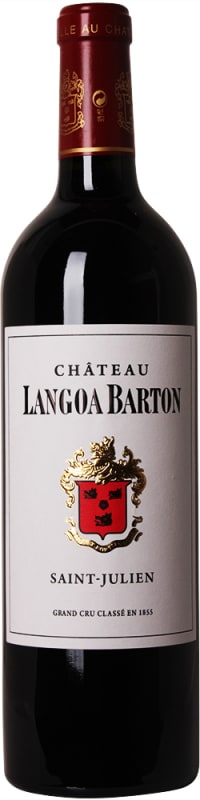


Winemaker Notes
Blend: 54% Cabernet Sauvignon, 38% Merlot, 8% Cabernet Franc
Professional Ratings
-
Wine Enthusiast
This wine, from the stablemate of LéovilleBarton, offers great fruit: blackberry flavors and structured black currants. With its tannins, spice and good acidity, the wine has a good future. Drink from 2023.
-
James Suckling
Lots of crushed blackcurrants and chocolate on the nose, following through to a medium to full body with soft, friendly tannins that are caressing and beautiful. Drinkable now, but better after 2022.
-
Robert Parker's Wine Advocate
The 2017 Langoa Barton is medium to deep garnet-purple colored and features wonderfully pure scents of crushed blackcurrants, wild blueberries and black raspberries plus wafts of underbrush, dark chocolate and violets. Medium to full-bodied, the palate is laden with seductive black and blue fruits, framed by grainy tannins and just enough freshness, finishing long and perfumed.
-
Decanter
Langoa shows the same delicacy and finesse as many St-Juliens in the 2017 vintage, but without the downside of slightly under ripe fruit. There are still earthy notes, and this is a not a gourmet take on the vintage (unlike its sibling Léoville Barton, which manages to deliver real flesh), but it has poise, concentration and excellent black fruit character. Should open up in another six to eight years, and deliver for a couple of decades from that point.
-
Jeb Dunnuck
The 2017 Château Langoa Barton showed beautifully both times I was able to taste it. Black cherries, plums, leafy herbs and spring flowers all emerge from this medium-bodied, ripe, lively Saint-Julien that shows the pretty, charming, elegant style of the vintage. As with all the wines from this vintage, it’s not massive by any means, yet it is nicely concentrated and impeccably balanced. The blend is 54% Cabernet Sauvignon, 38% Merlot and the rest Cabernet Franc, with harvest stretching between the 15th and 18th of September for the Merlot and the 22nd to the 29th of September for the Cabernet Franc and Petit Verdot. It’s still aging in 60% new oak.
Barrel Sample: 90-92 -
Wine Spectator
Ripe, bright and fresh, featuring a terrific beam of cassis and plum fruit running through, flanked by anise and red tea notes and scored by a singed applewood accent on the finish. Needs a little time to unwind fully. Cabernet Sauvignon, Merlot and Cabernet Franc. Best from 2022 through 2032.


One of the world’s most classic and popular styles of red wine, Bordeaux-inspired blends have spread from their homeland in France to nearly every corner of the New World. Typically based on either Cabernet Sauvignon or Merlot and supported by Cabernet Franc, Malbec and Petit Verdot, the best of these are densely hued, fragrant, full of fruit and boast a structure that begs for cellar time. Somm Secret—Blends from Bordeaux are generally earthier compared to those from the New World, which tend to be fruit-dominant.

An icon of balance and tradition, St. Julien boasts the highest proportion of classed growths in the Médoc. What it lacks in any first growths, it makes up in the rest: five amazing second growth chateaux, two superb third growths and four well-reputed fourth growths. While the actual class rankings set in 1855 (first, second, and so on the fifth) today do not necessarily indicate a score of quality, the classification system is important to understand in the context of Bordeaux history. Today rivalry among the classed chateaux only serves to elevate the appellation overall.
One of its best historically, the estate of Leoville, was the largest in the Médoc in the 18th century, before it was divided into the three second growths known today as Chateau Léoville-Las-Cases, Léoville-Poyferré and Léoville-Barton. Located in the north section, these are stone’s throw from Chateau Latour in Pauillac and share much in common with that well-esteemed estate.
The relatively homogeneous gravelly and rocky top soil on top of clay-limestone subsoil is broken only by a narrow strip of bank on either side of the “jalle,” or stream, that bisects the zone and flows into the Gironde.
St. Julien wines are for those wanting subtlety, balance and consistency in their Bordeaux. Rewarding and persistent, the best among these Bordeaux Blends are full of blueberry, blackberry, cassis, plum, tobacco and licorice. They are intense and complex and finish with fine, velvety tannins.