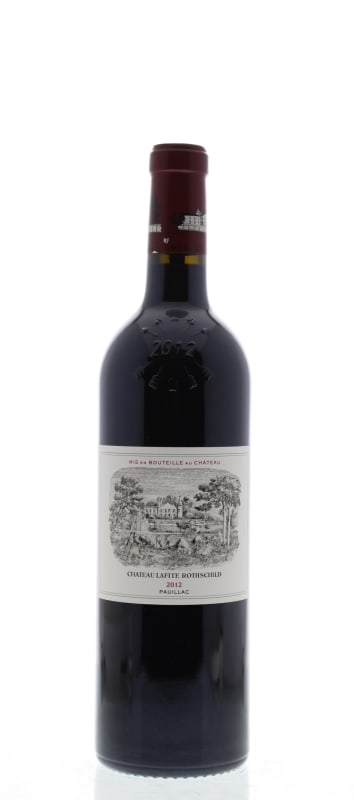


Winemaker Notes
Professional Ratings
-
Wine Enthusiast
Showing the serious side of Lafite, this is big and dark, powered by tannins as much as fruit. The wood aging is still showing, although that will integrate into the great structure that holds up the ripe black currant fruits. Totally dominated by some of the finest Cabernet Sauvignon in Bordeaux, this wine has strength while also having great freshness. Drink from 2024.
-
James Suckling
Superb structure for the vintage with blackcurrants, cedar, mushroom and sweet tobacco character. Full-bodied yet reserved and tight with an impressive density. Long finish. Better in 2020.
-
Wine Spectator
This has a dark, smoky edge from the start, with smoldering tobacco and grilled savory notes lining the core of steeped plum, macerated black currant and lightly mulled cherry fruit. Shows a loamy, smoky edge to the finish, with the tobacco hint peeking out. Features admirable range, depth and grip, with just a twinge of the vintage's austerity lurking. Best from 2018 through 2030.
-
Wilfred Wong of Wine.com
With the threat of botrytis—the noble rot responsible for some of the world's greatest dessert wines, but not particularly favorable in red wines—sorting became paramount in 2012, and that is where the history and the experience of the Lafite team came in handy. The winery comments, "Protection against disease was not easy; winegrowers and vineyard managers needed to apply all of their skill and experience. At the end of August, in the beautiful weather, we observed the onset of uneven ripening, which made it difficult to decide which plots to harvest first." The 2012 Château Lafite Rothschild exhibits bright red and black currants, with some mineral notes, and youthful oak. Time will settle this wine down, and it should reach its equilibrium as it approaches a decade in the cellar. (Tasted: April 15, 2013, Pauillac, France) Barrel Sample: 92-94
-
Robert Parker's Wine Advocate
The 2012 Lafite Rothschild, representing only 38% of their total production, is a blend of 91% Cabernet Sauvignon and the balance mostly Merlot. It is a very stylish, elegant, yet concentrated Lafite Rothschild with an opaque ruby/purple color, soft well-integrated tannins, nice integrated oak, acidity and alcohol. Lafites’s 2012 reveals good, opaque, ruby/purple color and plenty of lead pencil and blackcurrant fruit. The wine is medium-bodied and should hit its prime 2020-2035.


One of the world’s most classic and popular styles of red wine, Bordeaux-inspired blends have spread from their homeland in France to nearly every corner of the New World. Typically based on either Cabernet Sauvignon or Merlot and supported by Cabernet Franc, Malbec and Petit Verdot, the best of these are densely hued, fragrant, full of fruit and boast a structure that begs for cellar time. Somm Secret—Blends from Bordeaux are generally earthier compared to those from the New World, which tend to be fruit-dominant.

The leader on the Left Bank in number of first growth classified producers within its boundaries, Pauillac has more than any of the other appellations, at three of the five. Chateau Lafite Rothschild and Mouton Rothschild border St. Estephe on its northern end and Chateau Latour is at Pauillac’s southern end, bordering St. Julien.
While the first growths are certainly some of the better producers of the Left Bank, today they often compete with some of the “lower ranked” producers (second, third, fourth, fifth growth) in quality and value. The Left Bank of Bordeaux subscribes to an arguably outdated method of classification that goes back to 1855. The finest chateaux in that year were judged on the basis of reputation and trading price; changes in rank since then have been miniscule at best. Today producers such as Chateau Pontet-Canet, Chateau Grand Puy-Lacoste, Chateau Lynch-Bages, among others (all fifth growth) offer some of the most outstanding wines in all of Bordeaux.
Defining characteristics of fine wines from Pauillac (i.e. Cabernet-based Bordeaux Blends) include inky and juicy blackcurrant, cedar or cigar box and plush or chalky tannins.
Layers of gravel in the Pauillac region are key to its wines’ character and quality. The layers offer excellent drainage in the relatively flat topography of the region allowing water to run off into “jalles” or streams, which subsequently flow off into the Gironde.