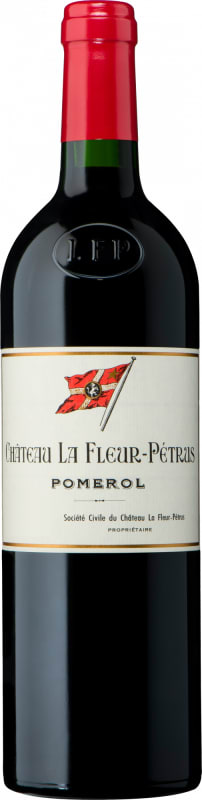


Winemaker Notes
Château La Fleur-Pétrus is composed predominantly of Merlot, which lends silkiness and generosity to the wine. Cabernet Franc, planted on gravel and fine clay, contributes rigor and complexity, while a small percentage of Petit Verdot, planted on fine gravel, offers a hint of spice to the finish. The wine combines a unique elegance with the generosity and structure typical of the great vineyards of Pomerol. An attentive tasting reveals remarkable refinement, complexity, and a touch of violet.
Blend: 96.5% Merlot, 3% Cabernet Franc, .5% Petit Verdot
Professional Ratings
-
Decanter
A clear stand out in 2022 with so much promise. Bright and energetic, quite lean in terms of tannic structure but straight and not austere or raw, maintains a clear direction with detail and definition all the way through. Nothing seems too much, great energy and focus with cool black and blue fruits, a salty minerality and toasted liquorice. Delicate almost, such refinement given the core of power and concentration but so delicately presented you'd almost think it wasnt there. This takes some time to reveal its layers in the glass, opening up slowly with the ripe fruit, and sense of verticality coming in after a few minutes. I love the sculpting but it's how this wine opens and grows that is so compelling. It's so enormously powerful, but so well caged right now, pure, clean, crisp, soft, chalky, intense and cool. A fabulous wine.
Barrel Sample: 98 -
Jeb Dunnuck
Awesome aromatics of black cherries, saddle leather, savory flowers, and incense emerge from the 2022 Château La Fleur-Petrus, another riveting wine in the vintage that brings incredible intensity while at the same time staying elegant, seamless, and flawlessly balanced. A blend of 97% Merlot and 3% Petit Verdot, this full-bodied, seamless Pomerol has fine yet building tannins, beautiful mid-palate depth, and a great finish.
-
James Suckling
A very opulent and extravagant red with dark plums, spices and lifted cedar. The palate is full-bodied yet very tight with endless tannins that are integrated and polished, bringing form and verve to this young wine. 96.5% merlot, 3% cabernet franc and 0.5% petit verdot.
-
Robert Parker's Wine Advocate
the 2022 La Fleur-Pétrus is broad and unctuous, offering up aromas of Agen prunes, dark berries and cherries mingled with notions of sweet spices, licorice and raisin fruitcake. Full-bodied, rich and chocolaty, it's ripe and heady, with an ample core of fruit and a sweet, lingering finish. The warmth and sunshine of the vintage is on full display.


One of the world’s most classic and popular styles of red wine, Bordeaux-inspired blends have spread from their homeland in France to nearly every corner of the New World. Typically based on either Cabernet Sauvignon or Merlot and supported by Cabernet Franc, Malbec and Petit Verdot, the best of these are densely hued, fragrant, full of fruit and boast a structure that begs for cellar time. Somm Secret—Blends from Bordeaux are generally earthier compared to those from the New World, which tend to be fruit-dominant.

A source of exceptionally sensual and glamorous red wines, Pomerol is actually a rather small appellation in an unassuming countryside. It sits on a plateau immediately northeast of the city of Libourne on the right bank of the Dordogne River. Pomerol and St-Émilion are the stars of what is referred to as Right Bank Bordeaux: Merlot-dominant red blends completed by various amounts of Cabernet Franc or Cabernet Sauvignon. While Pomerol has no official classification system, its best wines are some of the world’s most sought after.
Historically Pomerol attached itself to the larger and more picturesque neighboring region of St-Émilion until the late 1800s when discerning French consumers began to recognize the quality and distinction of Pomerol on its own. Its popularity spread to northern Europe in the early 1900s.
After some notable vintages of the 1940s, the Pomerol producer, Petrus, began to achieve great international attention and brought widespread recognition to the appellation. Its subsequent distribution by the successful Libourne merchant, Jean-Pierre Mouiex, magnified Pomerol's fame after the Second World War.
Perfect for Merlot, the soils of Pomerol—clay on top of well-drained subsoil—help to create wines capable of displaying an unprecedented concentration of color and flavor.
The best Pomerol wines will be intensely hued, with qualities of fresh wild berries, dried fig or concentrated black plum preserves. Aromas may be of forest floor, sifted cocoa powder, anise, exotic spice or toasted sugar and will have a silky, smooth but intense texture.