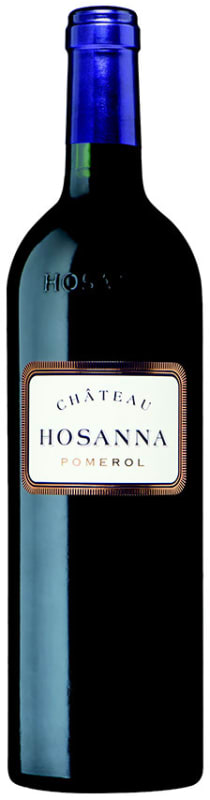


Winemaker Notes
Professional Ratings
-
Jeb Dunnuck
A real powerhouse of a Pomerol, the 2018 Château Hosanna checks in as a blend of 70% Merlot and 30% Cabernet Franc, all from a tiny, 11-acre parcel of blue clay and more red, gravelly soils in the heart of the appellation. This site has good neighbors, with Vieux Château Certan (and Certan de May) to the south, Lafleur just to the north, Petrus to the east, and La Fleur-Petrus to the west. Gorgeous blackcurrants, plum, chocolate, scorched earth, tobacco leaf, and graphite are just some of the nuances here, and this beauty is full-bodied, has a wonderfully textured, opulent mouthfeel, silky tannins, and one heavenly finish. It's up with the crème de la crème of the vintage, and that includes both banks. This straight-up stunning Pomerol will be drinkable with just 4-5 years of bottle age yet cruise for 30-40 years! Rating: 99+
-
James Suckling
An intense, juicy red with lots of meat, berry, chocolate and walnut aromas and flavors. Pure fruit. It’s full-bodied and dense with lots of fine tannins and richness. So powerful and long. Super length. Very muscular, yet agile at the same time. Try after 2025.
-
Robert Parker's Wine Advocate
The 2018 Hosanna is composed of 70% Merlot and 30% Cabernet Franc. Deep garnet-purple colored, the nose needs a bit of swirling and coaxing before it soars from the glass with compelling blue and black fruit scents of blueberry pie, blackberry preserves and stewed plums, plus hints of spice cake, unsmoked cigars and violets with a touch of cloves. The full-bodied palate shimmers with opulence, laden with black fruit preserves layers, supported by seductively plush tannin's and seamless freshness, finishing long and oh-so-spicy. It is very tempting to drink now, but 3-5 years of patience will offer a little cerebral tertiary contribution to all that decadent fruit. It should easily cellar for 25 years thereafter. Rating : 96+
-
Wine Enthusiast
This small property has produced a surprisingly restrained, stylish wine for its great richness. Ripe tannins showcase the black-currant fruits, with the perfumed Cabernet Franc balanced by dense Merlot in a harmonious whole. This is a wine to age. Drink from 2027.
-
Decanter
A big, muscular, powerful, classic, rich Pomerol; this can take the alcohol in its stride. Expect plenty of coffee, tobacco leaf, cigar and chocolate along with a slice of damson purée and black cherry. Serious, with a ton of years ahead of it. Drinking Window 2026 - 2044
-
Wine Spectator
This shows bay and tobacco leaf notes along the edges of a core of steeped plum and blackberry fruit. It all melds together through the finish, ending with an echo of warm earth. Merlot and Cabernet Franc. Drink now through 2035.


One of the world’s most classic and popular styles of red wine, Bordeaux-inspired blends have spread from their homeland in France to nearly every corner of the New World. Typically based on either Cabernet Sauvignon or Merlot and supported by Cabernet Franc, Malbec and Petit Verdot, the best of these are densely hued, fragrant, full of fruit and boast a structure that begs for cellar time. Somm Secret—Blends from Bordeaux are generally earthier compared to those from the New World, which tend to be fruit-dominant.

A source of exceptionally sensual and glamorous red wines, Pomerol is actually a rather small appellation in an unassuming countryside. It sits on a plateau immediately northeast of the city of Libourne on the right bank of the Dordogne River. Pomerol and St-Émilion are the stars of what is referred to as Right Bank Bordeaux: Merlot-dominant red blends completed by various amounts of Cabernet Franc or Cabernet Sauvignon. While Pomerol has no official classification system, its best wines are some of the world’s most sought after.
Historically Pomerol attached itself to the larger and more picturesque neighboring region of St-Émilion until the late 1800s when discerning French consumers began to recognize the quality and distinction of Pomerol on its own. Its popularity spread to northern Europe in the early 1900s.
After some notable vintages of the 1940s, the Pomerol producer, Petrus, began to achieve great international attention and brought widespread recognition to the appellation. Its subsequent distribution by the successful Libourne merchant, Jean-Pierre Mouiex, magnified Pomerol's fame after the Second World War.
Perfect for Merlot, the soils of Pomerol—clay on top of well-drained subsoil—help to create wines capable of displaying an unprecedented concentration of color and flavor.
The best Pomerol wines will be intensely hued, with qualities of fresh wild berries, dried fig or concentrated black plum preserves. Aromas may be of forest floor, sifted cocoa powder, anise, exotic spice or toasted sugar and will have a silky, smooth but intense texture.