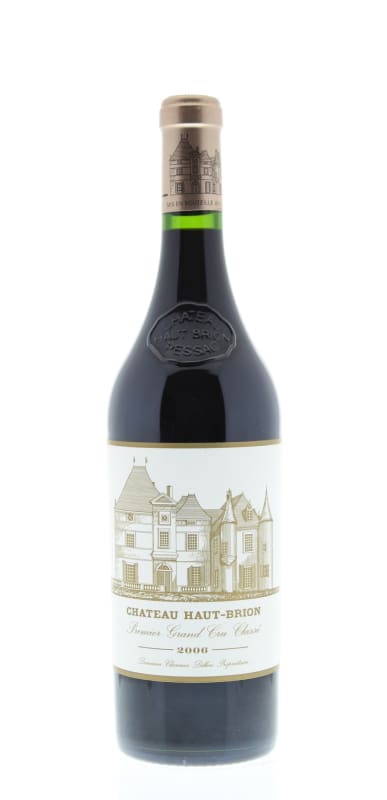


Winemaker Notes
Professional Ratings
-
Robert Parker's Wine Advocate
The 2006 Haut-Brion performed even better from bottle than it did from barrel. Sixty-four percent of the production went into this wine, and while it displays the vintage’s powerful tannins and structure, it possesses superb concentration, and the minerality/scorched earth notes of a great Haut-Brion. Medium to full-bodied, with perhaps not quite the fleshiness of the 2005 or 2000, it is built more along the lines of the 1998 and 1996. It is a brilliant effort displaying sensational purity, texture, and length that should be exceptionally long-lived. Anticipated maturity: 2017-2035.
-
Jeb Dunnuck
The 2006 Haut Brion is a classic, elegant version of this cuvee, and while approachable, it is still young and relatively unevolved. Textbook Graves notes of smoky tobacco, cigar, leafy herbs, lots of earthy minerality, and a deep core of black fruits all emerge from this beauty. With medium to full-bodied richness and impressive mid-palate depth, it has fine, present tannin, impeccable balance, and a great finish. Drink this classic Haut Brion anytime over the coming two decades.
-
Wine Spectator
Offers subtle and complex aromas, with violet, cedar and blackberry. Full-bodied, with ultrafine tannins and a very long finish. Tight and curled up in a ball. Best after 2015. 11,000 cases made.
-
Wine & Spirits
Jean-Philippe Delmas's team at Domaine Clarence Dillon produced two excellent wines in 2006 from the neighboring properties of Haut-Brion and La Mission. Both share an aristocratic stature, with Haut-Brion more immediately powerful and expressive in this vintage. As if the fruit mirrored the multicolored pebbles of the vineyard, this touches off sensory impressions of fresh currants, pomegranate, cherry pits, coriander, black raspberry, rhubarb and fennel, all seeming to emanate from the same dark and mysterious place at the center of the wine. The texture is lean and taut, with a tensile strength that carries the fruit past mouth-drying tannin through a mineral finish that lasts for minutes. There's nothing effusive about the wine; it's all reserved. Probably at its best between ten and 20 years from the vintage.


One of the world’s most classic and popular styles of red wine, Bordeaux-inspired blends have spread from their homeland in France to nearly every corner of the New World. Typically based on either Cabernet Sauvignon or Merlot and supported by Cabernet Franc, Malbec and Petit Verdot, the best of these are densely hued, fragrant, full of fruit and boast a structure that begs for cellar time. Somm Secret—Blends from Bordeaux are generally earthier compared to those from the New World, which tend to be fruit-dominant.

Recognized for its superior reds as well as whites, Pessac-Léognan on the Left Bank claims classified growths for both—making it quite unique in comparison to its neighboring Médoc properties.
Pessac’s Chateau Haut-Brion, the only first growth located outside of the Médoc, is said to have been the first to conceptualize fine red wine in Bordeaux back in the late 1600s. The estate, along with its high-esteemed neighbors, La Mission Haut-Brion, Les Carmes Haut-Brion, Pique-Caillou and Chateau Pape-Clément are today all but enveloped by the city of Bordeaux. The rest of the vineyards of Pessac-Léognan are in clearings of heavily forested area or abutting dense suburbs.
Arid sand and gravel on top of clay and limestone make the area unique and conducive to growing Sémillon and Sauvignon blanc as well as the grapes in the usual Left Bank red recipe: Cabernet Sauvignon, Merlot, Cabernet Franc and miniscule percentages of Petit Verdot and Malbec.
The best reds will show great force and finesse with inky blue and black fruit, mushroom, forest, tobacco, iodine and a smooth and intriguing texture.
Its best whites show complexity, longevity and no lack of exotic twists on citrus, tropical and stone fruit with pronounced floral and spice characteristics.