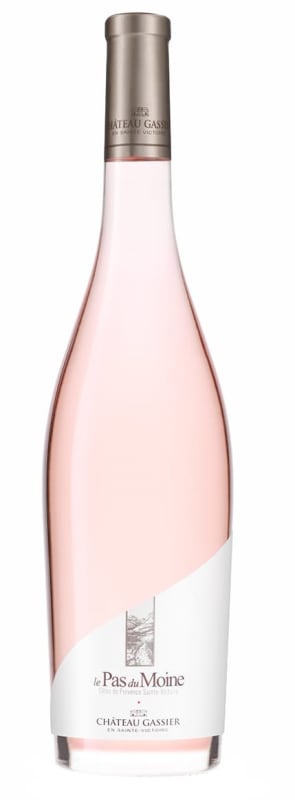
Chateau Gassier Le Pas du Moine Rose 2023 Front Bottle Shot
Chateau Gassier Le Pas du Moine Rose 2023 Front Bottle Shot Chateau Gassier Le Pas du Moine Rose 2023 Front Label

Winemaker Notes

Splendid nuances of litchee for this gleaming wine. A bewitching nose of citrus, exotic fruit, and red berries. The full, generous palate is burstng with citrus and delicate notes of exotic fruit. Superb structure and a finish of great persistence.

Le Pas du Moine rosé is a great match for a poke bowl with salmon, prawn, avocado and grapefruit, honeydew melon with Bayonne ham, grilled sea bream, and also ideal for aperitif.


Chateau Gassier

Chateau Gassier

View all products
Chateau Gassier, undefined
Chateau Gassier Winery Video
Nestled in the foothills of the Montagne de Sainte-Victoire, at some of the highest elevations found in Provence, are the vineyards of Château Gassier. In 1982, the Gassier family, originally from Barcelonnette, Haute-Provence, and descendants of the Provençal nobility since 1421, bought the property and the 40 hectares of vines in the village of Puyloubier. The Gassier family are instrumental in the history of Provence. Since the 17th century, the family distinguished themselves in the service of royalty as well as in legal and academic circles. But it is the younger branch of the family, based in Saint Estève de Var, whom provide the wine connection. From the turn of the 20th century, patriarch Raymond Gassier owned 200 hectares around the region. Raymond was briefly married to Colette Mars, a singer and actress of the time, who, in 1938, encouraged him to claim his title of nobility so that he became known as Baron Raymond Marius Gassier of Saint Estève. This proved a heritage of high lineage, associated with the kingdoms of France and Spain. Anthony Gassier, who adored horses and rode for various prestigious French stables, eventually abandoned his equestrian career to devote himself to the family vineyard. His search for great terroir in Provence led him to Sainte-Victoire, where he fell under the spell of the Mountain and founded Château Gassier. His son Georges, representing the 5th generation in the Gassier family’s wine lineage, took over the Château property in 1997. In 2004, the Gassier and Jeanjean families connected, creating an alliance of winemaking know-how and commercial expertise that developed Château Gassier into the estate we know today. Olivier Souvelain joined Château Gassier in 2010 as Estate Director and was entrusted with the task of restructuring the vineyards and buildings. In line with his commitment to preserving the domaine and its environment, the vineyards underwent organic conversion in 2016.
Image for Rosé Wine content section
View all products

Whether it’s playful and fun or savory and serious, most rosé today is not your grandmother’s White Zinfandel, though that category remains strong. Pink wine has recently become quite trendy, and this time around it’s commonly quite dry. Since the pigment in red wines comes from keeping fermenting juice in contact with the grape skins for an extended period, it follows that a pink wine can be made using just a brief period of skin contact—usually just a couple of days. The resulting color depends on grape variety and winemaking style, ranging from pale salmon to deep magenta.

Image for Cotes de Provence Provence, France content section

Cotes de Provence

Provence, France

View all products

Cotes de Provence is an extensive but valuable appellation that includes vineyards bordering the main Provencal appellations. Its sites vary from subalpine hills, which receive the cooling effects of the mountains to the north, to the coastal St-Tropez, a region mainly influenced by the warm Mediterranean sunshine.

Here the focus is on quality rosé, as it defines four fifths of the region’s wines. Following in the rosé footsteps, a lot of new effort is going into the region’s red production as well. A new generation has turned its focus on high quality Grenache, Syrah, Cinsault and Carignan. Cotes de Provence white wines, which represent a miniscule part of the region as far as volume, are nonetheless worthy of consideration and can include any combination of Clairette, Semillon, Ugni Blanc and Vermentino.

SBE107684_2023 Item# 1986615