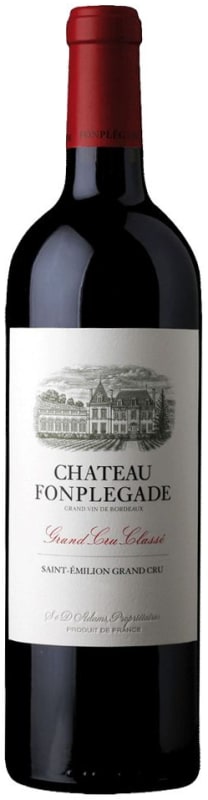


Winemaker Notes
With an impeccable balance between fruit, complexity, and aromatic length, this wine is characterized by a sophisticated minerality, consistent from year to year, with soft and supple tannins and a velvety texture. It is made from the estate's oldest vines, meticulously hand-farmed using organic and biodynamic practices to bring out the finest quality in each cluster. Predominantly Merlot, the blend includes just enough Cabernet Franc to imbue the wine with an elegant tannic structure.
Professional Ratings
-
Jeb Dunnuck
Based on 90% Merlot and 10% Cabernet Franc, coming from a gorgeous terroir on the Côte Pavie, the 2018 Château Fonplégade reveals a dense purple/ruby color as well as a charming, ripe, sexy style in its red and blue fruits, flowers, toasted spice, and loamy soil aromas and flavors. It shows more floral nuances with time in the glass, has a distinct earthy minerality, ripe tannins, and outstanding length. It takes lots of air to show at its best, and it will ideally be given 4-5 years of bottle age to integrate its oak, but unquestionably, everything is the right place, and this is a beautiful Saint-Emilion.
-
James Suckling
The currant and light vanilla come through on the nose with some flowers, too. It’s full-bodied with lots of rich fruit and chewy tannins that need to soften. Powerful and intense. Try after 2024.
-
Robert Parker's Wine Advocate
Deep garnet-purple in color, the 2018 Fonplegade needs no convincing, charging out of the gate with bold notions of black cherry preserves, mulberries and ripe, juicy black plums, leading to suggestions of Indian spices, dried roses and smoked meats plus a touch of tar. The medium to full-bodied palate is beautifully crafted, dripping with poise and sophistication, draped in plush tannin's and seamless freshness, finishing on a lingering black cherry note. A very polished showing!
-
Decanter
Silky tannins, lovely fresh lift and some menthol powering along through the finish. Brambled fruits, freshly cut and dried herbs, with tons of nuance and complexity here. Some austerity still at this stage, all confirming the promise shown during en primeur. 50% new oak, 30% one-year barrels, 10% cement eggs, 10% amphora.
-
Wine Enthusiast
This well-balanced wine is ripe, with dense black fruits shot through with ageworthy tannins. Poised and already offering fruitiness and ripeness built for long-term aging, this wine will be ready from 2026. Organic and biodynamic
-
Wine Spectator
This is nicely packed with plum, black cherry and boysenberry compote flavors that have good energy and are backed by a mix of savory, violet, anise and applewood notes through the finish. Buried chalky spine should help this age nicely in the cellar too. Drink now through 2030.


One of the world’s most classic and popular styles of red wine, Bordeaux-inspired blends have spread from their homeland in France to nearly every corner of the New World. Typically based on either Cabernet Sauvignon or Merlot and supported by Cabernet Franc, Malbec and Petit Verdot, the best of these are densely hued, fragrant, full of fruit and boast a structure that begs for cellar time. Somm Secret—Blends from Bordeaux are generally earthier compared to those from the New World, which tend to be fruit-dominant.

Marked by its historic fortified village—perhaps the prettiest in all of Bordeaux, the St-Émilion appellation, along with its neighboring village of Pomerol, are leaders in quality on the Right Bank of Bordeaux. These Merlot-dominant red wines (complemented by various amounts of Cabernet Franc and/or Cabernet Sauvignon) remain some of the most admired and collected wines of the world.
St-Émilion has the longest history in wine production in Bordeaux—longer than the Left Bank—dating back to an 8th century monk named Saint Émilion who became a hermit in one of the many limestone caves scattered throughout the area.
Today St-Émilion is made up of hundreds of independent farmers dedicated to the same thing: growing Merlot and Cabernet Franc (and tiny amounts of Cabernet Sauvignon). While always roughly the same blend, the wines of St-Émilion vary considerably depending on the soil upon which they are grown—and the soils do vary considerably throughout the region.
The chateaux with the highest classification (Premier Grand Cru Classés) are on gravel-rich soils or steep, clay-limestone hillsides. There are only four given the highest rank, called Premier Grand Cru Classés A (Chateau Cheval Blanc, Ausone, Angélus, Pavie) and 14 are Premier Grand Cru Classés B. Much of the rest of the vineyards in the appellation are on flatter land where the soils are a mix of gravel, sand and alluvial matter.
Great wines from St-Émilion will be deep in color, and might have characteristics of blackberry liqueur, black raspberry, licorice, chocolate, grilled meat, earth or truffles. They will be bold, layered and lush.