

Winemaker Notes
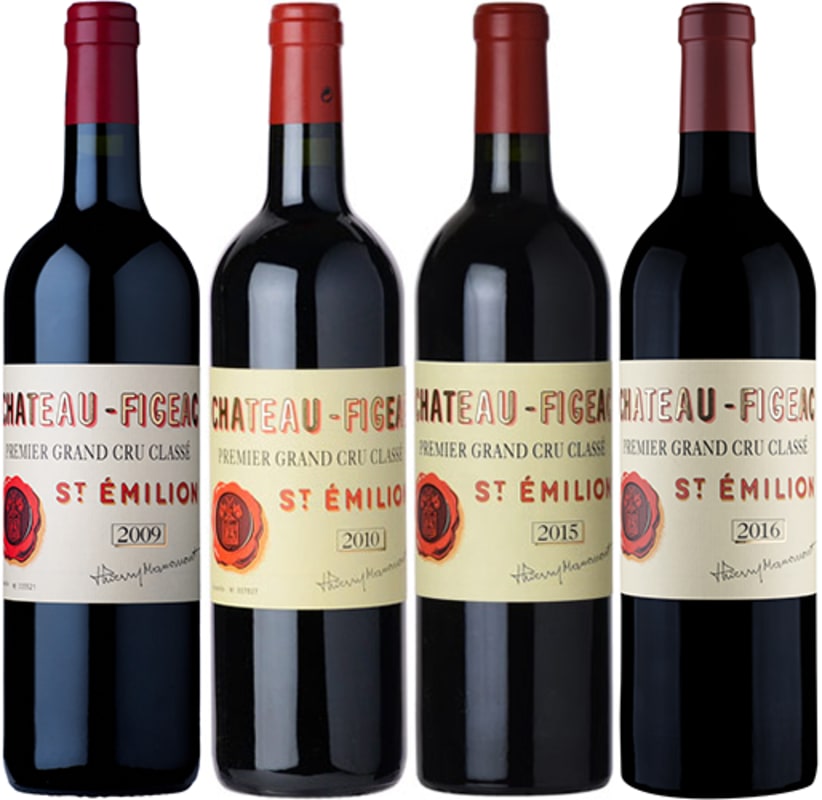
This vertical four-pack includes one bottle each of Château Figeac 2009, 2010, 2015 & 2016.
With its pedigree style, Château Figeac epitomizes the elegance of the great wines of Bordeaux. Its unique style gradually shows through and develops over time.
- 1 Bottle of 2009 Château Figeac
Château-Figeac owes its distinctive character to the unique combination of Gunzian gravel outcrops and clay subsoil, several microclimates and the mix of Cabernet Sauvignon, Cabernet Franc and Merlot planted in the vineyard. This unusual blend, with its majority two-thirds Cabernet, gives the wine both structure and refinement, freshness and smoothness. Since the early years of the present century the wine has become more approachable in its youth, offering a more caressing mouthfeel, without losing its incomparable uprightness over the years. Its ability to age for decades is quite exceptional, revealing an inimitable and complex bouquet as the years go by. - 1 Bottle of 2010 Château Figeac
Blend: 35% Cabernet Franc, 35% Cabernet Sauvignon, 30% Merlot - 1 Bottle of 2015 Château Figeac
The Cabernets have exceptional depth of aroma and flavor, an array of floral scents from the Cabernet Franc complementing the Cabernet Sauvignon’s fresh fruit and spice bouquet. A multiplicity of sensations appear on tasting, all enfolded in juicy Merlot which gives a full and creamy texture to the mid-palate. The tannic structure provides support for a long, lingering finish, entirely consistent with the Château-Figeac style. Blend: Blend: 43% Cabernet Sauvignon, 29% Merlot, 28% Cabernet Franc - 1 Bottle of 2016 Château Figeac
Blend: 38% Cabernet Sauvignon, 36% Merlot, 26% Cabernet Franc
Professional Ratings
-
Jeb Dunnuck
2015: A hold onto your hat wine, the 2015 Château Figeac is pure perfection and one of the wines of this terrific vintage. A blend of 43% Cabernet Sauvignon, 29% Merlot and 28% Cabernet Franc, its deep purple color is followed by a huge nose of crème de cassis, black raspberries, smoked earth, and graphite. This is followed by a full-bodied, opulent and incredibly concentrated Saint-Emilion that has everything in the right places, no hard edges, thrilling purity of fruit, and a great, great finish. This is one of those rare gems that carries huge intensity and richness, yet still glides across the palate with no sense of weight or heaviness. Winemaker Frédéric Faye thinks the 2016 is even better but that certainly isn’t stopping me from giving this crazy good wine a triple digit score. Everyone owes it to themselves to try and taste this wine at least once!
-
Vinous
2016: The 2016 Figeac was bottled at the end of July 2018, since Frédéric Faye wanted to give the wine more time in barrel to develop more harmony. The stunning 24-carat bouquet rivets you to the spot with brilliant delineation and mineral-rich red fruit that articulates its terroir as well as any Right Bank you will find. The palate is medium-bodied with svelte tannin, perfect acidity, wonderfully integrated new oak and enormous depth toward the fresh, pencil-box- and cedar-infused finish. This is a classic Figeac, up there with the 1947 and 1949, both recently re-tasted and testifying to a wine that genuinely belongs among the elite Saint-Émilions. Faye believes it is the best Figeac he has ever made. He is correct.
-
James Suckling
2015: Intense, yet extremely precise nose of red fruit with hints of pomegranate and vanilla. Stunning balance of great ripeness and very fine tannins that give this a wonderfully rich and plush texture at the very long and lingering finish, which gives you so much to think about. Drink or hold. Château Quintus vertical tasting. SP.
-
Jeb Dunnuck
2016: Another brilliant wine from the genius of Frédéric Faye, the 2016 Château Figeac checks in as 38% Cabernet Sauvignon, 36% Merlot, and the rest Cabernet Franc that spent 19 months in new French oak. Roughly 75% of the production made it into the grand vin. This deeply colored beauty is a legendary wine in the making and offers ultra-pure aromas and flavors of crème de cassis, smoke tobacco, dried herbs, chocolate, truffle, and graphite. Showing more violets notes with time in the glass, it builds incrementally on the palate, with flawless balance as well as incredible elegance, no hard edges, and a finish that won't quit. Readers will have a blast comparing the 2016 and 2015 vintages over the coming 3-4 decades and this estate is firing on all cylinders. This will most likely merit a triple-digit rating in 7-8 years and keep for 4 decades or more.
Rating: 98+ -
James Suckling
2010: Intense aromas of wet earth, leaves, sweet berries and cinnamon follow through to a full body, velvety and dense tannins and a long and flavorful finish. Opulent style. Just opening now, but this shows lots of stuffing, even if it does tighten down on the palate. Integrated and fine. Drink or hold.
-
Wine Enthusiast
2015: Dominated by the two Cabernets—Sauvignon and Franc—this is a beautifully structured wine. Firm tannins and ripe black currants give a perfumed character that is ripe, dense and impressive. The wine has enormous potential, with great tannins and fruit. Drink from 2027.
Cellar Selection -
Decanter
2010: Many 2010 St-Emilion are over the top, with high alcohols, but not Figeac. The nose is starting to evolve, with lush blackcurrant and mint aromas, and hints of bacon and liquorice. Sleek and concentrated, the wine still shows admirable freshness. It's assertive and peppery, has power and spice, and its long, majestic finish is sustained by its fine-grained tannins.
-
Decanter
2015: This Figeac expresses the solar character of the vintage while retaining enticing freshness. The bouquet is dense and complex with spicy, woody and graphite-like notes mingling with ripe wild berry fruit. The palate also combines a fleshy core with welcome freshness, but also presents a more imposing tannic framework than the ones presented above, and so this is a more monolithic wine that will certainly benefit from cellaring for ten years or more.
-
Decanter
2016: Owned by the Manoncourt family since 1947, with Frédéric Faye as general manager and Michel Rolland as consultant since 2013, Figeac is one of two properties ranked premier grand cru classé A in the 2022 St-Emilion Classification (but was not in 2016). Uniquely for Bordeaux’s Right Bank, its 40ha of vineyards are on mainly gravel soils, so Cabernet grapes dominate over Merlot. 2016 blend: 38% Cabernet Sauvignon, 36% Merlot, 26% Cabernet Franc, aged in 100% new oak. Georgie Hindle: Not giving ‘drink me now’ vibes, but it’s super-refined, deep and layered. Power and concentration, a stunning, very complete wine. Vincenzo Arnese: Delicate yet ripe aromas of plum, dark cherry, blueberry and blackcurrant, oak, cloves and star anise. Balanced. Arthur Coggill: Rich, heady redcurrant and damson, very in your face red cherry. Supple, gentle palate with walnut. The length gives you time to savour the flavours.
-
James Suckling
2009: Even in this super-ripe vintage Figeac retains its usual red bell pepper aroma (from the cabernet sauvignon grape) and that adds a light touch to the opulent fruit cake and spice character. The full fine tannins beautifully support the rich palate and make the finish very long and plush. A great 2009! Drink or hold. (Horizontal Tasting, London, 2019)
-
Robert Parker's Wine Advocate
2010: Deep garnet colored, the 2010 Figeac bursts from the glass with gregarious scents of baked blueberries, black cherry compote and chocolate box with hints of camphor, pencil lead and iron ore. Medium to full-bodied, the palate has beautifully ripe, velvety tannins and bold freshness supporting the generous fruit, finishing long and layered.
-
Robert Parker's Wine Advocate
2015: The recent leaps and bounds in improvements that have occurred at this great estate, equating to a dramatic increase in intensity and complexity—without compromising the husky, soft-spoken, sultry voice that is Figeac—is a monumental achievement. Kudos to Frederic Faye and his team for so beautifully expressing what was clearly an extraordinary vintage at Chateau Figeac! Blended of 29% Merlot, 43% Cabernet Sauvignon and 28% Cabernet Franc, the deep garnet-purple colored 2015 Figeac reveals vibrant black cherries, cassis, red currants, black plums and licorice notes with touches of cigar boxes, bouquet garni, potpourri, damp soil and black pepper. Medium-bodied, delicately crafted and with nuanced, quietly intense layers of vivacious red and black fruits, the palate features a solid frame of polished, rounded tannins and seamless freshness, finishing long and minerally.
Rating: 97+ -
Robert Parker's Wine Advocate
2016: The 2016 Figeac is comprised of 38% Cabernet Sauvignon, 36% Merlot and 26% Cabernet Franc. Deep garnet-purple colored, the nose is a little broody and reticent at this very youthful stage, slowly unfolding to reveal profound plum preserves, crème de cassis, black raspberries and star anise with hints of moss-covered bark, truffles and tilled loam plus a waft of red currants and raspberry leaves sparks. Medium to full-bodied, the palate is practically quivering with energy, offering glimpses at tightly wound black fruit and mineral/ferrous layers, framed by very firm, ripe tannins and wonderful tension, finishing long with the spices coming through. This will need a good 7-8 years to come round and then should cellar for 40+ years. Very serious, beautifully poised and sophisticated personality this vintage.
Rating: 97+ -
Vinous
2010: The 2010 Figeac has a youthful and exuberant bouquet with black cherries, boysenberry, cassis and violets that soar from the glass. There is no stopping the aromatics here. The palate is rich and sensual on the entry with precocious red fruit laced with blood orange and cedar. It firms up a little towards the structured finish that exerts fine grip and there is real persistence in evidence. This is a very classy 2010 Right Bank, this bottle showing even better than the example at BI Wines & Spirits a few days earlier. Tasted blind at Farr Vintners 10-Year On Bordeaux horizontal.
-
Vinous
2015: One of the real standouts of the vintage, the 2015 Figeac soars out of the glass with stunning aromatic presence and beautifully layered fruit. Powerful and yet also light on its feet, it is wonderfully complex from start to finish. Plum, mocha, spice, new leather and menthol gradually open up, but the 2015 is most remarkable for its sensual perfume and exceptional overall balance. This is the first vintage the winemaking team followed a new protocol designed to maintain purity of fruit and aromas by reducing contact with oxygen during the first year of aging. The 2015 Figeac is magnificent.
-
Jeb Dunnuck
2010: Based on a normal mix of close to equal parts Cabernet Sauvignon, Merlot, and Cabernet Franc, the 2010 is still youthful yet certainly offers pleasure today. Deep ruby/plum-hued with a classic Figeac nose of red and black currants, tobacco leaf, chocolate, and truffle, and it certainly seems more Médoc than Saint-Emilion. Beautifully balanced on the palate, it's medium to full-bodied, and has silky tannins, a terrific mix of both richness and freshness, and an overriding sense of elegance. It's a gorgeous Figeac just coming into its own, with another two decades of prime drinking ahead of it.
-
James Suckling
2016: This is a very linear and driven Figeac with smooth and fine tannins. Full-bodied, yet compact and reserved. Blackberry, chocolate and hazelnut flavors. Direct and structured.
-
Wine Enthusiast
2009: A ripe year like 2009 is kind to the Cabernet Sauvignon of Chateau Figeac. The wine is perfumed with new wood and sweet fruits, delicious black currant flavors giving both ripeness and freshness. The wine has weight and impressive density. A start of the vintage.
Cellar Selection -
Wine Enthusiast
2010: This Cabernet Sauvignon-dominated wine always stands out as a powerhouse of impressive tannins. In 2010, it is complex with a dense structure, tight mineral texture and dense wood. Underneath, the ripe black fruits bring the promise for the long-term future. Give this wine at least 10 years.
Cellar Selection -
Wine Spectator
2009: Distinctive, with atypical (for St.-Emilion) force and drive to the black currant, roasted cedar and maduro tobacco flavors, which are supported by a dense, loam-tinged structure. Terrific roasted espresso, ganache and fig paste notes wait in reserve. Very muscular, but with the cut for balance. Best from 2017 through 2035.
-
Wine Spectator
2010: This is very tight, showing a prominent roasted apple wood and bittersweet cocoa frame more today, though the core of dense currant paste, blackberry pâte de fruit and plum sauce waits in reserve. Gorgeous singed spice, anise and toasted fig bread notes flitter through the finish, though this needs some time in the cellar to resolve itself fully. A very distinctive, structured expression of St.-Emilion. Best from 2016 through 2035.
-
Wine Spectator
2015: Densely packed, with crème de cassis, raspberry reduction and plum sauce flavors allied to notes of loam, warm cast iron and roasted apple wood. Shows terrific cut and energy, with the iron element helping to push the finish along and letting the fruit linger. Among the more backward wines of the vintage, so patience is required. Best from 2028 through 2045.
-
Wine Spectator
2016: A gutsy, fully endowed wine, brimming with dark currant, warm fig and steeped blackberry notes, as well as waves of smoldering tobacco and warm gravel. Features a serious bass line, but everything works together, while flecks of savory and iron dart in and out.
-
Decanter
2009: The colour remains deep and shows no sign of evolution. The nose, too, remains youthful, but it's broad and fleshy, with generous blackberry fruit. Plump and rounded, it's more forward than 2010, reflecting the vintage, but it's also very concentrated. The tannins are firm so the wine has great structure, if not the freshness and energy of the 2010. Long.
-
Jeb Dunnuck
2009: The 2009 Château Figeac is the normal blend of close to equal parts Merlot, Cabernet Franc, and Cabernet Sauvignon. It’s a beautiful wine that has classic Figeac style, yet is more reserved and backward than most in the vintage. Forest floor, truffle, blackcurrants, cigar ash and green tobacco notes all emerge from this full-bodied, ripe, yet pure, elegant Saint-Emilion that has good acidity and plenty of length. The tannins are ripe, yet firm, it’s nicely balanced, and it blossoms with time in the glass. Nevertheless, it needs another 4-5 years of cellaring to hit prime time, and it should keep for 2-3 decades.
-
Robert Parker's Wine Advocate
2009: The medium garnet colored 2009 Figeac features a very pretty perfume of rose hip tea, lilacs and cinnamon stick over a core of red and black currant preserves plus hints of dried herbs and sweaty saddles. Medium to full-bodied, the palate delivers bags of savory fruit layers with plenty of floral sparks, framed by rounded tannins, finishing on a earthy note.
-
Vinous
2009: The 2009 Figeac has one of the more Oriental-inspired bouquets amongst its peer group, one that is extremely well defined with scents of pressed rose petals and rolled tobacco emerging with time. The palate is medium-bodied with supple tannin. Fresh and vibrant although disappointingly, it cuts off dramatically on the finish. Maybe with time it will just broaden out a little? I hope so because otherwise this is splendid. Tasted blind at Farr Vintners’ 2009 Bordeaux tasting.
-
Wine Enthusiast
2016: While this wine still has serious layers of tannins, it also delivers considerable ripe black-fruit flavors. The estate in the Figeac sector of Saint-Emilion has produced a powerful wine that is firm and that will age further.
Cellar Selection


One of the world’s most classic and popular styles of red wine, Bordeaux-inspired blends have spread from their homeland in France to nearly every corner of the New World. Typically based on either Cabernet Sauvignon or Merlot and supported by Cabernet Franc, Malbec and Petit Verdot, the best of these are densely hued, fragrant, full of fruit and boast a structure that begs for cellar time. Somm Secret—Blends from Bordeaux are generally earthier compared to those from the New World, which tend to be fruit-dominant.

Marked by its historic fortified village—perhaps the prettiest in all of Bordeaux, the St-Émilion appellation, along with its neighboring village of Pomerol, are leaders in quality on the Right Bank of Bordeaux. These Merlot-dominant red wines (complemented by various amounts of Cabernet Franc and/or Cabernet Sauvignon) remain some of the most admired and collected wines of the world.
St-Émilion has the longest history in wine production in Bordeaux—longer than the Left Bank—dating back to an 8th century monk named Saint Émilion who became a hermit in one of the many limestone caves scattered throughout the area.
Today St-Émilion is made up of hundreds of independent farmers dedicated to the same thing: growing Merlot and Cabernet Franc (and tiny amounts of Cabernet Sauvignon). While always roughly the same blend, the wines of St-Émilion vary considerably depending on the soil upon which they are grown—and the soils do vary considerably throughout the region.
The chateaux with the highest classification (Premier Grand Cru Classés) are on gravel-rich soils or steep, clay-limestone hillsides. There are only four given the highest rank, called Premier Grand Cru Classés A (Chateau Cheval Blanc, Ausone, Angélus, Pavie) and 14 are Premier Grand Cru Classés B. Much of the rest of the vineyards in the appellation are on flatter land where the soils are a mix of gravel, sand and alluvial matter.
Great wines from St-Émilion will be deep in color, and might have characteristics of blackberry liqueur, black raspberry, licorice, chocolate, grilled meat, earth or truffles. They will be bold, layered and lush.