


Winemaker Notes
An elegant pale Rosé with expressive notes of fresh strawberries and bright cherry. Dry and crisp with nice complexity this Rosé is very refreshing and perfect as an aperitif. Chateau Fage is situated on the banks of the Dordogne in the Graves de Vayres appellation, facing the prestigious appellations of Saint-Emilion, Pomerol and Fronsac. Recently acquired by the Glotin family, the estate is one the referent chateau of the appellation, for the quality of its wines.
Professional Ratings
-
Wilfred Wong of Wine.com
COMMENTARY: The 2021 Château Fage Rosé is light and lively. TASTING NOTES: This wine exhibits aromas and flavors of savory spices and dried earth. Enjoy it with pan-fried Petrale sole topped with pink peppercorns. (Tasted: May 23, 2022, San Francisco, CA)




Château Fage is situated on the banks of the Dordogne in the Graves de Vayres appellation, facing the prestigious appellations of Saint-Emilion, Pomerol and Fronsac. The estate is one the reference château of the appellation, for the quality of its wines, as well as its capacity to produce substantial volumes.
Built in the 19th century, the castle dominates the Souloire valley. The estate extends over 110 acres of vines, forests and meadows. A blend of great homogeneity that characterizes this exceptional terroir located on the banks of the Dordogne in the Graves de Vayres appellation. Since 2015 a vineyard renewal program has been implemented. Several plots have been replanted, the soils have been worked in order to aerate them and decompact them. A sustainable agriculture policy has been put in place. In the cellar, the equipment has been renewed, in particular with a more efficient sorting machine. All this with the aim of achieving the level of quality that this terroir deserves.
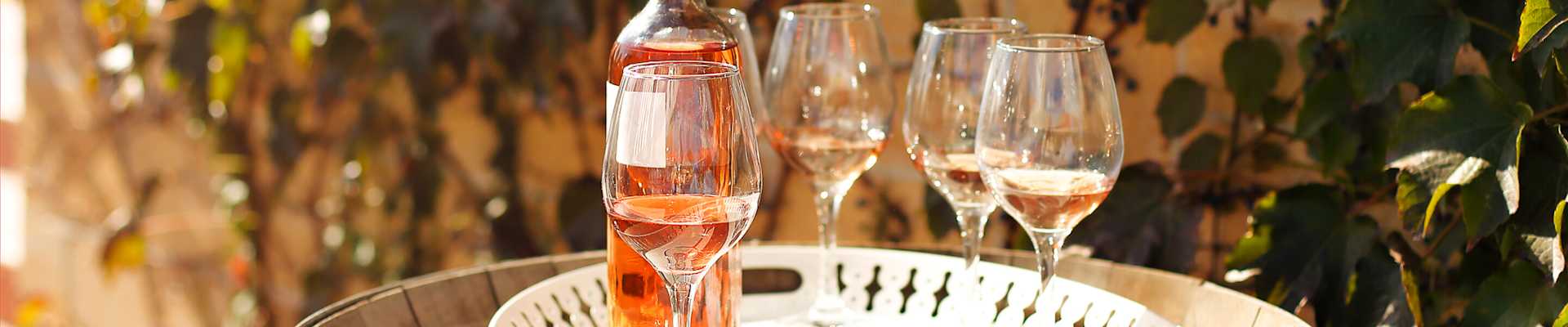
Whether it’s playful and fun or savory and serious, most rosé today is not your grandmother’s White Zinfandel, though that category remains strong. Pink wine has recently become quite trendy, and this time around it’s commonly quite dry. Since the pigment in red wines comes from keeping fermenting juice in contact with the grape skins for an extended period, it follows that a pink wine can be made using just a brief period of skin contact—usually just a couple of days. The resulting color depends on grape variety and winemaking style, ranging from pale salmon to deep magenta.

One of the most important wine regions of the world, Bordeaux is a powerhouse producer of wines of all colors, sweetness levels, and price points. Separated from the Atlantic Ocean by a coastal pine forest, this relatively flat region has a mild maritime climate, marked by cool wet winters and warm summers. Annual weather differences create significant vintage variations, making Bordeaux an exciting French wine region to follow.
The Gironde estuary, a defining feature of Bordeaux, separates most of the region into the Left Bank and the Right Bank. Farther inland, where the Gironde splits into the Garonne and Dordogne Rivers, the bucolic, rolling hills of the area in between, called Entre-Deux-Mers, is a source of great quality, approachable reds and whites.
The Left Bank, dominated by Cabernet Sauvignon, contains the Médoc, Graves, and Sauternes, as well as the region’s most famous chateaux. Merlot is important here as the perfect blending grape for Cabernet Sauvignon adding plush fruit and softening Cabernet's sometimes hefty tannins. Cabernet Franc, Petit Verdot and Malbec may also be used in the Left Bank Bordeaux wine blends.
Merlot is the principal Bordeaux wine variety of the Right Bank; Cabernet Franc adds structure and complexity to Merlot, creating wines that are concentrated, supple, and more imminently ready for drinking, compared with their Left Bank counterparts. Key appellations of the Right Bank include St. Emilion and Pomerol.
Dry and sweet Bordeaux white wines are produced throughout the region from Sauvignon Blanc, Sémillon, and sometimes Muscadelle or Sauvignon Gris. Some of the finest dry whites can be found in the Graves sub-appellation of Pessac-Léognan, while Sauternes is undisputedly the gold standard for sweet wines. Small amounts of rosé and sparkling Bordeaux wines are made in the region as well.