

Winemaker Notes
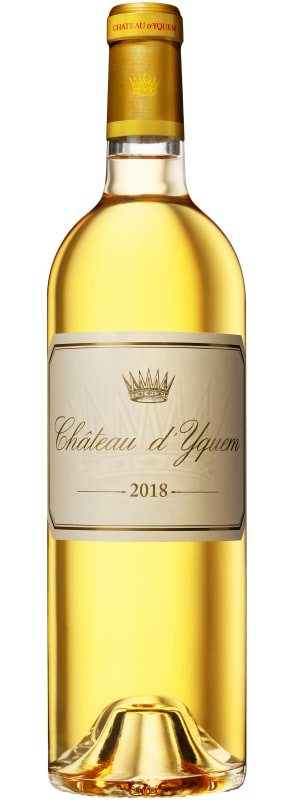
2018 is a solar Yquem, true to the vintage, but perfectly balanced and underlined a freshness which is the signature of this mythical wine.
Blend: 85% Sémillon, 15% Sauvignon Blanc
Professional Ratings
-
Decanter
An extremely impressive Yquem here. Deeply concentrated and silky in texture, with crème caramel and saffron, followed by bitter orange on the finish. Gourmet, powerful and concentrated, revealing as it opens in the glass the lime blossom and zest that pick things up, keeping things light and sculpted through the finish. There were five weeks without rain between the picking of the dry white Y and the main estate wine Yquem - so a full two months of harvest time. It meant a lot of patience and a small final yield, but one that was high in quality. Around 50% of the production goes into Yquem. 145g/l residual sugar and a pH of 3.95. Also tasted August 2020; same score.
-
James Suckling
An extremely polished and refined d’Yquem with lightly cooked peaches and mangos and an overlay of vanilla and cream with some lemon meringue. Orange peel, too. What is striking is the texture, which is creamy and so fine. The tannins give the wine energy and beauty. The finish is extremely long and impressive. So clean and refined. Not heavy at all, but vivid and clean as crystal. Goes on for minutes. Elegance with stature is a good description. Drinkable now, but better in 2023 and onwards.
-
Wine Spectator
A beauty from start to finish, with fresh, racy notes of honeysuckle, quinine and mirabelle plum leading off, followed by richer quince, creamed pear and white nectarine flavors. Everything melds through the finish, picking up macadamia nut and brioche accents to complete the seduction. Sémillon and Sauvignon Blanc. Best from 2025 through 2045.
-
Robert Parker's Wine Advocate
The 2018 d'Yquem is a great success despite a challenging harvest, exuding aromas of peach, pear, menthol and orchard fruits, complemented by an elegant, floral-driven bouquet. It’s remarkably balanced and fresh on the palate, with a medium to full-bodied structure, a delicate core of fruit in the finish and a penetrating energy revealing a lovely and already enjoyable wine. It's a great effort in a challenging vintage in Sauternes. This blend of 85% Sémillon and 15% Sauvignon Blanc contains 145 grams of residual sugar.
-
Vinous
The 2018 Yquem was tasted just a few months earlier before this second reading at the château. My notes are pretty consistent with that dried honey and saffron scented aromas, perhaps just missing the energy conveyed by the previous vintage. The palate is well balanced with that telltale lusciousness that I remarked upon in my last note, although this just precludes the 2018 from delivering the tension and nerve of the best vintages. Apricot and lemon curd linger on the aftertaste. Very fine.


Apart from the classics, we find many regional gems of different styles.
Late harvest wines are probably the easiest to understand. Grapes are picked so late that the sugars build up and residual sugar remains after the fermentation process. Ice wine, a style founded in Germany and there referred to as eiswein, is an extreme late harvest wine, produced from grapes frozen on the vine, and pressed while still frozen, resulting in a higher concentration of sugar. It is becoming a specialty of Canada as well, where it takes on the English name of ice wine.
Vin Santo, literally “holy wine,” is a Tuscan sweet wine made from drying the local white grapes Trebbiano Toscano and Malvasia in the winery and not pressing until somewhere between November and March.
Rutherglen is an historic wine region in northeast Victoria, Australia, famous for its fortified Topaque and Muscat with complex tawny characteristics.

Sweet and unctuous but delightfully charming, the finest Sauternes typically express flavors of exotic dried tropical fruit, candied apricot, dried citrus peel, honey or ginger and a zesty beam of acidity.
Sémillon, Sauvignon Blanc, Sauvignon Gris and Muscadelle are the grapes of Sauternes. But Sémillon's susceptibility to the requisite noble rot makes it the main variety and contributor to what makes Sauternes so unique. As a result, most Sauternes estates are planted to about 80% Sémillon. Sauvignon is prized for its balancing acidity and Muscadelle adds aromatic complexity to the blend with Sémillon.
Botrytis cinerea or “noble rot” is a fungus that grows on grapes only in specific conditions and its onset is crucial to the development of the most stunning of sweet wines.
In the fall, evening mists develop along the Garonne River, and settle into the small Sauternes district, creeping into the vineyards and sitting low until late morning. The next day, the sun has a chance to burn the moisture away, drying the grapes and concentrating their sugars and phenolic qualities. What distinguishes a fine Sauternes from a normal one is the producer’s willingness to wait and tend to the delicate botrytis-infected grapes through the end of the season.