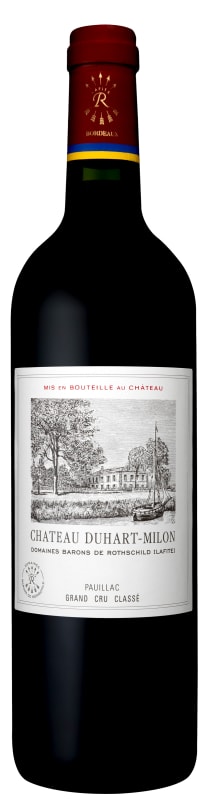


Winemaker Notes
The Duhart-Milon grape is not docile, but some have learned to understand it, over the years and with the advice of their elders. Generations of winegrowers have succeeded one another on this honest and generous land from which great wines are sourced.
Blend: 78% Cabernet Sauvignon, 22% Merlot
Professional Ratings
-
Jeb Dunnuck
The 2022 Château Duhart-Milon is all finesse and elegance, offering cassis, black raspberry, spring flowers, spicy wood, and graphite. Medium to full-bodied, it’s incredibly pure, layered, and seamless, with utter class from start to finish.
-
James Suckling
The tension here comes from chalky tannins and lovely tobacco, herbs, cedar and cigar-box character. Currants and blue fruits. It's medium-bodied with lovely fruit and light-citrus bitterness. Firm and intense with an excellent finish.
-
Decanter
Ripe fruit on the nose, cherries, blackcurrants and plums, fresh, open and inviting. Sleek and smooth, this is intense but juicy giving tannic strength, just shy of chewy but appealingly chalky and fleshy giving a mouthfilling texture while the stony, saline, spiced edge to the tannins and cool blueberry and mint give the freshness. The tannins stand out here, present and at the fore, but well textured, crushed velvet but juicy with high acidity and a sharpness that counters the clear power underneath. Ageing will incorporate 40% of new oak plus up to 15% of amphora based on current trials. Harvest 31 August to 28 September.
Barrel Sample: 94 -
Robert Parker's Wine Advocate
The 2022 Duhart-Milon is showing beautifully, bursting from the glass with aromas of mulberries, blackcurrants, pencil shavings and rose petal. Medium to full-bodied, velvety and textural, it's sweet and layered, with a gourmand core of fruit underpinned by powdery tannins and lively acids. A decade ago, Duhart could be a somewhat austere wine, but today it's much more integrated and harmonious. The 2022 is a blend of 78% Cabernet Sauvignon and 22% Merlot.


One of the world’s most classic and popular styles of red wine, Bordeaux-inspired blends have spread from their homeland in France to nearly every corner of the New World. Typically based on either Cabernet Sauvignon or Merlot and supported by Cabernet Franc, Malbec and Petit Verdot, the best of these are densely hued, fragrant, full of fruit and boast a structure that begs for cellar time. Somm Secret—Blends from Bordeaux are generally earthier compared to those from the New World, which tend to be fruit-dominant.

The leader on the Left Bank in number of first growth classified producers within its boundaries, Pauillac has more than any of the other appellations, at three of the five. Chateau Lafite Rothschild and Mouton Rothschild border St. Estephe on its northern end and Chateau Latour is at Pauillac’s southern end, bordering St. Julien.
While the first growths are certainly some of the better producers of the Left Bank, today they often compete with some of the “lower ranked” producers (second, third, fourth, fifth growth) in quality and value. The Left Bank of Bordeaux subscribes to an arguably outdated method of classification that goes back to 1855. The finest chateaux in that year were judged on the basis of reputation and trading price; changes in rank since then have been miniscule at best. Today producers such as Chateau Pontet-Canet, Chateau Grand Puy-Lacoste, Chateau Lynch-Bages, among others (all fifth growth) offer some of the most outstanding wines in all of Bordeaux.
Defining characteristics of fine wines from Pauillac (i.e. Cabernet-based Bordeaux Blends) include inky and juicy blackcurrant, cedar or cigar box and plush or chalky tannins.
Layers of gravel in the Pauillac region are key to its wines’ character and quality. The layers offer excellent drainage in the relatively flat topography of the region allowing water to run off into “jalles” or streams, which subsequently flow off into the Gironde.