


Winemaker Notes
Blend: 80% Merlot, 12% Cabernet Sauvignon, 8% Petit Verdot
Professional Ratings
-
Wine Enthusiast
There is a high percentage of Merlot in this blend, giving softness with ripe blackberry fruits and a succulent character. The wine is pure black fruits and fresh acidity.
-
Decanter
Floral and aromatic, expressive and perfumed with sweet blackcurrant touches. Cool blue fruits; blueberries, plums and damsons, this is slightly sombre, dark and heady with a fresh minty-liquorice and crushed stone texture giving an appealing salinity. Satsifying weight in the mouth, but delicately presented with spiced nuances. Quite strict on the mid-palate, some tension coming through with energy and polish.
-
James Suckling
Perfumed already with currants, blueberries, violets, bark and sandalwood. Medium-bodied with fine, lightly powdery tannins. Very fresh. Cool blue fruit. 80% merlot, 12% cabernet sauvignon and 8% petit verdot. Third wine of Ducru-Beaucaillou.
Barrel Sample: 91-92 -
Vinous
The 2021 Le Petit Ducru de Ducru-Beaucaillou, the estate's Merlot-based blend, is soft, fruity and charming, with notes of dark cherry, spice, leather, tobacco, mocha and dried herbs. Best of all, the Petit Ducru will drink well with minimal cellaring. Much of the Merlot is from vineyards that often go into the Grand Vin. –Antonio Galloni
-
Jeb Dunnuck
The deeply hued 2021 Le Petit Ducru De Ducru-Beaucaillou (which got some choice lots of Merlot in 2021) is classy stuff, with red and black currants, sappy flowers, medium-bodied richness, ripe, polished tannins, and a supple, layered, elegant profile that has plenty to love.
-
Robert Parker's Wine Advocate
The 2021 Le Petit Ducru mostly derives from 25 hectares in Saint-Julien purchased by Jean-Eugène Borie in 1972 and formerly known as Lalande-Borie. Exhibiting aromas of cherries, cassis and petals, it's medium to full-bodied, ample and seamless, with a polished, charming profile and an impressively penetrating finish. Barrel Sample: 89-90.


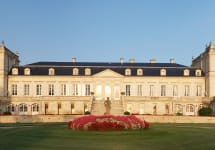
Chateau Ducru Beaucaillou is named after the beautiful, large stones found in its unique wine-growing terroir. This exceptional ecosystem produces fine, elegant, tasty wines with a long finish - in short, archetypical Saint-Julien wines.
Perched on an exceptional site with incomparable views over the Gironde estuary, in the center of a hundred-year-old park, Ducru-Beaucaillou is a majestic, Victorian-style castle, which has, over time, become one of the great symbols of the Médoc. Unusual for Bordeaux, it is built directly above the barrel cellars, enveloping its owners, who have lived here for over sixty years.
Today, the estate is managed by the company Jean Eugène Borie SA, which is owned by Mrs Borie, her daughter Sabine Coiffe and her son Bruno-Eugène, CEO since 2003, the third generation of the Borie family to head the estate. There are very close links between this estate and the five families who have been its successive owners.

One of the world’s most classic and popular styles of red wine, Bordeaux-inspired blends have spread from their homeland in France to nearly every corner of the New World. Typically based on either Cabernet Sauvignon or Merlot and supported by Cabernet Franc, Malbec and Petit Verdot, the best of these are densely hued, fragrant, full of fruit and boast a structure that begs for cellar time. Somm Secret—Blends from Bordeaux are generally earthier compared to those from the New World, which tend to be fruit-dominant.

An icon of balance and tradition, St. Julien boasts the highest proportion of classed growths in the Médoc. What it lacks in any first growths, it makes up in the rest: five amazing second growth chateaux, two superb third growths and four well-reputed fourth growths. While the actual class rankings set in 1855 (first, second, and so on the fifth) today do not necessarily indicate a score of quality, the classification system is important to understand in the context of Bordeaux history. Today rivalry among the classed chateaux only serves to elevate the appellation overall.
One of its best historically, the estate of Leoville, was the largest in the Médoc in the 18th century, before it was divided into the three second growths known today as Chateau Léoville-Las-Cases, Léoville-Poyferré and Léoville-Barton. Located in the north section, these are stone’s throw from Chateau Latour in Pauillac and share much in common with that well-esteemed estate.
The relatively homogeneous gravelly and rocky top soil on top of clay-limestone subsoil is broken only by a narrow strip of bank on either side of the “jalle,” or stream, that bisects the zone and flows into the Gironde.
St. Julien wines are for those wanting subtlety, balance and consistency in their Bordeaux. Rewarding and persistent, the best among these Bordeaux Blends are full of blueberry, blackberry, cassis, plum, tobacco and licorice. They are intense and complex and finish with fine, velvety tannins.