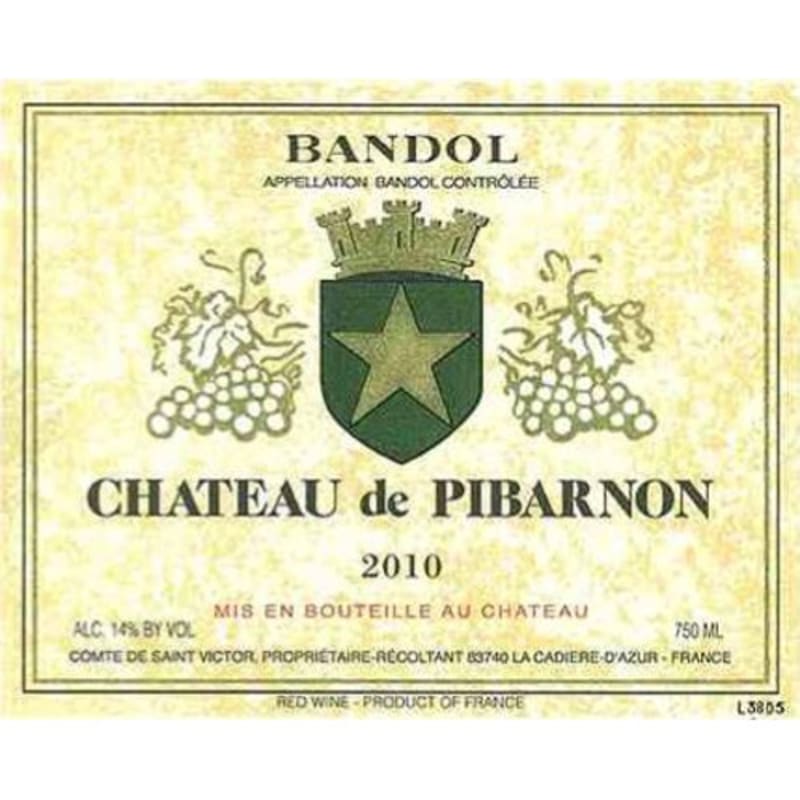

Winemaker Notes
Blend: 90 % Mourvedre, 10% Grenache
Professional Ratings
-
Robert Parker's Wine Advocate
Moving to the classic cuvee and even more impressive (it was one of the top wines I was able to taste for this report), the 2010 Bandol, which is over 90% Mourvedre, sees partial destemming and aging in oak casks, offers both gorgeous aromatic complexity and superb richness and depth on the palate. Giving up notions of pepper, Provencal herbs, underbrush and leather, with a solid core of dark fruit, this medium to full-bodied, pure, layered and beautifully balanced effort needs another 2-3 years of bottle age, and will easily keep for a decade or more past that. Run by the Saint-Victor family since 1975, Chateau Pibarnon lies in the northern part of the appellation and consists of steep, terraced slopes and unique blue marl and limestone soils. The wines are gorgeous and offer classic examples of the appellation.


Full of ripe fruit, and robust, earthy goodness, Mourvèdre is actually of Spanish provenance, where it still goes by the name Monastrell or Mataro. It is better associated however, with the Red Blends of the Rhône, namely Chateauneuf-du-Pape. Mourvèdre shines on its own in Bandol and is popular both as a single varietal wine in blends in the New World regions of Australia, California and Washington. Somm Secret—While Mourvèdre has been in California for many years, it didn’t gain momentum until the 1980s when a group of California winemakers inspired by the wines of the Rhône Valley finally began to renew a focus on it.

Provence’s leader in concentrated and age-worthy red wines, Bandol is home to the dense, deep and earthy Mourvèdre grape. Like Châteauneuf-du-Pape, Bandol produces characterful reds that, while approachable in their youth, are typically designed for the cellar.
Given its coastal, Provencal situation, Bandol also naturally produces an assortment of charming, aromatic rosés made of Mourvèdre, Grenache and Cinsault.