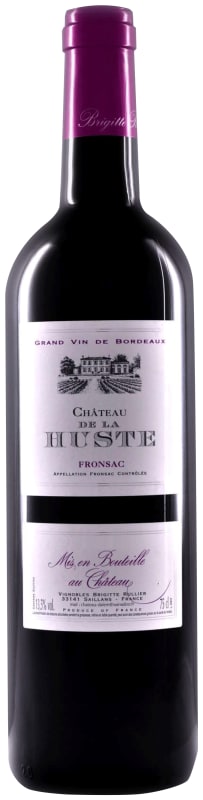


Winemaker Notes
The Barrel Sample for this wine is above 14% ABV.
Professional Ratings
-
Robert Parker's Wine Advocate
Opaque purple-black colored, the 2019 de la Huste bursts from the glass with gregarious scents of baked black cherries, warm blackberries and plum preserves plus hints of licorice, melted chocolate, spice cake and cinnamon stick with a waft of potpourri. Medium to full-bodied, the palate is a powerhouse of black fruits and savory flavors, framed by wonderfully ripe, rounded tannins and fantastic freshness, finishing long and perfumed.
Barrel Sample:91-93 -
James Suckling
This is a solid Fronsac with crushed-blackberry, stone and dark-chocolate aromas and flavors. It’s medium-bodied with a chewy tannin backbone and stony, earthy highlights at the finish. Needs time to soften. Try after 2023.
-
Jeb Dunnuck
The 2019 Château De La Huste is terrific and certainly worth the effort to track down. Classic, medium-bodied, concentrated, and balanced, it has ripe red, black, and blue fruits as well as background chocolate and tobacco notes. Nicely textured, it has plenty of mid-palate depth, ripe yet present tannins, and the balance and class to evolve for a decade. Best after 2022.
-
Wine Spectator
Sleek and fresh, with very pure damson plum and cassis notes lined with subtle savory and chalky mineral hints. Understated and sneaky long. Merlot and Cabernet Franc. Drink now.


One of the world’s most classic and popular styles of red wine, Bordeaux-inspired blends have spread from their homeland in France to nearly every corner of the New World. Typically based on either Cabernet Sauvignon or Merlot and supported by Cabernet Franc, Malbec and Petit Verdot, the best of these are densely hued, fragrant, full of fruit and boast a structure that begs for cellar time. Somm Secret—Blends from Bordeaux are generally earthier compared to those from the New World, which tend to be fruit-dominant.

Home of the very first remarkable Right Bank wines, dating back to the 1730s, Fronsac and Canon-Fronsac actually retained more fame than Pomerol well into the 19th century. Today these wines represent some of Bordeaux’s best hidden gems.
Fronsac is a very small region at an unusually high elevation compared to other Bordeaux appellations. Its vineyards unroll along the oak-dotted hills bordering the river’s edge, making it perhaps Bordeaux’s prettiest and most majestic countryside.
Merlot covers 60% of the vineyard acreage; the rest of the vines are Cabernet Franc and Cabernet Sauvignon. The Fronsac and Canon-Fronsac appellations are limited to the higher land where soils are predominantly limestone and sandstone. Lower vineyards along the Dordogne River mainly qualify for Bordeaux AOC status
The best Fronsac are deeply concentrated in ripe red and black berry; they have a solid mineral backbone and are rich and plush on the finish.