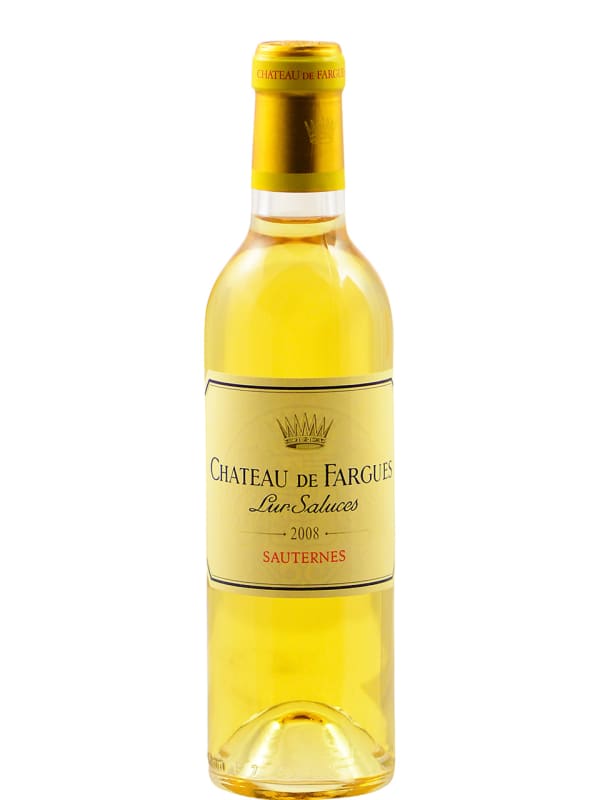


Winemaker Notes
While Château d’Yquem was sold to LVMH in the late 1990s, Château de Fargues remains under the control of the Lur-Saluces family, with Alexandre’s friendly and highly capable son Philippe at the helm today. Their lone wine is produced from 80% Sémillon and 20% Sauvignon Blanc, harvested with meticulous care to only include pristinely botrytized fruit, with yields averaging less than a glass of wine per vine. It is aged for two full years in one-third new oak barrels, then six further months in stainless steel to assemble; fining and filtration are never employed. Emphasizing focus over ultra-richness, Château de Fargues is an elegant, streamlined, varietally expressive Sauternes with outstanding longevity.
Professional Ratings
-
Robert Parker's Wine Advocate
Tasted single blind against its peers. Whereas last year the de Fargues 2008 was immediately forthcoming, a few months later this example demands much more coaxing from the glass. Eventually, it reveals scents of dried pineapple, limestone and a touch of cooking apple with some VA notes lending it a bit of a “kick.” The palate is medium-bodied with a mellifluous texture. It is very well-balanced with a tangible sense of tension from start to finish, attractive notes of dried honey and quince interlacing the long structured finish. This constitutes a serious Sauternes for the serious Sauternes-lover.
-
Wine Spectator
This harnesses the steely, nervy quinine edge of the vintage and buries it nicely in a core of lemon chiffon, shortbread and honeysuckle notes. The pure finish shows a nice sweet-sour interplay and fine length. This could age on a fairly slow track.
-
Wine Enthusiast
Big, rich botrytis character from the first aromas right through the palate. The wine is rich in orange marmalade, intense and concentrated.
Barrel Sample: 90-92


Apart from the classics, we find many regional gems of different styles.
Late harvest wines are probably the easiest to understand. Grapes are picked so late that the sugars build up and residual sugar remains after the fermentation process. Ice wine, a style founded in Germany and there referred to as eiswein, is an extreme late harvest wine, produced from grapes frozen on the vine, and pressed while still frozen, resulting in a higher concentration of sugar. It is becoming a specialty of Canada as well, where it takes on the English name of ice wine.
Vin Santo, literally “holy wine,” is a Tuscan sweet wine made from drying the local white grapes Trebbiano Toscano and Malvasia in the winery and not pressing until somewhere between November and March.
Rutherglen is an historic wine region in northeast Victoria, Australia, famous for its fortified Topaque and Muscat with complex tawny characteristics.

Sweet and unctuous but delightfully charming, the finest Sauternes typically express flavors of exotic dried tropical fruit, candied apricot, dried citrus peel, honey or ginger and a zesty beam of acidity.
Sémillon, Sauvignon Blanc, Sauvignon Gris and Muscadelle are the grapes of Sauternes. But Sémillon's susceptibility to the requisite noble rot makes it the main variety and contributor to what makes Sauternes so unique. As a result, most Sauternes estates are planted to about 80% Sémillon. Sauvignon is prized for its balancing acidity and Muscadelle adds aromatic complexity to the blend with Sémillon.
Botrytis cinerea or “noble rot” is a fungus that grows on grapes only in specific conditions and its onset is crucial to the development of the most stunning of sweet wines.
In the fall, evening mists develop along the Garonne River, and settle into the small Sauternes district, creeping into the vineyards and sitting low until late morning. The next day, the sun has a chance to burn the moisture away, drying the grapes and concentrating their sugars and phenolic qualities. What distinguishes a fine Sauternes from a normal one is the producer’s willingness to wait and tend to the delicate botrytis-infected grapes through the end of the season.