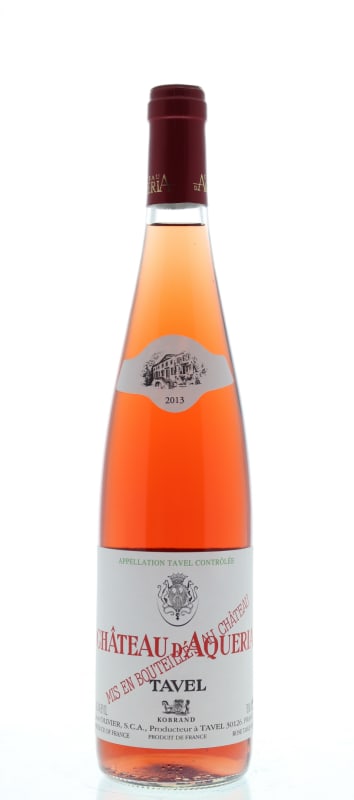


Winemaker Notes
Delicious with steamed or sauteed shellfish, salads such as salade niçoise, and roasted chicken.
Blend: 50% Grenache, 12% Syrah, 12% Cinsault, 8% Mourvèdre, 12% Clairette, 5% Bourboulenc, 1% Picpoul
Professional Ratings
-
Wine & Spirits
This is one of the best vintages of D'Aqueria Tavel in recent memory. It's juicy and bright with red cherry fruit, zesty with lemon and herbs-a symphony of flavor that sings of its southern Rhone roots.
Best Buy


Whether it’s playful and fun or savory and serious, most rosé today is not your grandmother’s White Zinfandel, though that category remains strong. Pink wine has recently become quite trendy, and this time around it’s commonly quite dry. Since the pigment in red wines comes from keeping fermenting juice in contact with the grape skins for an extended period, it follows that a pink wine can be made using just a brief period of skin contact—usually just a couple of days. The resulting color depends on grape variety and winemaking style, ranging from pale salmon to deep magenta.

The only all-rosé appellation in the Rhone, a Tavel comes in many hues from light salmon to bright pink and is said to be the only rosé that can actually age—and improve. The rosé wines of Tavel have a great historic reputation, having been favored by King Louis XIV in the 18th century, as well as famous authors, Balzac and Mistral.
Tavel are always dry but the high percentage of the fruity Grenache (30-60% of the blend by law) and even Cinsault, give charming aromas and flavors that make them feel "almost sweet." A great Tavel rosé will have a bouquet suggestive of rose petals, apricot, strawberry and red currant. The palate may be fleshy, round and layered but is always fresh and balanced.