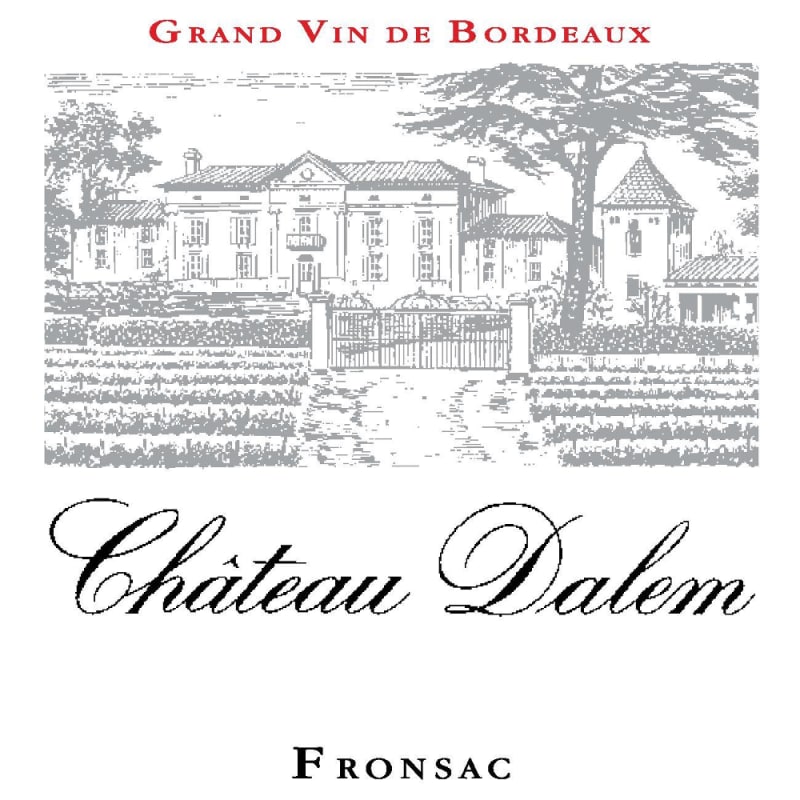

Winemaker Notes
Professional Ratings
-
James Suckling
Love the blackberry and dark-chocolate aromas with hints of sandalwood and almonds. Full-bodied, layered and very intense and powerful. So polished and long. Shows gorgeous length. Drink in 2022.
-
Wine Spectator
Briary tannins push plum, raspberry and blackberry preserve flavors along. Light spice, singed apple wood and tobacco notes fill in the background. Best from 2019 through 2030.
-
Jeb Dunnuck
An incredibly successful Fronsac is the 2015 Château Dalem, which is a 90/10 split of Merlot and Cabernet Franc that saw 50% new oak. It’s a ripe, rounded, incredibly sexy Fronsac that offers notes of white truffles (which makes me think of limestone soils), licorice, chocolate, plums, and currants. It’s loaded with character, has terrific purity, and is going to deliver the goods for at least 10-15 years. This estate sits at the top of the Fronsac plateau, overlooking the Dordogne Valley, and covers 18 hectares plated mostly to Merlot, with 20% Cabernet Franc. The soils consist of a thin layer of clay sitting atop limestone subsoils. The estate is run by the Swiss Rullier family and readers looking for wines that overdeliver should remember this estate.
-
Robert Parker's Wine Advocate
Composed of 90% Merlot and 10% Cabernet Franc, the 2015 Dalem spent 18 months in part new and part one-year-old oak barrels. Medium to deep garnet-purple in color, it leaps from the glass with notions of chocolate-covered cherries, crushed blackberries and plum preserves with a cedar and Marmite toast undercurrent plus a touch of beef drippings. Full-bodied and packed to the gills with youthful, crunchy black fruits, it has a firm frame and finishes a little woody at this youthful stage, but it should emerge singing in 2-3 years.
Rating: 91+


One of the world’s most classic and popular styles of red wine, Bordeaux-inspired blends have spread from their homeland in France to nearly every corner of the New World. Typically based on either Cabernet Sauvignon or Merlot and supported by Cabernet Franc, Malbec and Petit Verdot, the best of these are densely hued, fragrant, full of fruit and boast a structure that begs for cellar time. Somm Secret—Blends from Bordeaux are generally earthier compared to those from the New World, which tend to be fruit-dominant.

Home of the very first remarkable Right Bank wines, dating back to the 1730s, Fronsac and Canon-Fronsac actually retained more fame than Pomerol well into the 19th century. Today these wines represent some of Bordeaux’s best hidden gems.
Fronsac is a very small region at an unusually high elevation compared to other Bordeaux appellations. Its vineyards unroll along the oak-dotted hills bordering the river’s edge, making it perhaps Bordeaux’s prettiest and most majestic countryside.
Merlot covers 60% of the vineyard acreage; the rest of the vines are Cabernet Franc and Cabernet Sauvignon. The Fronsac and Canon-Fronsac appellations are limited to the higher land where soils are predominantly limestone and sandstone. Lower vineyards along the Dordogne River mainly qualify for Bordeaux AOC status
The best Fronsac are deeply concentrated in ripe red and black berry; they have a solid mineral backbone and are rich and plush on the finish.