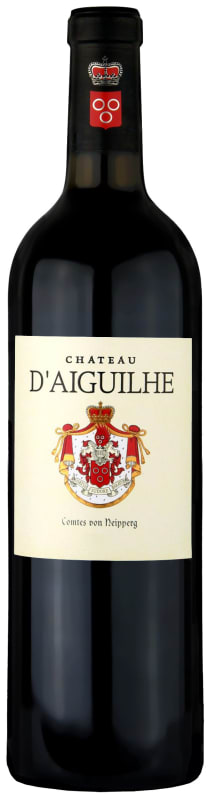


Winemaker Notes
Blend: 88% Merlot, 12% Cabernet Franc
The Barrel Sample for this wine is above 14% ABV.
Professional Ratings
-
Decanter
Brilliant wine maintaining clear grip from start to finish, powerful black fruits with a silky smooth texture. Clear austerity with fresh acidities, this is mouthwatering on the finish and totally moreish.
Barrel Tasting:92
-
Jeb Dunnuck
Black cherries, spicy oak, chalky minerality, and hints of white truffle all emerge from the 2019 Château D'Aiguilhe, an elegant, beautifully balanced, seamless 2019 from the Castillon region. It has plenty of ripeness, medium body, present tannins, and the balance and class to keep for 10-15 years.
-
James Suckling
Aromas of ripe blackberries, grilled plums, tobacco and dark chocolate. It’s medium-bodied with firm, chewy tannins. Compact and structured.
-
Robert Parker's Wine Advocate
A terrific effort from this large and immaculately maintained property on the clay-limestone slopes of the Côtes de Castillon, the 2019 d'Aiguilhe exhibits aromas of cherries and cassis mingled with notions of burning embers, licorice and warm spices. Medium to full-bodied, layered and concentrated, with lively acids, powdery tannins and a mineral finish, it's intelligently matured in tank and large-format oak as well as small barriques.
-
Wine Spectator
Restrained but with good inner juiciness to its plum and cassis notes, while red licorice and red tea hints chime through. Shows a subtle chalky minerality that lengthens the finish. Merlot and Cabernet Franc.


One of the world’s most classic and popular styles of red wine, Bordeaux-inspired blends have spread from their homeland in France to nearly every corner of the New World. Typically based on either Cabernet Sauvignon or Merlot and supported by Cabernet Franc, Malbec and Petit Verdot, the best of these are densely hued, fragrant, full of fruit and boast a structure that begs for cellar time. Somm Secret—Blends from Bordeaux are generally earthier compared to those from the New World, which tend to be fruit-dominant.

Though the region is larger than many of its Right Bank neighbors, it is one that consistently produces high quality, well-valued red wines. In fact, Cotes de Castillon can almost be considered a geographical eastern extension of St. Emilion, producing similarly-fashioned reds based on Merlot.
Vineyards in the region’s clay, limestone and sandstone soils produce sturdy red wines. On alluvial terraces, in vineyards closer to the Dordogne River, wines tend to be more supple and fruity. In either case, a great Cotes de Castillon red will be bursting with raspberry, plum and blueberry, have an enticing bouquet of dried flowers and a finish that is plush and opulent.