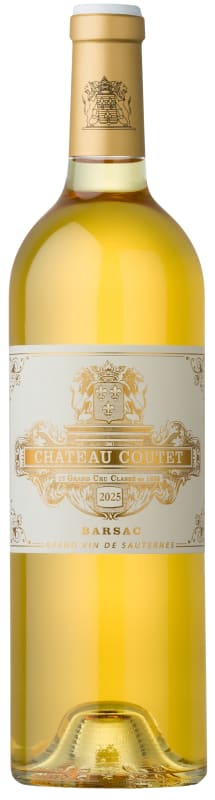


Winemaker Notes
Blend: 97% Sémillon, 2% Sauvignon Blanc, 1% Muscadelle
Professional Ratings
-
Jeb Dunnuck
Grilled peach, toasted bread, honey, and mint are just some of the nuances that emerge from the 2025 Château Coutet, a rich, powerful, full-bodied Barsac. On the palate, it has clean, integrated acidity and a great finish. I love its overall balance.
Barrel Sample: 95-97 -
Vinous
The 2025 Coutet is a little more backward on the nose than usual, less giving. But there is wonderful purity of fruit, lemon thyme and clementine scents, touches of white flower. The palate is medium-bodied with a viscous entry, playing with Coutet's trademark thread of acidity that emanates from the limestone soils. Quite minerally and spicy on the aftertaste, this is a marvellous Barsac from the Baly family. –Neal Martin
Barrel Sample: 95-97 -
James Suckling
This is round and concentrated, with incisive acidity providing balance. Full-bodied and attractive in its power, with just enough freshness to hold it together.
Barrel Sample: 94-95


Apart from the classics, we find many regional gems of different styles.
Late harvest wines are probably the easiest to understand. Grapes are picked so late that the sugars build up and residual sugar remains after the fermentation process. Ice wine, a style founded in Germany and there referred to as eiswein, is an extreme late harvest wine, produced from grapes frozen on the vine, and pressed while still frozen, resulting in a higher concentration of sugar. It is becoming a specialty of Canada as well, where it takes on the English name of ice wine.
Vin Santo, literally “holy wine,” is a Tuscan sweet wine made from drying the local white grapes Trebbiano Toscano and Malvasia in the winery and not pressing until somewhere between November and March.
Rutherglen is an historic wine region in northeast Victoria, Australia, famous for its fortified Topaque and Muscat with complex tawny characteristics.

Characterized by dried tropical fruit, candied apricot, citrus and honey, the sweet wines of Barsac are always balanced by a bright beam of acidity. While technically also part of the Sauternes region, Barsac’s sandy and limestone soils produce a lighter version in comparison. Its main grapes are the same: Sémillon, Sauvignon Blanc, Sauvignon Gris and Muscadelle.