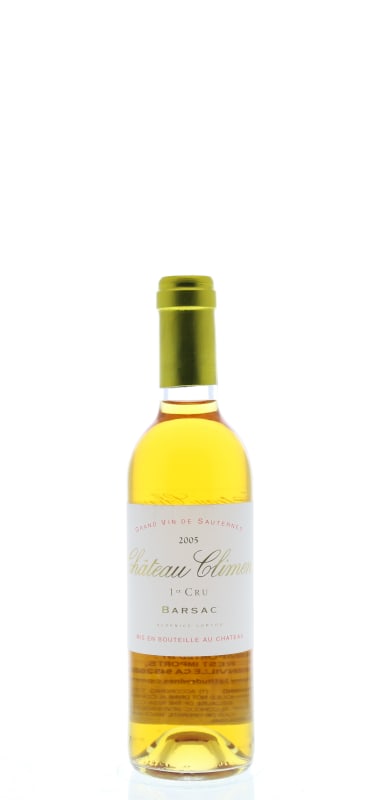


Winemaker Notes
Professional Ratings
-
Robert Parker's Wine Advocate
Tasted blind at the 10-Year On Tasting in Sauternes. The 2005 Château Climens just soars from the glass with layers of clear honey, marmalade, nectarine and minerals all beautifully carved. The palate is medium-bodied with fresh, vibrant honeyed fruit that builds and builds in the mouth in tandem with a killer line of acidity. Even though it is a convincing, great Climens, you also have the impression that it is only just beginning to show what it is capable of. Bérénice Lurton and her team excelled in this vintage and it comes strongly recommended.
-
Wine Spectator
Toffee, dried lemon rind and tropical fruit on the nose. Full-bodied and very sweet, with a dense palate of candied fruit and a long, sweet finish. Very concentrated. The botrytis spice creeps up on the finish.
-
Connoisseurs' Guide
There was a time when the best of Barsac would not achieve the heavily concentrated character found in wines from the heart of Sauternes, but, as this wine so handsomely shows, such is no longer the case. Its intensely honeyed, golden apple and ripe peach aromas are nicely complemented by nutty notes of botrytis, and the wine's thick, rich flavors follow perfectly in suit. Still, this wine is too young and direct to be more than a sugary cameo of what it will become over time, and we very much urge you to let it age into the layered perfection that surely lies ahead.
-
Wine Enthusiast
Intensely rich, very perfumed wine, full of apples and honey flavors. There is also fresh fruit, but the richness dominates, showing some dry botrytis flavors to finish.


Apart from the classics, we find many regional gems of different styles.
Late harvest wines are probably the easiest to understand. Grapes are picked so late that the sugars build up and residual sugar remains after the fermentation process. Ice wine, a style founded in Germany and there referred to as eiswein, is an extreme late harvest wine, produced from grapes frozen on the vine, and pressed while still frozen, resulting in a higher concentration of sugar. It is becoming a specialty of Canada as well, where it takes on the English name of ice wine.
Vin Santo, literally “holy wine,” is a Tuscan sweet wine made from drying the local white grapes Trebbiano Toscano and Malvasia in the winery and not pressing until somewhere between November and March.
Rutherglen is an historic wine region in northeast Victoria, Australia, famous for its fortified Topaque and Muscat with complex tawny characteristics.

Characterized by dried tropical fruit, candied apricot, citrus and honey, the sweet wines of Barsac are always balanced by a bright beam of acidity. While technically also part of the Sauternes region, Barsac’s sandy and limestone soils produce a lighter version in comparison. Its main grapes are the same: Sémillon, Sauvignon Blanc, Sauvignon Gris and Muscadelle.