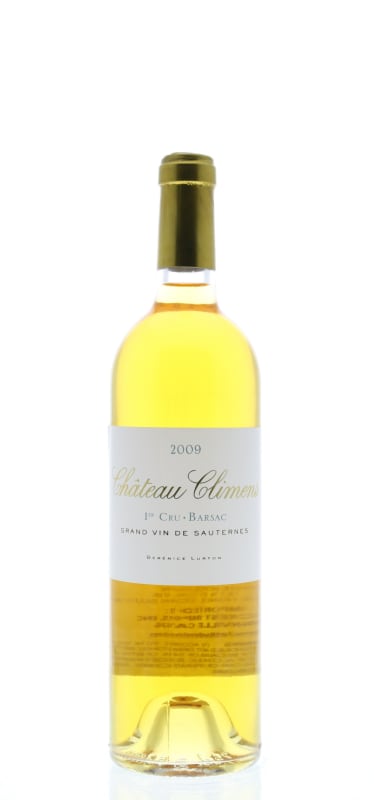


Winemaker Notes
Professional Ratings
-
Decanter
Rich and opulent, but the Barsac terroir keeps it reined in. Exotic fruit notes, baked apple and confit fruit. Pure, velvety and unctuous but with a bite of citrus zest freshness coming in behind. Biodynamic estate.
-
Robert Parker's Wine Advocate
The samples tasted in Southwold were not correct and therefore I requested a bottle to be included in this report that was tasted one week later. Suffice to say, it was completely different and much more representative. Here the 2009 displays a wonderful bouquet of honeysuckle, almond and a hint of creme caramel that is beautifully defined. The palate has a creamy entry with patently a good deal of oak that needs to be subsumed. The balance is just exquisite, the line of acidity perfectly pitched and moreover, there is that paradoxical mixture of weight and levity that makes Climens what it is. The finish blossoms with quince, almond and honey and lingers long in the mouth. This is surely destined to be a top tier Climens that will last the usual decades. Drink 2014-2050.
-
Wine Enthusiast
The superb palate boasts richness, with honey and orange zest notes. It shows fine balance between the flavors of orange jelly and the intense botrytis-driven notes. It has a light, delicate texture and acidity.
-
Wine Spectator
Rounded and broad in feel for now, with richly layered toasted almond, ginger cream, brioche and glazed apple notes that all glide through the viscous finish, where a flash of green tea can be found. This has the buried zip for the long haul, which it will need to assimilate fully. There's lots in reserve. Best from 2015 through 2034. 4,165 cases made.


Apart from the classics, we find many regional gems of different styles.
Late harvest wines are probably the easiest to understand. Grapes are picked so late that the sugars build up and residual sugar remains after the fermentation process. Ice wine, a style founded in Germany and there referred to as eiswein, is an extreme late harvest wine, produced from grapes frozen on the vine, and pressed while still frozen, resulting in a higher concentration of sugar. It is becoming a specialty of Canada as well, where it takes on the English name of ice wine.
Vin Santo, literally “holy wine,” is a Tuscan sweet wine made from drying the local white grapes Trebbiano Toscano and Malvasia in the winery and not pressing until somewhere between November and March.
Rutherglen is an historic wine region in northeast Victoria, Australia, famous for its fortified Topaque and Muscat with complex tawny characteristics.

Characterized by dried tropical fruit, candied apricot, citrus and honey, the sweet wines of Barsac are always balanced by a bright beam of acidity. While technically also part of the Sauternes region, Barsac’s sandy and limestone soils produce a lighter version in comparison. Its main grapes are the same: Sémillon, Sauvignon Blanc, Sauvignon Gris and Muscadelle.