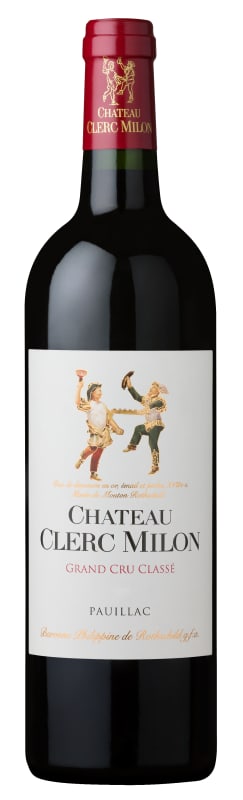


Winemaker Notes
The wine has a deeper reddish purple color. Concentration on the nose is revealed with great refinement and complexity. Black cherry and vanilla aromas give way to deeper, smoky, peaty notes along with blond tobacco and dried flowers. Refinement is everywhere on the palate as the lush and creamy attack expands over well-integrated tannins to mingle with generous and varied flavors reminiscent of morello cherry and almonds, with a slightly marine cast. The finish, flavorful and fresh with great tension, displays dark chocolate, saline and mineral notes.
Professional Ratings
-
James Suckling
Rich and dark, with refined evolution. Aromas of tobacco, graphite and hints of cigar, cedar, paprika, berries and black fruit. Medium- to full-bodied on the palate but fluid, with tight, fine-grained tannins. 58% cabernet sauvignon, 29% merlot, 11% cabernet franc, 1% petit verdot and 1% carmenere.
-
Wine Enthusiast
This property continues its upward trend. It is a solid wine, packed with great ripe fruit. Old vines give extra concentration and depth of flavor. The wine has great potential, with both its tannins and rich fruit playing strongly. Drink from 2023.
-
Decanter
More briary, robust and structured than its stable mate d'Armailhac. Impressive vineyard depth -?? a serious Pauillac on top form.
-
Jeb Dunnuck
The 2014 Clerc Milon lags behind its 2015 counterpart but is a solid, concentrated, charming 2014 that’s certainly an outstanding wine, and then some. Red and black currants, lots of earthy minerality, tobacco, and cigar notes all give way to a medium to full-bodied, concentrated, ripe, textured 2014 that has good acidity, fine tannin, and loads of charm. It’s approachable today but will be better with 3-4 years of bottle age and shine for two decades or more.
-
Robert Parker's Wine Advocate
The 2014 Cantenac Brown has a backward nose at first, a mixture of red and black fruit, cedar and tobacco, an attractive pastille-like scent emerging with time. The palate is medium-bodied with a little more extraction than its peers. It feels fleshy and pure, notes of raspberry coulis, confit fruit, orange rind and tobacco towards the well-structured, delicately spiced finish. It makes you want to come back for another sip—always a good sign! A bottle tasted six months later in February 2017 demonstrated a little more cohesion and finesse, suggesting that this Margaux will meliorate with bottle age. One to watch out for.
-
Wine Spectator
This is defined by a large, rounded core of enticing cassis, cherry preserves and plum compote, while light anise and briar notes hang in the background. Offers an ample spine for balance, but this feels like it may be approachable sooner because of that ball of fruit. Best from 2018 through 2028.
-
Wilfred Wong of Wine.com
For decades, Château Clerc Milon has been one of my favorite Pauillacs. I have enjoyed its balance between the Old and New Worlds—never over-the-top in being too international and always showing its Pauillac roots. This vintage shows bright red and black fruit, a touch of sweet oak, and a little bit of dust. (Tasted: January 27, 2017, San Francisco, CA)


One of the world’s most classic and popular styles of red wine, Bordeaux-inspired blends have spread from their homeland in France to nearly every corner of the New World. Typically based on either Cabernet Sauvignon or Merlot and supported by Cabernet Franc, Malbec and Petit Verdot, the best of these are densely hued, fragrant, full of fruit and boast a structure that begs for cellar time. Somm Secret—Blends from Bordeaux are generally earthier compared to those from the New World, which tend to be fruit-dominant.

The leader on the Left Bank in number of first growth classified producers within its boundaries, Pauillac has more than any of the other appellations, at three of the five. Chateau Lafite Rothschild and Mouton Rothschild border St. Estephe on its northern end and Chateau Latour is at Pauillac’s southern end, bordering St. Julien.
While the first growths are certainly some of the better producers of the Left Bank, today they often compete with some of the “lower ranked” producers (second, third, fourth, fifth growth) in quality and value. The Left Bank of Bordeaux subscribes to an arguably outdated method of classification that goes back to 1855. The finest chateaux in that year were judged on the basis of reputation and trading price; changes in rank since then have been miniscule at best. Today producers such as Chateau Pontet-Canet, Chateau Grand Puy-Lacoste, Chateau Lynch-Bages, among others (all fifth growth) offer some of the most outstanding wines in all of Bordeaux.
Defining characteristics of fine wines from Pauillac (i.e. Cabernet-based Bordeaux Blends) include inky and juicy blackcurrant, cedar or cigar box and plush or chalky tannins.
Layers of gravel in the Pauillac region are key to its wines’ character and quality. The layers offer excellent drainage in the relatively flat topography of the region allowing water to run off into “jalles” or streams, which subsequently flow off into the Gironde.