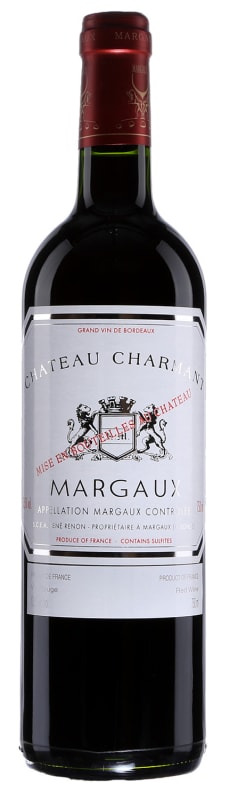


Winemaker Notes
A bright red robe with brown tints with aromas of berries, violets, peppers and tobacco. The wine has a fleshy texture with full flavors of blackberry, toasted bread and licorice.
Blend: 50% Merlot, 45% Cabernet Sauvignon, 5% Petit Verdot
Professional Ratings
-
James Suckling
A perfumed nose of berries, cherries, dried herbs, violets and sweet spices. Medium-bodied with silky tannins. Polished and creamy with fruity character and a flavorful, polished finish. Drink from 2024.
-
Wilfred Wong of Wine.com
The 2019 Chateau Charmant is delicious and nicely balanced. This wine shows aromas and flavors of savory spices, tart blackberries, and oak shading. Enjoy it with a grilled, thick veal chop. (Tasted: March 6, 2025, San Francisco, CA)


Operated since the beginning of the 19th century, three generations of the Renon family have proudly crafted world class wines. The estate extends 10 acres between the communes of Margaux and Soussans on gravelly and sandy-gravelly soils located on south and southwest facing ridges of the prestigious Margaux appellation. The vineyard is surrounded by many Grands Crus (Château Margaux, Lascombe, Cantenac Brown) with century-old vines, the average age of 55 to 60 years is composed of Merlot, Cabernet Sauvignon, Cabernet Franc and Petit Verdot. It is cultivated by fertilization based on organic manure. Château Charmant is a classic estate. Traditional cultivation is observed, the vineyard are hand plowed and not chemically weeded. This natural approach results in optimal conditions for good control of yields, thus allowing the grapes to develop as well as possible. Co-planting is carried out regularly in order to perpetuate the vineyards and ensure that the balance of the plots is maintained. The harvest is done entirely manually with sorting at the picking stage, then on a sorting table on the harvest bin. Vinification is traditional in thermo-regulated vats. The wines are aged for 12 months in oak barrels, 25% to 30% of which are new barrels and the rest in barrels of one, two and three wines. The wines are fined with egg white and then bottled.

One of the world’s most classic and popular styles of red wine, Bordeaux-inspired blends have spread from their homeland in France to nearly every corner of the New World. Typically based on either Cabernet Sauvignon or Merlot and supported by Cabernet Franc, Malbec and Petit Verdot, the best of these are densely hued, fragrant, full of fruit and boast a structure that begs for cellar time. Somm Secret—Blends from Bordeaux are generally earthier compared to those from the New World, which tend to be fruit-dominant.

Silky, seductive and polished are the words that characterize the best wines from Margaux, the most inland appellation of the Médoc on the Left Bank of Bordeaux.
Margaux’s gravel soils are the thinnest of the Médoc, making them most penetrable by vine roots—some reaching down over 23 feet for water. The best sites are said to be on gentle outcrops, or croupes, where more gravel facilitates good drainage.
The Left Bank of Bordeaux subscribes to an arguably outdated method of classification but it is nonetheless important in regards to history of the area. In 1855 the finest chateaux were deemed on the basis of reputation and trading price—at that time. In 1855, Chateau Margaux achieved first growth status, yet it has been Chateau Palmer (officially third growth from the 1855 classification) that has consistently outperformed others throughout the 20th century.
Chateau Margaux in top vintages is capable of producing red Cabernet Sauvignon based wines described as pure, intense, spell-binding, refined and profound with flavors and aromas of black currant, violets, roses, orange peel, black tea and incense.
Other top producers worthy of noting include Chateau Rauzan-Ségla, Lascombes, Brane-Cantenac, and d’Issan, among others.
The best wines of Margaux combine a deep ruby color with a polished structure, concentration and an unrivaled elegance.