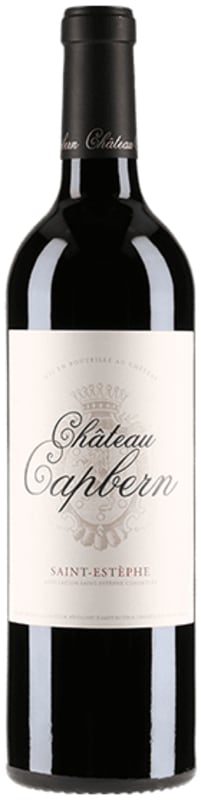


Winemaker Notes
Professional Ratings
-
Jeb Dunnuck
The 2018 Château Capbern checks in as a Cabernet Sauvignon-dominated blend that includes 37% Merlot and 1% Petit Verdot, all of which was brought up in 60% new barrels. It has a deep, dark, earthy, classic Saint-Estèphe bouquet that gives up lots of cassis and almost blue fruits as well as ample chocolate, damp earth, and leafy herb-like aromas and flavors. With a full-bodied, rich, opulent mouthfeel, loads of sumptuous dark fruits, sweet tannins, and a great finish, this brilliant 2018 brings lots of fruit and opulence, yet stays weightless and balanced, with solid underlying structure. A hidden gem in the vintage, this is every bit as good as the 2016, and it's going to shine for two decades or more.
-
Wine Enthusiast
This richly structured wine is layered with dense black fruits and serious tannins. A big wine in every sense, it is concentrated and juicy. The wine is made by the team from nearby classed growth Chateau Calon Segur. Drink from 2026.
-
Robert Parker's Wine Advocate
The 2018 Capbern is composed of 62% Cabernet Sauvignon, 37% Merlot and 1% Petit Verdot and comes in at 14.6% alcohol. It's anticipated to age for 16 months in barriques, 60% new. Deep purple-black in color, it leaps from the glass with vibrant scents of black raspberries, kirsch and fresh blackcurrants with nuances of cedar chest, pencil lead and forest floor plus a waft of lavender. Full-bodied, rich and packed with juicy fruit, it has a firm line of grainy tannins and loads of freshness, finishing with an herbal lift.
Barrel Sample: 91-93 -
Decanter
A tasty, extremely appetising Capbern that, after tasting, makes you you already look forward to drinking in bottle. It has a real elegance to its black fruits, and the tannins have a softness and succulence to them, leading on to a mouthwatering finish. Harvest took place between 19 September and 8 October, around one week earlier than in a classic year according to Laurent Dufau, and yielding 37hl/ha.Drinking Window 2024 - 2036. Barrel Sample: 92
-
James Suckling
A juicy and savory red with currant, walnut, mushroom and cedar aromas that follow through to a medium body with firm tannins and a savory finish. Drink after 2023.
-
Wine Spectator
This shows a mix of olive, bay and pepper notes that are wrangling with a core of dark currant and plum fruit right now. Structure is fine-grained and everything knits nicely through the finish, but this is for fans of the slightly gamy side. Cabernet Sauvignon, Merlot and Petit Verdot.


One of the world’s most classic and popular styles of red wine, Bordeaux-inspired blends have spread from their homeland in France to nearly every corner of the New World. Typically based on either Cabernet Sauvignon or Merlot and supported by Cabernet Franc, Malbec and Petit Verdot, the best of these are densely hued, fragrant, full of fruit and boast a structure that begs for cellar time. Somm Secret—Blends from Bordeaux are generally earthier compared to those from the New World, which tend to be fruit-dominant.

Deeply colored, concentrated, and distinctive, St. Estephe is the go-to for great, age-worthy and reliable Bordeaux reds. Separated from Pauillac merely by a stream, St. Estephe is the farthest northwest of the highest classed villages of the Haut Medoc and is therefore subject to the most intense maritime influence of the Atlantic.
St. Estephe soils are rich in gravel like all of the best sites of the Haut Medoc but here the formation of gravel over clay creates a cooler atmosphere for its vines compared to those in the villages farther downstream. This results in delayed ripening and wines with higher acidity compared to the other villages.
While they can seem a bit austere when young, St. Estephe reds prove to live very long in the cellar. Traitionally dominated by Cabernet Sauvignon, many producers now add a significant proportion of Merlot to the blend, which will soften any sharp edges of the more tannic, Cabernet.
The St. Estephe village contains two second growths, Chateau Montrose and Cos d’Estournel.